
Poodles, with their exceptional intelligence and deep bond with their human families, are incredibly sensitive and social creatures. This wonderful trait, however, can sometimes lead to challenges, particularly when it comes to being left alone. If your Poodle exhibits distress, destructive behavior, or excessive vocalization when you’re away, you might be dealing with separation anxiety. Finding effective Poodle separation anxiety solutions is key to their well-being and your peace of mind.
Understanding Separation Anxiety in Poodles
Separation anxiety isn’t about your Poodle being naughty; it’s a genuine panic response to being separated from their primary attachment figure. Poodles, being highly people-oriented, are particularly susceptible. This anxiety can manifest differently across Standard, Miniature, and Toy Poodles, but the core issue remains the same: a feeling of intense fear and abandonment.
Moreover, it is important to remember that a Poodle’s unique Poodle personality often includes a strong desire for companionship. Consequently, being left alone can trigger significant emotional distress. Understanding these underlying feelings is the first step toward helping your Poodle.
Common Symptoms of Separation Distress
- Excessive Vocalization: Constant barking, howling, or whining.
- Destructive Behavior: Chewing furniture, doors, or personal items, often focused on exit points.
- Inappropriate Urination/Defecation: House-soiling, even if house-trained.
- Pacing and Panting: Restlessness, even when not hot or exercised.
- Escaping: Attempts to break out of crates or rooms.
- Self-Harm: Excessive licking, chewing, or grooming to the point of injury.
It’s crucial to differentiate true separation anxiety from boredom or lack of training. A bored Poodle might chew a toy; an anxious Poodle might chew through a wall trying to get to you. Therefore, careful observation of your Poodle’s behavior when you are absent is essential for accurate assessment.
Effective Strategies for Poodle Separation Anxiety Solutions
Addressing separation anxiety requires patience, consistency, and a multi-faceted approach. Here are expert strategies to help your Poodle feel more secure and calm when alone. Implementing these Poodle separation anxiety solutions can significantly improve your dog’s quality of life.
1. Desensitize Departures and Arrivals
Many Poodles key into departure cues (grabbing keys, putting on shoes). Start practicing these actions without leaving. Pick up your keys, put them down. Put on your coat, take it off. Do this randomly throughout the day, so these actions lose their predictive power. This process, known as desensitization, gradually teaches your Poodle that these signals don’t always mean you’re leaving.
When you leave, keep goodbyes low-key. When you return, ignore your Poodle for the first few minutes until they are calm, then offer a calm greeting. Avoid making a big fuss over leaving or coming home, as this can heighten anxiety. Instead, aim for a neutral, calm demeanor.
2. Counter-Conditioning with High-Value Treats
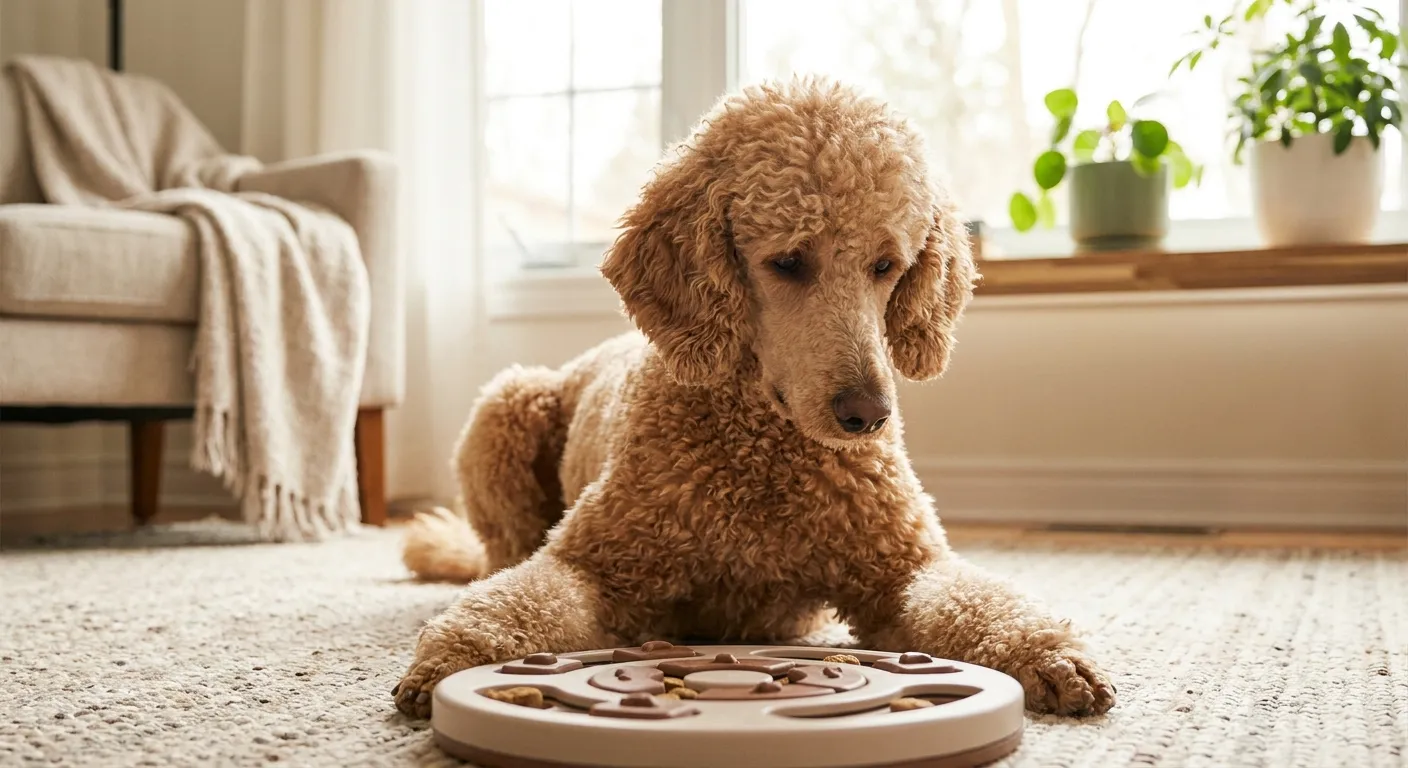
Associate your departure with something positive. Before you leave, provide a high-value, long-lasting chew toy or a puzzle feeder filled with a favorite treat (e.g., Kong stuffed with peanut butter). This not only distracts them but also creates a positive association with your absence. Ensure the treat is only given when you leave and taken away upon return. This technique is a powerful component of any effective strategy for managing Poodle separation anxiety.
3. Crate Training and Safe Spaces
For some Poodles, a properly introduced and positive crate can become a safe den. Never use the crate as punishment. Introduce it gradually, making it a comfortable place with soft bedding and toys. For instance, feeding meals in the crate or offering special treats only when inside can build positive associations. This safe space can provide comfort when you are away.
Not all Poodles do well with crates. If your Poodle shows extreme distress or tries to escape, a designated safe room might be a better option. This room should be Poodle-proofed, comfortable, and equipped with familiar scents and items. This is a crucial element of many Poodle separation anxiety solutions.
4. Increase Exercise and Mental Stimulation
A tired Poodle is a calmer Poodle. Ensure your dog receives adequate physical exercise and mental stimulation before you leave. This can include a brisk walk, a game of fetch, or a training session. Mental games and puzzle toys can also tire them out more effectively than just physical activity. Consequently, an engaged and well-exercised Poodle is less likely to develop destructive behaviors out of boredom or pent-up energy.
Consider activities that challenge their intellect, such as obedience training or scent work. These activities tap into their natural intelligence and can be incredibly fulfilling. For more ideas on how to keep your Poodle active, refer to our guide on Fulfilling Your Poodle’s Daily Exercise Needs.
5. Gradual Absences (Desensitization Training)
This is arguably the most critical long-term strategy. Start by leaving your Poodle alone for very short periods, gradually increasing the duration. Begin with just a few seconds, then minutes, then slowly extend the time. The goal is to stay below your Poodle’s anxiety threshold. If they show signs of distress, you’ve gone too long; shorten the next session. This systematic approach helps your Poodle build confidence in being alone.
For example, you might step out the door for five seconds, then return. Repeat this several times. Then, try ten seconds. This process requires significant patience and consistency. It’s often helpful to record your Poodle’s behavior during these absences to accurately gauge their comfort level. This slow and steady progress is vital for successful Poodle separation anxiety solutions.
6. Consider Calming Aids and Professional Help
For some Poodles, natural calming aids can be beneficial. These might include pheromone diffusers (like Adaptil), calming supplements, or even specialized anxiety vests. Always consult your veterinarian before introducing any new supplement or aid to ensure it’s safe and appropriate for your Poodle. Your vet can offer tailored advice.
In severe cases, or if you’re struggling to make progress, seeking help from a certified professional dog trainer or a veterinary behaviorist is highly recommended. These experts can assess your Poodle’s specific situation and develop a personalized behavior modification plan. They can also prescribe medication if necessary, which can be a valuable tool in conjunction with behavioral training. The American Society for the Prevention of Cruelty to Animals (ASPCA) offers excellent resources on finding qualified professionals for pet behavior issues: https://www.aspca.org/pet-care/dog-care/common-dog-behavior-issues/separation-anxiety.
7. Rule Out Other Medical Conditions
Before concluding that your Poodle has separation anxiety, it’s prudent to rule out any underlying medical conditions that could mimic its symptoms. For instance, inappropriate urination could be a sign of a urinary tract infection, while excessive vocalization might indicate pain or discomfort. A comprehensive veterinary check-up is always a good starting point. This ensures that any physical ailments are addressed first, paving the way for effective behavioral interventions.
Conditions like early stages of cognitive dysfunction in older Poodles can also present with similar signs. Similarly, certain neurological issues might cause restlessness or changes in behavior. Therefore, consulting your veterinarian is a critical step in diagnosing and addressing your Poodle’s distress. The Cornell University College of Veterinary Medicine provides further insights into canine anxiety and related conditions: https://www.vet.cornell.edu/departments-centers-and-institutes/cornell-k-9-stress-and-behavior-program.
Patience and Consistency are Key to Success
Addressing separation anxiety in Poodles is not a quick fix. It requires immense patience, consistent effort, and a deep understanding of your Poodle’s emotional state. Every Poodle is an individual, and what works for one may not work for another. Be prepared to try different strategies and adjust your approach as needed. Celebrate small victories and remain positive throughout the process.
Remember, your Poodle relies on you for security and comfort. By implementing these expert Poodle separation anxiety solutions, you are not only alleviating their distress but also strengthening the bond you share. With dedication, you can help your Poodle learn to cope calmly and confidently when left alone, ensuring they lead a happy and healthy life. For additional insights into managing your Poodle’s well-being, exploring resources on understanding and managing Poodle separation anxiety can be invaluable.
Conclusion
Poodle separation anxiety is a challenging issue for both dogs and their human companions. However, with a thoughtful and consistent application of the strategies outlined above, significant progress can be made. From desensitizing departures to providing mental stimulation and creating safe spaces, each step contributes to building your Poodle’s confidence and reducing their distress when left alone. Remember to seek professional guidance when necessary, as a tailored approach often yields the best results. Ultimately, your commitment to these Poodle separation anxiety solutions will lead to a calmer, happier, and more secure Poodle, enriching your shared life together.
Frequently Asked Questions About Poodle Separation Anxiety
What is the main cause of separation anxiety in Poodles?
The primary cause of separation anxiety in Poodles is their strong bond with their human companions and their sensitive, social nature. They can experience intense fear or panic when separated from their primary attachment figure, viewing it as abandonment rather than just being left alone.
Can crate training help with Poodle anxiety when left alone?
Yes, for many Poodles, a properly introduced and positive crate can become a safe, comforting den. However, if a Poodle exhibits extreme distress or attempts to escape the crate, it might worsen their anxiety. In such cases, a safe, Poodle-proofed room might be a better alternative for managing their distress.
How long does it take to resolve Poodle separation issues?
There’s no fixed timeline for resolving separation issues in Poodles. It depends on the severity of the anxiety, the consistency of the training, and the individual Poodle’s temperament. It typically requires several weeks to months of dedicated effort, with gradual improvements over time.
Are there any natural remedies for Poodle anxiety while alone?
Some natural remedies can help alleviate anxiety in Poodles, such as pheromone diffusers (e.g., Adaptil), calming supplements containing L-theanine or melatonin, and thunder shirts or anxiety vests. Always consult your veterinarian before using any supplements or aids to ensure they are safe and appropriate for your specific Poodle.
When should I seek professional help for my Poodle’s separation distress?
You should seek professional help from a certified dog trainer or veterinary behaviorist if your Poodle’s separation distress is severe, not improving with your current strategies, or if you observe self-harm behaviors. Professionals can offer a personalized plan, and in some cases, prescribe medication to assist with behavior modification.