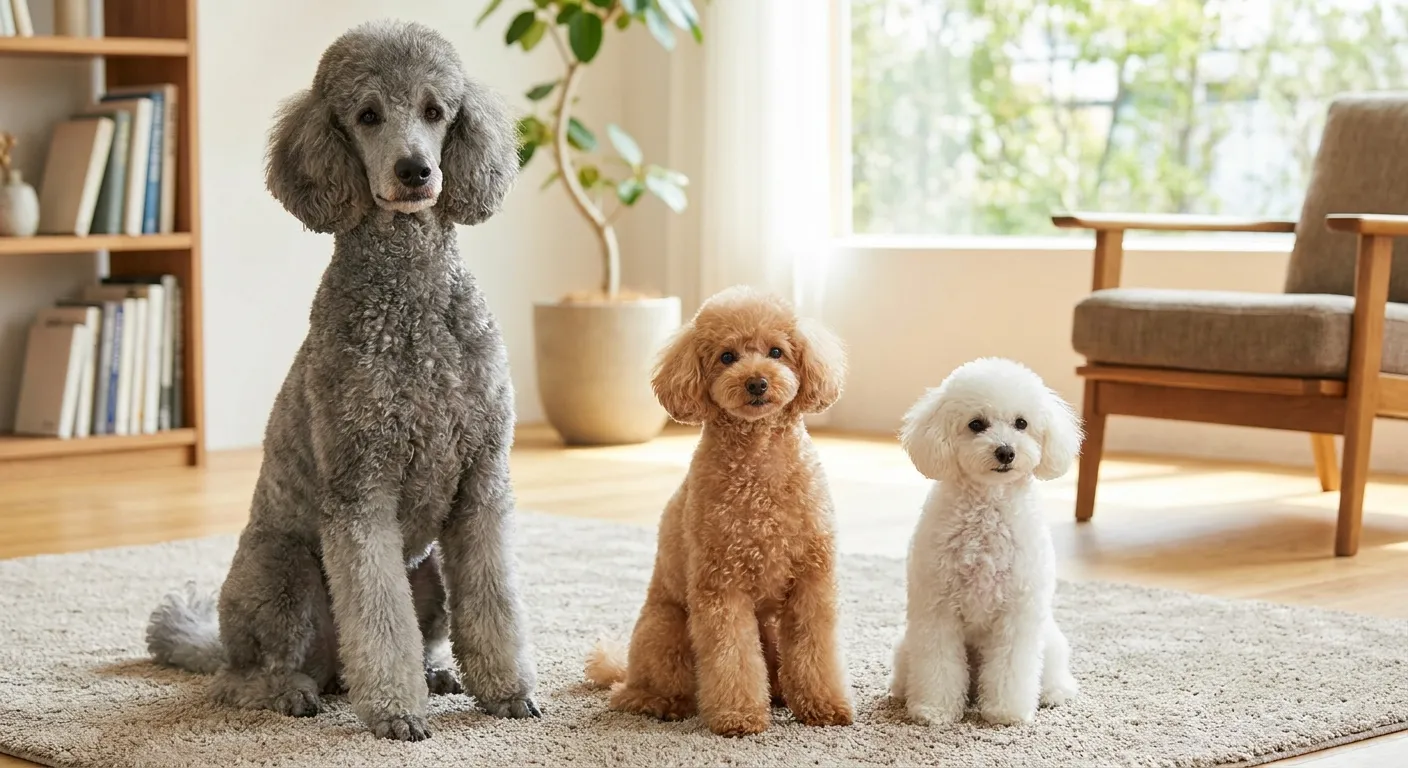
Poodles are a truly remarkable and diverse breed, recognized in three distinct sizes: Standard, Miniature, and Toy. While all share the same elegant appearance, intelligent mind, and hypoallergenic coat, their poodle size differences significantly impact their lifestyle, exercise requirements, and general care needs. Understanding these variations is essential for prospective owners to choose the Poodle that best fits their home and lifestyle. This guide will help you navigate the unique characteristics of each size, ensuring you’re well-prepared for your journey with a Poodle.
Standard Poodle: The Original Athlete
Standard Poodles are the largest of the three, typically standing over 15 inches tall at the shoulder and weighing between 45 to 70 pounds. Originally bred as water retrievers, they possess a robust build and require a substantial amount of exercise and mental stimulation. They thrive in active households where they can participate in long walks, hikes, swimming, or dog sports like agility. Their larger size means they generally need more space, both indoors and outdoors. Furthermore, their grooming needs are considerable due to their dense, curly coat. Standards are known for their calm demeanor indoors, provided their exercise needs are met, and make excellent family companions.
For instance, a Standard Poodle’s energy levels demand consistent activity. Daily vigorous exercise is crucial to prevent boredom and destructive behaviors. Many Standard Poodle owners find that a combination of physical activity and mental challenges keeps their companions happy and well-adjusted. Moreover, their intelligence means they pick up training quickly, making them highly trainable for various tasks and sports. Poodle Exercise Needs: Keeping Your Poodle Active and Engaged offers more insights into meeting these demands.
Owners should also be aware of specific health considerations for larger breeds. For example, Standard Poodles can be prone to bloat, a serious condition requiring immediate veterinary attention. Learning about prevention strategies is vital. You can find comprehensive information on this topic by visiting Prevent Poodle Bloat: Essential Strategies for Standard Poodle Owners. Regular veterinary check-ups are always recommended to monitor their overall health and well-being.
Miniature Poodle: The Versatile Companion
Miniature Poodles bridge the gap between their larger and smaller counterparts, standing between 10 and 15 inches tall and weighing 10 to 15 pounds. This size offers a fantastic balance: they are small enough for apartment living but robust enough for active adventures. Miniature Poodles are highly adaptable and enjoy moderate daily exercise, such as brisk walks or playtime in a securely fenced yard. Their intelligence and eagerness to please make them highly trainable, excelling in obedience and various canine activities. They bond closely with their families and often exhibit the classic Poodle playful and affectionate nature without the sheer physical demands of a Standard or the delicate nature of a Toy.
In addition, Miniature Poodles are known for their vibrant personalities. They are often described as spirited and charming, making them wonderful companions for a wide range of individuals and families. Their adaptable nature means they can thrive in various living situations, from suburban homes to city apartments, provided their exercise and mental stimulation needs are met. Consequently, this medium size is a popular choice for those seeking a Poodle that is neither too big nor too small.
Training a Miniature Poodle is generally a rewarding experience due to their high intelligence. Early socialization and consistent positive reinforcement are key to developing a well-behaved companion. Furthermore, their grooming requirements, while still significant, can be more manageable than those of a Standard Poodle, especially if kept in a shorter clip. Regular brushing and professional grooming appointments are essential to maintain their coat health and prevent matting. These aspects of Mastering Poodle Grooming at Home: Beyond the Basics apply to all Poodle sizes.
Toy Poodle: The Pocket-Sized Charmer
Toy Poodles are the smallest, standing under 10 inches tall and typically weighing between 4 to 6 pounds. Their diminutive size makes them ideal for small living spaces and for owners seeking a true lap dog. While they still possess the Poodle’s intelligence and require mental engagement, their exercise needs are much less strenuous, often satisfied with indoor play and short, gentle walks. Toy Poodles can be more fragile due to their small stature, requiring careful handling, especially around children or larger pets. They are intensely devoted to their owners and can be prone to separation anxiety if not properly socialized and trained. Despite their size, they carry themselves with confidence and charm.
Specifically, Toy Poodles thrive on companionship and prefer to be close to their human family. Their small stature means they can be easily injured if accidentally stepped on or dropped, so a household with very young, boisterous children might not be the best fit. However, for older individuals or those in quieter homes, a Toy Poodle can be an incredibly loving and attentive companion. Moreover, their compact size makes them excellent travel partners, as they can often accompany owners more easily than larger breeds.
Mental stimulation is just as important for Toy Poodles as it is for their larger relatives. Puzzle toys, short training sessions, and interactive games can help keep their intelligent minds engaged. On the other hand, their delicate nature means they may require more protection from extreme weather conditions. A warm sweater in winter or shade in summer is often necessary. Understanding these unique care considerations is vital for any prospective Toy Poodle owner. These poodle size differences are quite apparent in daily care.
Comparing Poodle Size Differences: Lifestyle Considerations
When considering which Poodle size is right for you, it’s crucial to evaluate your lifestyle, living situation, and the amount of time and resources you can dedicate to a pet. Each size variation brings its own set of advantages and challenges. For example, a Standard Poodle might be perfect for an active family with a large yard, while a Toy Poodle might be better suited for someone living in an apartment who desires a constant companion.
Exercise Requirements
As previously discussed, exercise needs vary significantly. Standard Poodles require substantial daily activity, often 60-90 minutes of vigorous exercise, including walks, runs, or swimming. Miniature Poodles need moderate exercise, typically 30-60 minutes of daily walks or play. Toy Poodles, conversely, are satisfied with shorter walks and indoor play, amounting to about 20-30 minutes of activity per day. Neglecting these needs, regardless of size, can lead to behavioral issues. Proper exercise is paramount for a happy, healthy Poodle.
Grooming Demands
All Poodles require regular grooming due to their continuously growing, non-shedding coats. However, the sheer volume of coat on a Standard Poodle means grooming sessions will be longer and potentially more frequent than for a Toy Poodle. Owners of all sizes should commit to daily brushing to prevent mats and tangles, along with professional grooming every 4-6 weeks. This consistent care is essential for maintaining their distinctive appearance and skin health. Your Guide to the First Poodle Puppy Groom: Gentle Introductions can help new owners.
Space and Living Environment
The ideal living situation also differs based on the Poodle’s size. Standard Poodles generally thrive in homes with ample indoor and outdoor space. A securely fenced yard is highly beneficial for them. Miniature Poodles are highly adaptable and can do well in apartments or houses, provided they receive adequate exercise. Toy Poodles are perfectly suited for apartment living due to their small footprint. However, regardless of size, all Poodles benefit from being an integral part of the family and should not be left alone for extended periods.
Temperament and Socialization
While all Poodles share intelligence and a generally good-natured disposition, some subtle temperament differences can be observed among the sizes. Standard Poodles are often described as calm, dignified, and highly trainable. Miniature Poodles tend to be energetic, playful, and very alert. Toy Poodles are typically affectionate, sensitive, and can be quite vocal. Early socialization is crucial for all Poodle sizes to ensure they grow into well-adjusted adults, comfortable with various people, places, and other animals. Poodle Puppy Socialization Tips: Building a Confident Companion can provide valuable guidance.
Each size variation, therefore, presents a unique set of considerations regarding temperament, which is influenced by both genetics and early experiences. Understanding these nuances helps prospective owners make an informed decision about which Poodle will best integrate into their family dynamic. These distinct poodle size differences make each variety unique.
Health Considerations Across Poodle Sizes
While all Poodles are generally healthy dogs, certain health issues can vary in prevalence or severity across the different sizes. Awareness of these potential concerns is crucial for providing the best possible care for your Poodle throughout their life. It’s always recommended to choose a reputable breeder who screens their breeding dogs for genetic conditions.
Standard Poodles, being larger, are more prone to orthopedic issues like hip dysplasia and elbow dysplasia. They are also at a higher risk for bloat (gastric dilatation-volvulus), a life-threatening condition. Therefore, understanding the symptoms and emergency protocols for bloat is especially important for Standard Poodle owners. Additionally, some Standard Poodles may be susceptible to Addison’s disease and sebaceous adenitis.
Miniature Poodles can also experience orthopedic issues, though less commonly than Standards. They may be more prone to patellar luxation (slipping kneecaps) and progressive retinal atrophy (PRA), an eye condition that can lead to blindness. Regular eye exams are recommended for this size. Furthermore, some Miniature Poodles might develop Legg-Calve-Perthes disease, a condition affecting the hip joint.
Toy Poodles, due to their delicate bone structure, are particularly susceptible to patellar luxation and Legg-Calve-Perthes disease. They can also be prone to dental problems, as their small mouths can lead to overcrowding of teeth, making them more susceptible to plaque and tartar buildup. Consequently, diligent dental care is paramount for Toy Poodles. Hypoglycemia (low blood sugar) can also be a concern in very young Toy Poodle puppies. Therefore, these specific poodle size differences impact health.
Regardless of size, all Poodles can be susceptible to certain conditions such as epilepsy, various allergies, and ear infections due to their floppy ears. Regular veterinary check-ups are essential for all Poodle sizes to monitor their health proactively and address any concerns early. For comprehensive information on overall Poodle health, consider reading Poodle Health and Wellness: Proactive Strategies for a Long, Vibrant Life.
Choosing Your Perfect Poodle: Making an Informed Decision
Choosing among the different Poodle sizes is a significant decision that should be based on careful consideration of your lifestyle, living arrangements, and commitment to their specific needs. Each size offers the beloved Poodle traits – intelligence, elegance, and a loving disposition – just in a different package. It is important to remember that while generalizations about each size exist, individual personalities can vary greatly within any litter.
Consider your daily routine. Do you enjoy long hikes and outdoor adventures? A Standard Poodle might be your ideal companion. Are you looking for a versatile dog that can adapt to apartment living but still enjoys active outings? A Miniature Poodle could be a perfect fit. Or perhaps you desire a devoted lap dog that thrives in a quieter home and requires less strenuous exercise? A Toy Poodle might be exactly what you’re seeking. These distinct poodle size differences truly cater to diverse preferences.
Furthermore, think about your family dynamic. Do you have young children or other pets? A Standard or Miniature Poodle might be more robust for a bustling household, whereas a Toy Poodle might require more supervision to ensure their safety. It’s also wise to research reputable breeders who prioritize health and temperament. A good breeder will be transparent about their dogs’ health clearances and will help you choose a puppy whose personality matches your family’s lifestyle. You can also explore The Poodle Club of America for more information on responsible breeding practices and breed standards.
Ultimately, the joy of owning a Poodle, regardless of its size, comes from the deep bond you form with your intelligent and affectionate companion. By understanding the unique characteristics and care requirements associated with each of the poodle size differences, you can make an informed decision that leads to a fulfilling and happy life together. Embrace the journey of discovery and find the Poodle that will truly enrich your world.
Conclusion
Understanding the distinct poodle size differences is fundamental for any prospective Poodle owner. From the athletic Standard to the versatile Miniature and the charming Toy, each size offers a unique set of characteristics, care requirements, and personality traits. Standard Poodles demand significant exercise and space, thriving in active environments. Miniature Poodles provide a balanced option, adapting well to various living situations with moderate activity. Toy Poodles are ideal for smaller homes and those seeking a devoted lap companion, requiring gentle handling due to their delicate stature. By carefully considering your lifestyle, activity level, and the specific needs of each size, you can confidently choose the Poodle that will become a cherished and thriving member of your family. Each Poodle, regardless of its dimensions, promises intelligence, loyalty, and an abundance of affection, making them truly wonderful companions for life.
FAQ
What are the main poodle categories?
Poodles come in three primary categories: Standard, Miniature, and Toy. These classifications are based on their height at the shoulder, with Standards being the largest, Miniatures in the middle, and Toys being the smallest.
How do the needs of Standard vs. Toy poodles compare?
Standard Poodles require much more exercise, space, and robust handling due to their larger size and athletic background. Toy Poodles, conversely, have lower exercise needs, are well-suited for smaller living spaces, and require very gentle handling due to their delicate frame.
Which poodle type is best for apartment living?
Toy Poodles are generally considered the best for apartment living due to their small size and lower exercise requirements. Miniature Poodles can also adapt well to apartments if they receive sufficient daily exercise and mental stimulation.
Do different poodle sizes have different temperaments?
While all Poodles share core traits like intelligence and a loving nature, there can be subtle temperament variations. Standards are often described as calm and dignified, Miniatures as energetic and playful, and Toys as affectionate and sensitive. Individual personalities also play a significant role.
What are the key health considerations for each poodle variety?
Standard Poodles are more prone to bloat and hip/elbow dysplasia. Miniature Poodles may face issues like patellar luxation and progressive retinal atrophy. Toy Poodles are susceptible to patellar luxation, Legg-Calve-Perthes disease, and dental problems due to their small size. Regular vet check-ups are important for all.