
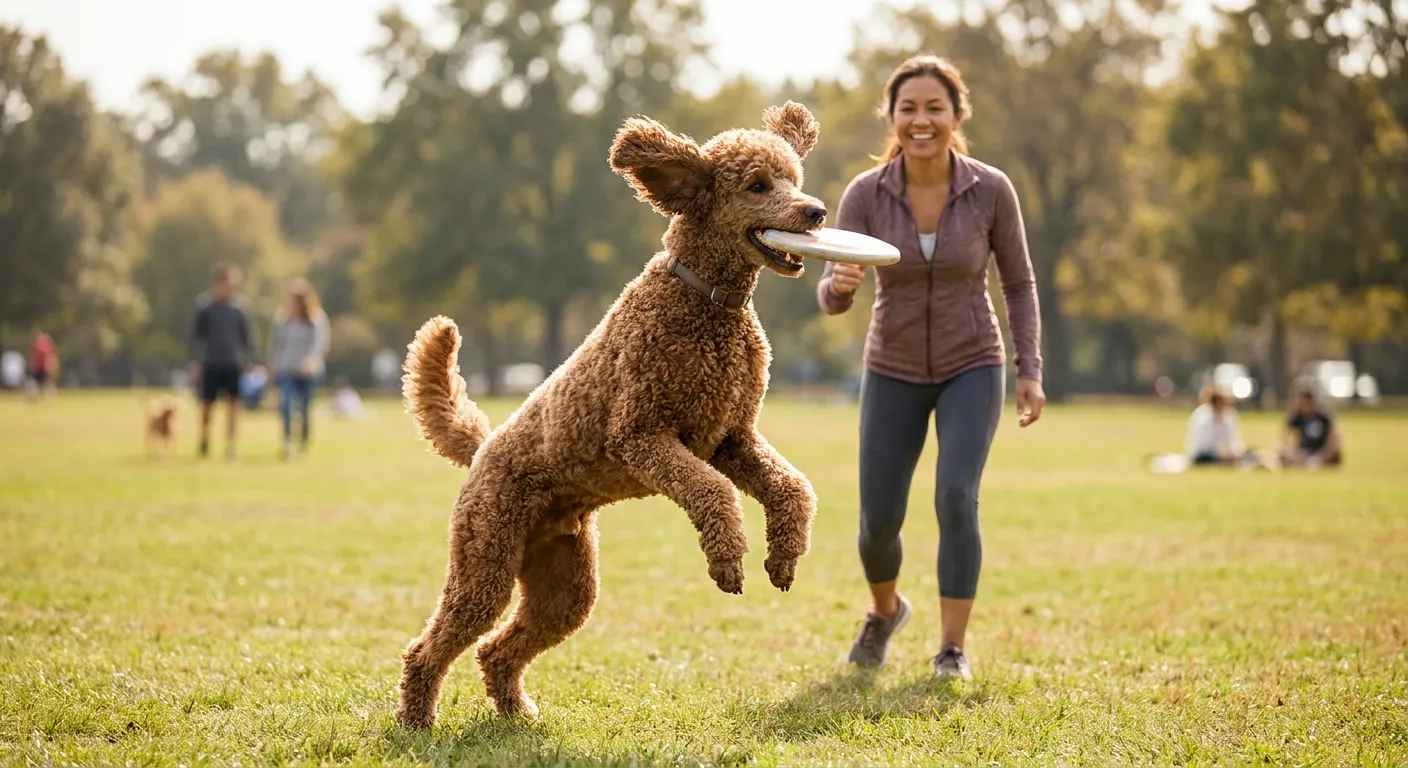
Poodles are often mistakenly thought of as delicate lap dogs. However, beneath their elegant exterior lies an active, intelligent breed with significant energy levels. Understanding your Poodle exercise requirements is crucial for their physical health and mental well-being. This holds true whether you own a robust Standard Poodle, a lively Miniature, or an energetic Toy Poodle. Adequate exercise prevents boredom, destructive behaviors, and ultimately promotes a happy, well-adjusted dog.
In fact, neglecting a Poodle’s need for activity can lead to various issues. These include excessive barking, chewing, and anxiety. Therefore, providing appropriate outlets for their energy is not just beneficial; it’s essential for their overall quality of life. We’ll explore how to tailor exercise routines to each Poodle size and introduce engaging activities that go beyond simple walks.
Understanding Poodle Exercise Requirements by Size
While all Poodles benefit from regular activity, the intensity and duration will vary significantly by size. Their historical roles and breeding purposes offer clues to their inherent energy levels. For instance, Standard Poodles, originally bred as water retrievers, are highly athletic and require substantial exercise. Aim for at least 60-90 minutes of vigorous activity daily. This can include brisk walks, jogging, swimming, or active play sessions. Furthermore, their stamina means they excel in longer, more challenging activities. For more on how their size impacts overall care, consider reading about Standard, Miniature, Toy: Understanding Poodle Size Differences & Care Needs.
Miniature Poodles are also energetic and need 45-60 minutes of daily exercise. This can include brisk walks, enthusiastic games of fetch, or even agility training. They possess a good balance of energy and manageability, making them versatile companions. Their compact size allows for more varied play environments, both indoors and outdoors. Similarly, Toy Poodles, despite their small stature, are not couch potatoes. They need 30-45 minutes of daily activity, such as short, frequent walks, engaging indoor play, and puzzle toys to stimulate their minds. It’s important to remember that mental stimulation is just as vital as physical exercise for all Poodles, as their intelligence demands engagement.
The Importance of a Consistent Exercise Schedule
Establishing a consistent daily exercise schedule is paramount for your Poodle. Dogs thrive on routine, and a predictable schedule helps manage their energy levels and prevent behavioral problems. For example, morning walks can help burn off initial energy, leading to a calmer dog throughout the day. Afternoon play sessions or training can provide further mental and physical engagement. Moreover, consistency helps your Poodle anticipate their activity, reducing anxiety and promoting a sense of security. Always consider your Poodle’s age and health status when planning their exercise routine. Consult with your veterinarian if you have concerns about appropriate activity levels or any underlying health conditions.
Remember, exercise isn’t just about physical exertion; it’s also about bonding. Playtime offers a wonderful opportunity to strengthen your relationship with your Poodle. Whether it’s a game of tug-of-war or a shared jog, these moments contribute significantly to their emotional well-being.
Beyond Walks: Enriching Your Poodle’s Life with Diverse Activities
Simply walking isn’t always enough for a Poodle. Their sharp minds thrive on challenges, making varied activities essential for their overall happiness. Incorporate activities like obedience training, trick training, or dog sports such as agility, flyball, or scent work. These activities not only provide physical exertion but also offer crucial mental stimulation, which can tire a Poodle just as effectively as a long run. In addition, participating in dog sports can build confidence and improve their focus. The American Kennel Club provides excellent resources on various dog sports and activities that Poodles can excel in.
For Toy and Miniature Poodles, interactive toys and indoor games can supplement outdoor adventures, especially on bad weather days. Puzzle feeders, snuffle mats, and hide-and-seek games are excellent ways to engage their minds indoors. Furthermore, rotating toys keeps their interest piqued. Consider setting up a small indoor obstacle course using household items to add variety. Regardless of size, all Poodles benefit from learning new commands and tricks. This intellectual engagement is a core component of meeting their Poodle exercise requirements.
Water Activities: A Poodle Favorite
Given their heritage as water retrievers, many Poodles absolutely love swimming. Swimming is a fantastic low-impact exercise that works all muscle groups without stressing joints. This makes it an ideal activity for Poodles of all ages, including seniors. If you have access to a safe, dog-friendly pool or lake, introduce your Poodle to swimming gradually. Always supervise them closely. Moreover, ensure they wear a life vest, especially if they are new to swimming or if the water is deep. This activity can be incredibly invigorating and a great way to meet their daily energy expenditure. For senior Poodles, swimming can be particularly beneficial for maintaining mobility, as discussed in our guide on Golden Years, Golden Care: Comprehensive Senior Poodle Care Tips.
Socialization and Playdates
Poodles are generally social dogs, and supervised playdates with other well-behaved dogs can be an excellent form of exercise and mental stimulation. Running, chasing, and wrestling with a canine friend provides a different kind of physical outlet than solo play. Additionally, it helps them develop good social skills. However, always ensure that all dogs involved are healthy, vaccinated, and have compatible play styles. A dog park can be a good option for some, but always prioritize safety and observe your Poodle’s comfort level. Consequently, choosing appropriate playmates is crucial for a positive experience.
Addressing Common Exercise Challenges
Sometimes, meeting your Poodle exercise requirements can present challenges. For instance, bad weather can limit outdoor activities. On rainy or snowy days, shift focus to indoor games. This includes fetch in a long hallway, stair climbing (if safe for their joints), or advanced trick training. Puzzle toys filled with treats can keep them occupied for extended periods. Similarly, mental games like ‘find the treat’ (hiding treats around the house) can be surprisingly tiring for their minds.
Age and health also play significant roles. Puppies have bursts of energy but need shorter, more frequent play sessions to protect their developing joints. Over-exercising a puppy can lead to long-term orthopedic problems. Conversely, senior Poodles may have reduced stamina or joint issues. For them, gentle walks, swimming, and mental games are more appropriate. Always consult your vet to tailor exercise to their specific needs. This ensures their comfort and safety. Monitoring for signs of fatigue or discomfort is vital. If your Poodle seems reluctant to move or shows signs of pain, it’s time for a vet check-up.
Preventing Over-Exercising and Injury
While it’s important to meet your Poodle’s energy needs, over-exercising can be detrimental. Look for signs of fatigue such as excessive panting, lagging behind, or limping. Furthermore, Poodles, especially Standard Poodles, can be prone to certain health conditions like bloat. Vigorous exercise immediately before or after meals should be avoided. Learn more about Protecting Your Poodle: Essential Strategies for Preventing Bloat to keep your Poodle safe. Always provide plenty of fresh water during and after exercise sessions. Hydration is key to preventing overheating and fatigue. Similarly, ensure that exercise surfaces are safe and not too hot or too cold, especially for their paw pads.
Integrating Mental Stimulation with Physical Activity
Poodles are renowned for their intelligence. Therefore, integrating mental challenges into their physical routine is not just a bonus; it’s a necessity. Activities like obedience training classes, where they learn new commands and refine existing ones, provide both physical movement and intense mental focus. Advanced trick training, such as ‘fetch a specific toy’ or ‘put toys away’, also serves this dual purpose. Scent work, where Poodles use their noses to find hidden treats or objects, is another excellent way to engage their minds and bodies simultaneously. This type of activity can be particularly satisfying for them, tapping into their natural instincts. In fact, many Poodles find scent work more tiring than a long walk, due to the intense concentration required.
Interactive puzzle toys, as mentioned earlier, are fantastic for solitary mental stimulation. However, you can also make walks more mentally engaging. Vary your routes, let your Poodle sniff and explore new scents (within reason), and incorporate short training bursts during your walks. For example, practice ‘sit’ and ‘stay’ at various points. This keeps them attentive and turns a simple stroll into a more enriching experience. Consequently, a well-rounded exercise plan always considers both body and mind.
Training for Better Exercise Habits
Training can significantly enhance your Poodle’s exercise experience. A well-trained Poodle is safer off-leash in appropriate areas, making activities like hiking or open field play more enjoyable. Recall training is especially important for safety. Furthermore, teaching them to walk nicely on a leash makes walks a pleasure rather than a chore. Consider enrolling in a local dog training class. This not only provides structured learning but also offers opportunities for socialization. These skills contribute directly to how effectively you can meet your Poodle exercise requirements. For more insights into their unique intellect, explore Unveiling the Poodle Personality: What Makes These Dogs So Unique?.
Conclusion
Meeting your Poodle’s unique Poodle exercise requirements is fundamental to their overall health, happiness, and longevity. Far from being delicate, Poodles are active and intelligent companions who thrive on both physical exertion and mental engagement. By tailoring activities to their size – be it a vigorous Standard, a lively Miniature, or an energetic Toy Poodle – and incorporating a variety of stimulating pursuits, you ensure a well-adjusted and joyful pet. Remember to prioritize consistency, adapt to their age and health, and always provide opportunities for both body and mind to flourish. An exercised Poodle is a contented Poodle, ready to be a joyful companion and a cherished member of your family. Investing in their activity needs is truly investing in a long and happy life together.
FAQ
How much daily activity does a Standard Poodle need?
Standard Poodles are highly energetic and typically require 60-90 minutes of vigorous activity each day. This can include brisk walks, jogging, swimming, or active play sessions.
Are Toy Poodles really active, or are they mostly lap dogs?
Despite their small size, Toy Poodles are not couch potatoes. They need 30-45 minutes of daily activity, which can include short walks, indoor play, and puzzle toys to stimulate their minds.
What are some good activities for Poodles besides walking?
Beyond walks, Poodles benefit from activities like obedience training, trick training, dog sports (agility, flyball, scent work), swimming, and interactive indoor games. These provide both physical and mental stimulation.
How can I keep my Poodle active on a rainy day?
On rainy days, you can engage your Poodle with indoor fetch, stair climbing (if appropriate), advanced trick training, puzzle toys, snuffle mats, or hide-and-seek games. Mental stimulation is key when outdoor options are limited.
Is mental stimulation as important as physical activity for Poodles?
Yes, absolutely. Poodles are highly intelligent dogs, and mental stimulation is just as vital as physical exercise. Engaging their minds with training, puzzles, and new challenges helps prevent boredom and destructive behaviors, contributing significantly to their overall well-being.