
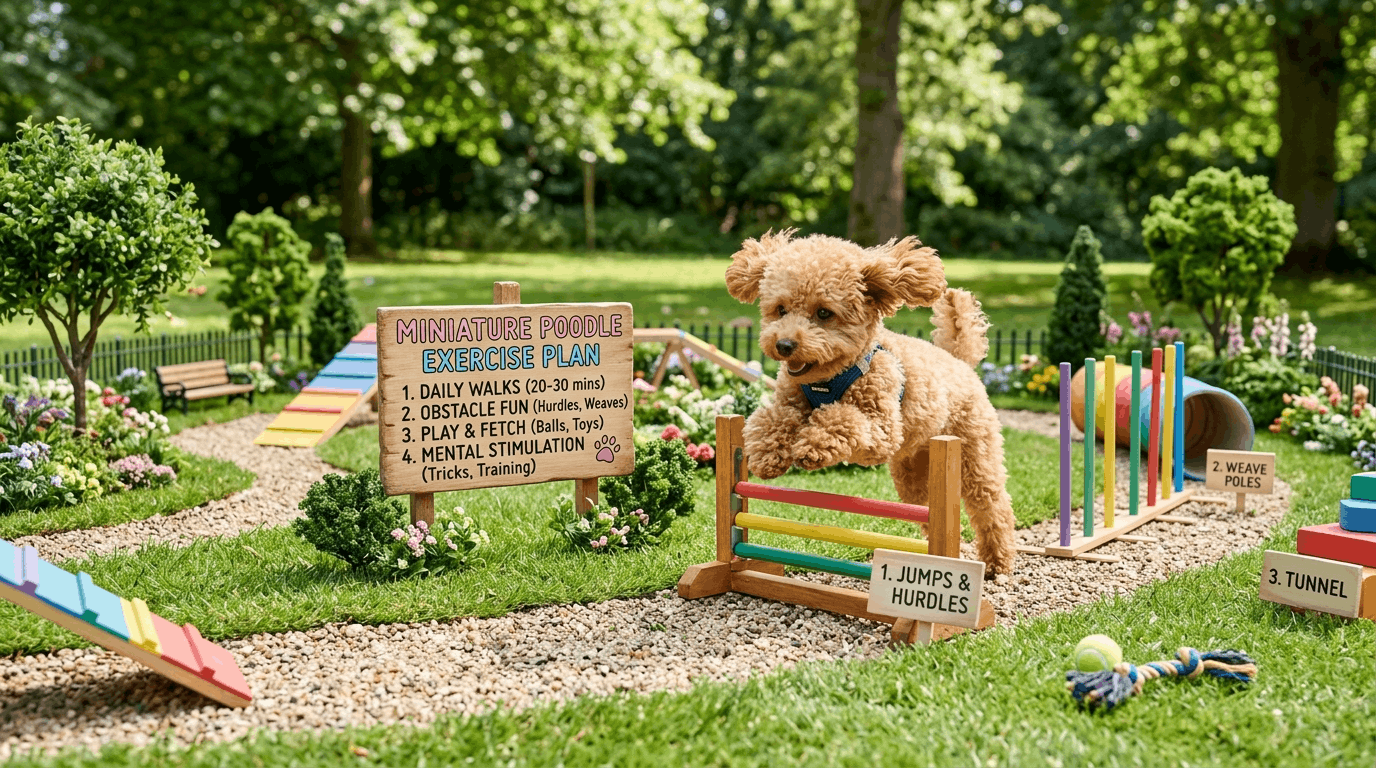
A miniature poodle exercise plan is essential for keeping this energetic and intelligent breed both physically active and mentally satisfied. While miniature poodles are smaller than standard poodles, they still require consistent activity to stay healthy and well-behaved. Without proper exercise, they can quickly become bored, restless, and prone to unwanted behaviors such as excessive barking or chewing. Therefore, building a structured routine is one of the most effective ways to support their overall well-being.
Because miniature poodles are highly adaptable, they can thrive in both houses and apartments. However, their environment does not eliminate their need for daily activity. In fact, regular exercise helps maintain a healthy weight, supports joint health, and improves mood. When you commit to a consistent plan, your dog becomes calmer, more focused, and easier to manage.
Understanding Energy Levels And Daily Needs
A successful miniature poodle exercise plan starts with understanding your dog’s natural energy level. Miniature poodles are active dogs that enjoy movement, play, and mental challenges. Although they are smaller than larger breeds, they still require structured activity to burn off excess energy.
Most miniature poodles need between 45 and 60 minutes of exercise each day. However, this does not have to be done in one session. Breaking activity into shorter periods helps maintain engagement and prevents fatigue. Additionally, combining physical exercise with mental stimulation provides better results than focusing on one alone.
Age also plays a role in determining exercise needs. Puppies tend to have bursts of energy throughout the day, while adult dogs benefit from more structured routines. Senior dogs may require gentler activities, but they still need regular movement to stay healthy. Therefore, adjusting your plan based on your dog’s age ensures comfort and effectiveness.
Observing your dog’s behavior is equally important. If your poodle seems restless or overly excited, it may indicate a need for more activity. On the other hand, excessive tiredness may suggest overexertion. Finding the right balance helps maintain optimal health.
Building A Balanced Daily Routine
Creating a routine is key when following a miniature poodle exercise plan. Consistency helps your dog understand what to expect, which reduces anxiety and improves behavior. A predictable schedule also supports better energy management throughout the day.
Start with a morning walk to release pent-up energy. This early activity sets a positive tone for the day and helps your dog stay calm. Later, incorporate another session in the afternoon or evening to maintain balance.
In addition to walks, include playtime and training sessions. These activities provide both physical movement and mental engagement. For example, short games of fetch or basic obedience training can be highly effective.
Variety is important to prevent boredom. Rotating activities keeps your dog interested and motivated. Over time, this approach creates a routine that feels enjoyable rather than repetitive.
Incorporating Indoor Activities Effectively
Even with limited space, a miniature poodle exercise plan can be effective indoors. Because of their size, miniature poodles can get meaningful exercise without requiring large areas.
Simple games such as fetch in a hallway or gentle tug-of-war can provide physical activity. Additionally, using stairs under supervision offers a quick way to burn energy. These activities are easy to integrate into daily routines.
Interactive toys also play a valuable role. Toys that encourage movement or problem-solving keep your dog active while providing mental stimulation. As a result, indoor time becomes productive rather than idle.
Rotating toys regularly helps maintain interest. By introducing new options, you prevent boredom and keep your dog engaged. This strategy ensures consistent activity even when outdoor time is limited.
Combining Physical And Mental Stimulation
An effective miniature poodle exercise plan must include both physical and mental stimulation. While physical activity burns energy, mental challenges keep your dog engaged and prevent boredom.
Training sessions are a great way to achieve this balance. Teaching new commands or tricks encourages focus and builds confidence. Additionally, short training sessions throughout the day are more effective than longer sessions.
Puzzle toys and scent games also provide mental exercise. These activities challenge your dog to think and solve problems, which keeps their mind sharp. Over time, this reduces the likelihood of destructive behavior.
Combining these elements creates a well-rounded routine. By engaging both body and mind, you ensure your poodle remains happy and balanced.
Outdoor Exercise And Exploration
Outdoor time is an important part of any miniature poodle exercise plan. Walks provide not only physical activity but also exposure to new sights and smells. This sensory stimulation is essential for mental health.
Aim for at least two walks per day. These walks do not need to be long, but they should be consistent. Exploring different routes adds variety and keeps your dog interested.
Off-leash play in a secure area can also be beneficial. Running freely allows your dog to burn energy more efficiently. However, always ensure the environment is safe and controlled.
Weather conditions may affect outdoor activity. On hot or rainy days, adjust your routine accordingly. Indoor alternatives can help maintain consistency without compromising safety.
Avoiding Overexertion And Injury
While exercise is important, overdoing it can be harmful. A well-designed miniature poodle exercise plan focuses on balance rather than intensity. Too much activity can lead to fatigue or injury.
Watch for signs of overexertion, such as excessive panting or reluctance to continue. If these signs appear, allow your dog to rest. Providing water and a cool environment also supports recovery.
Gradually increase activity levels instead of making sudden changes. This approach helps your dog adapt and reduces the risk of strain. Additionally, consider your dog’s physical condition and adjust accordingly.
Proper warm-up and cool-down periods can also make a difference. Gentle movement before and after exercise helps prevent stiffness and supports joint health.
Adapting The Plan For Apartment Living
Apartment living does not limit the effectiveness of a miniature poodle exercise plan. With proper planning, you can meet your dog’s needs even in smaller spaces.
Frequent short walks are often more effective than fewer long ones. This approach provides regular opportunities for exercise and stimulation. Additionally, incorporating indoor activities helps fill any gaps.
Using nearby parks or open areas can enhance your routine. These spaces allow for more movement and exploration. As a result, your dog benefits from a richer environment.
Consistency remains the most important factor. By maintaining a routine, you ensure your dog receives enough activity regardless of living conditions.
Building Long-Term Healthy Habits
A miniature poodle exercise plan should focus on long-term sustainability. While short bursts of effort can show quick results, consistent habits provide lasting benefits.
Start with manageable routines and build gradually. This approach prevents burnout and ensures that both you and your dog stay committed. Over time, these habits become part of your daily life.
Regular check-ups with your veterinarian can help monitor your dog’s health. Adjusting your plan based on professional advice ensures continued effectiveness.
Involving your dog in daily activities also increases overall movement. Simple interactions, such as play or training, add up throughout the day. As a result, your dog remains active without requiring excessive time.
Conclusion
A miniature poodle exercise plan is essential for maintaining your dog’s health, happiness, and behavior. By combining physical activity, mental stimulation, and consistent routines, you create a balanced lifestyle that meets your dog’s needs. Although every poodle is different, a thoughtful approach ensures long-term success. With patience and consistency, your miniature poodle will thrive, becoming a more relaxed and well-adjusted companion.
FAQ
1. How much daily activity does a miniature poodle need?
Most require around 45 to 60 minutes of combined physical and mental activity.
2. Can indoor exercise replace outdoor walks?
Indoor activities help, but outdoor walks provide essential stimulation.
3. What are the best activities for small spaces?
Games like fetch, tug-of-war, and interactive toys work well indoors.
4. How do I know if my dog needs more exercise?
Restlessness, barking, or destructive behavior can indicate insufficient activity.
5. Is it safe to exercise a dog every day?
Yes, daily activity is important, but it should be balanced and appropriate for your dog’s condition.