Gastric Dilatation-Volvulus (GDV), commonly known as bloat, is a life-threatening condition that can affect deep-chested breeds like Poodles. Therefore, understanding and implementing strategies for preventing poodle bloat is paramount for any owner. This critical condition occurs when the stomach fills with gas, food, or fluid and then twists, cutting off blood flow and trapping contents. It is an emergency that requires immediate veterinary attention, often surgical intervention. Recognizing the risks and taking proactive steps can significantly safeguard your beloved companion.
Poodles, particularly Standard Poodles, are among the breeds identified as having a higher predisposition to bloat. Their deep chests create an anatomical space where the stomach can more easily rotate. While the exact cause of bloat is not fully understood, a combination of factors including genetics, diet, feeding habits, and activity levels are believed to contribute. Consequently, a multi-faceted approach to prevention is essential. This guide will provide practical and trusted advice to help Poodle parents minimize this devastating risk.
Understanding the Threat of Gastric Dilatation-Volvulus (GDV)
Before delving into prevention, it is crucial to grasp the severity of GDV. When a Poodle’s stomach bloats, it expands dramatically, putting pressure on other organs and restricting blood flow. If the stomach then twists, or volvulus occurs, it becomes a closed system. This traps gas, food, and fluid, leading to rapid tissue death and systemic shock. Without immediate emergency treatment, GDV is almost always fatal. Prompt action upon noticing symptoms is therefore non-negotiable.
Symptoms of bloat can appear suddenly and progress quickly. Owners should be vigilant for signs such as restlessness, pacing, unproductive retching or gagging, a distended abdomen (which may be firm to the touch), excessive drooling, pain when the abdomen is touched, and signs of discomfort. Your Poodle might also appear weak, collapse, or have pale gums. If any of these symptoms are observed, seek veterinary care immediately. Early detection can make a critical difference in survival rates.
Essential Feeding Strategies for Preventing Poodle Bloat
One of the most effective ways to reduce the risk of bloat is to adjust your Poodle’s feeding routine. Instead of offering one large meal, it is generally recommended to feed two to three smaller meals throughout the day. This reduces the amount of air and food ingested at one time, lessening the strain on the stomach. For instance, dividing their daily food into morning, midday, and evening portions can be highly beneficial.
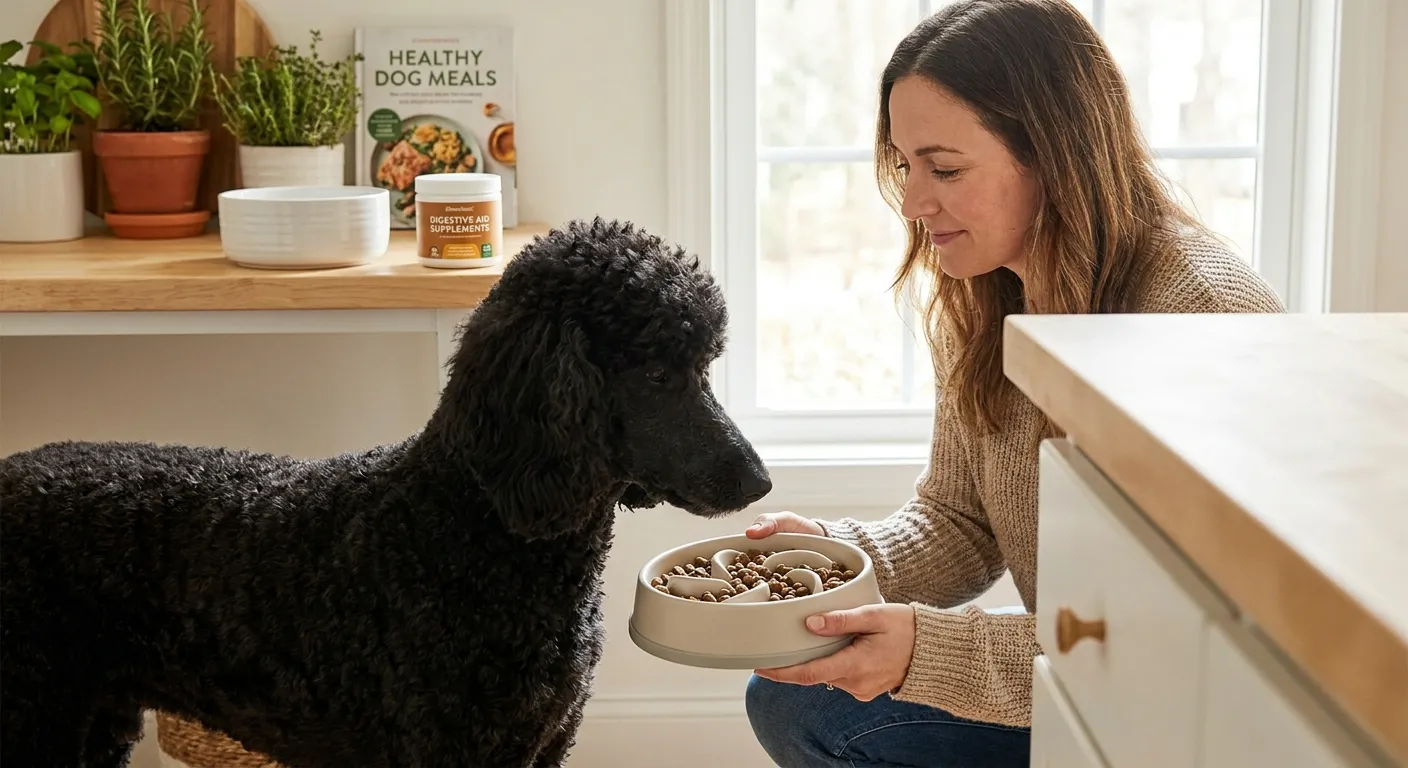
Using a slow-feeder bowl can also be incredibly beneficial. These bowls are designed with obstacles that force your Poodle to eat at a more measured pace. This minimizes gulping and excessive air intake, which are known contributors to bloat. Additionally, ensure your Poodle eats in a calm, stress-free environment. Stress during meal times can lead to hurried eating and increased anxiety, potentially elevating risk. Consider feeding your Poodle separately if you have multiple pets to reduce competition and stress.
The Role of Diet and Hydration in Bloat Prevention
The type of food you feed your Poodle might also play a role in bloat prevention. While research is ongoing, some studies suggest that diets high in fat or those containing citric acid as a preservative could increase risk. Therefore, choosing a high-quality dog food with easily digestible ingredients is often recommended. Discuss your Poodle’s diet with your veterinarian to ensure it meets their specific nutritional needs and supports overall digestive health. For example, some owners opt for foods with smaller kibble sizes for larger breeds, though this too has mixed evidence regarding bloat prevention.
Hydration is equally important. Ensure your Poodle always has access to fresh water. However, discourage them from drinking large quantities rapidly, especially immediately after eating or strenuous exercise. Rapid water intake can introduce excess air into the stomach, thereby increasing bloat risk. Offering smaller amounts of water more frequently, particularly after activity, is a better approach. You can learn more about Poodle Health and Wellness: Proactive Strategies for a Long, Vibrant Life on our site.
Managing Activity Around Meal Times
Another critical strategy involves managing your Poodle’s activity around meal times. Avoid strenuous exercise, excessive play, or stressful situations for at least one hour before and two hours after eating. Rapid movements and elevated heart rates can contribute to the stomach twisting, a key component of GDV. A leisurely walk before a meal is fine, but intense play sessions or agility training should be scheduled well away from feeding times. This allows the stomach to digest food without unnecessary agitation.
Similarly, avoid situations that might cause your Poodle undue stress during or immediately after meals. A calm, predictable routine is best for digestion and overall well-being. If your Poodle tends to get excited easily, consider a quiet space for them to eat and rest afterwards. For more insights on keeping your Poodle active, visit our page on Poodle Exercise Needs: Keeping Your Poodle Active and Engaged.
Understanding Genetic Predisposition and Veterinary Consultations
While preventative measures are crucial, it is important to acknowledge that some Poodles may have a higher genetic predisposition to bloat. If your Poodle has close relatives who have suffered from GDV, their risk might be elevated. This makes a conversation with your veterinarian even more vital. They can provide personalized advice based on your dog’s individual risk factors, including breed, age, and family history.
For high-risk individuals, your veterinarian may discuss a prophylactic gastropexy. This is a surgical procedure that permanently tacks the stomach to the abdominal wall to prevent twisting. While it does not prevent the stomach from bloating, it significantly reduces the likelihood of volvulus, which is the most dangerous aspect of GDV. This procedure is often performed at the same time as spaying or neutering, particularly in breeds known for their susceptibility to bloat. For comprehensive information, consult reputable sources like the American College of Veterinary Surgeons.
Recognizing the Early Signs of Bloat
Despite all preventative efforts, it is still possible for bloat to occur. Therefore, being able to recognize the early signs is paramount. Vigilance can mean the difference between life and death. Look for restlessness, unproductive retching or gagging (as if trying to vomit but nothing comes up), a distended abdomen that may feel hard, excessive drooling, and signs of pain or discomfort. Your Poodle might pace, whine, or repeatedly look at their abdomen.
Additionally, changes in behavior such as lethargy, weakness, or an inability to stand can also indicate a serious problem. If you observe any combination of these symptoms, do not wait. Contact your veterinarian or an emergency veterinary clinic immediately. Time is of the essence when dealing with suspected bloat. Delaying treatment even for an hour can drastically reduce the chances of survival. For more specific guidance on Preventing Poodle Bloat: A Comprehensive Guide for Owners, explore our detailed resource.
Lifestyle Adjustments to Aid in Preventing Poodle Bloat
Beyond feeding and exercise, several other lifestyle adjustments can contribute to a lower risk of bloat. Maintaining a healthy weight for your Poodle is important. Obesity can put additional strain on the digestive system and overall health. Regular, moderate exercise, as opposed to infrequent strenuous bursts, is also beneficial for digestive regularity and muscle tone.
Some owners consider using elevated food bowls, particularly for larger Standard Poodles. The theory is that eating from a raised bowl might reduce the amount of air swallowed during meals. However, scientific evidence on this topic is mixed, with some studies even suggesting a potential increase in risk. Therefore, discuss this option thoroughly with your veterinarian before making a decision. You can find more general advice on Poodle care, including specific tips for Optimal Nutrition for Your Senior Poodle: Keeping Them Vibrant and Healthy.
The Importance of Regular Veterinary Check-ups
Regular veterinary check-ups are fundamental for any Poodle owner. These visits allow your vet to monitor your dog’s overall health, discuss any concerns you might have, and provide up-to-date advice on preventative care, including strategies for preventing poodle bloat. Your veterinarian can assess your Poodle’s specific risk factors based on their age, breed, and health history.
During these check-ups, you can also inquire about the latest research on bloat prevention and discuss whether prophylactic gastropexy is a suitable option for your Poodle. Staying informed and working closely with your vet forms a strong defense against this serious condition. For further general information on canine health, the American Veterinary Medical Association is an excellent resource.
Conclusion: Proactive Steps for a Happy, Healthy Poodle
Preventing Poodle bloat requires a diligent and informed approach from every owner. While no strategy guarantees complete immunity, being proactive significantly reduces the risk of this devastating condition. By implementing thoughtful feeding routines, managing activity around meal times, understanding your Poodle’s genetic predispositions, and maintaining open communication with your veterinarian, you are taking the best possible steps to protect your beloved companion.
Remember, early detection and immediate veterinary intervention are critical if bloat is suspected. Your vigilance and commitment to preventative care are the most powerful tools in ensuring your Poodle lives a long, happy, and healthy life, free from the threat of GDV. Keep these strategies in mind to maintain the well-being of your cherished Poodle.
FAQ
What are the primary risk factors for bloat in Poodles?
Primary risk factors include being a deep-chested breed (especially Standard Poodles), eating one large meal daily, eating rapidly, strenuous exercise before or after meals, and a family history of GDV. Stress and certain dietary components may also contribute.
How can I adjust my Poodle’s feeding schedule to minimize bloat risk?
To minimize bloat risk, feed your Poodle two to three smaller meals per day instead of one large meal. This helps prevent the stomach from becoming overly full and reduces the amount of air swallowed during eating. Using a slow-feeder bowl is also highly recommended.
Are raised food bowls beneficial for preventing bloat in deep-chested dogs?
The evidence regarding raised food bowls and their effect on preventing canine bloat is mixed. Some studies suggest they might increase risk, while others show no significant impact. It is best to discuss this option with your veterinarian to determine if it is appropriate for your individual Poodle.
What immediate actions should I take if I suspect my Poodle has bloat?
If you suspect your Poodle has bloat, seek immediate veterinary attention. This is a life-threatening emergency. Do not attempt home remedies. Contact your veterinarian or the nearest emergency veterinary clinic without delay. Prompt treatment is crucial for survival.
Is there a surgical option to prevent the stomach from twisting?
Yes, a surgical procedure called prophylactic gastropexy can prevent the stomach from twisting (volvulus). In this procedure, the stomach is permanently tacked to the abdominal wall. While it doesn’t prevent bloating, it significantly reduces the most dangerous aspect of GDV. It is often recommended for high-risk breeds and can be performed during spaying or neutering.