
Welcoming a Poodle puppy into your home is an incredibly exciting time! These intelligent, charming dogs, whether Standard, Miniature, or Toy, bring immense joy. To ensure your new furry family member thrives, a solid foundation in Poodle puppy care guide essentials is crucial. This article will walk you through everything from establishing routines and basic training to initial grooming and proper nutrition, setting both of you up for a lifetime of happiness.
Understanding Poodle Puppy Development
Poodle puppies grow rapidly in their first year, both physically and mentally. During this critical period, they learn about their world, develop social skills, and form lasting bonds. Early experiences shape their temperament and behavior as adults. Focus on positive reinforcement, consistent boundaries, and plenty of safe exploration to foster a confident, well-adjusted Poodle. Remember, each Poodle size has slightly different growth rates, but the developmental milestones are generally similar across the breed. For more on this, consider exploring Standard, Miniature, Toy: Understanding Poodle Size Differences & Care Needs.
Essential Nutrition for Growing Poodles
Proper nutrition is the cornerstone of a healthy Poodle puppy. Choose a high-quality puppy food specifically formulated for small, medium, or large breeds, depending on your Poodle’s expected adult size. Look for ingredients that list real meat as the first component, and avoid excessive fillers or artificial additives. Feed your puppy multiple small meals throughout the day, following the guidelines on the food packaging and consulting your veterinarian for personalized advice. Hydration is equally important; always ensure fresh, clean water is available. Furthermore, you might find valuable insights in our guide to Fueling Your Poodle: A Guide to Choosing the Best Dry Food for Optimal Health.
Mastering Basic Poodle Puppy Training
Starting training early is key for Poodles, given their high intelligence. Begin with simple commands like ‘sit,’ ‘stay,’ and ‘come’ using positive reinforcement methods such as treats, praise, and toys. Consistency is paramount. Short, frequent training sessions are more effective than long, infrequent ones. Socialization is another vital component; expose your puppy to various sights, sounds, people, and other vaccinated dogs in a controlled, positive manner to prevent fear or aggression later on.
Crate Training: A Safe Haven for Your Poodle
Crate training is an invaluable tool for house-training, managing separation anxiety, and providing your Poodle with a safe, personal space. Introduce the crate gradually, making it a positive experience with treats and comfortable bedding. Never use the crate as punishment. Most puppies will quickly learn to appreciate their den. It also aids in establishing a consistent sleep schedule and preventing destructive behaviors when you can’t directly supervise them. If your puppy struggles with being alone, our article on Home Alone: Understanding and Managing Poodle Separation Anxiety offers further strategies.
Initial Grooming and Health Checks
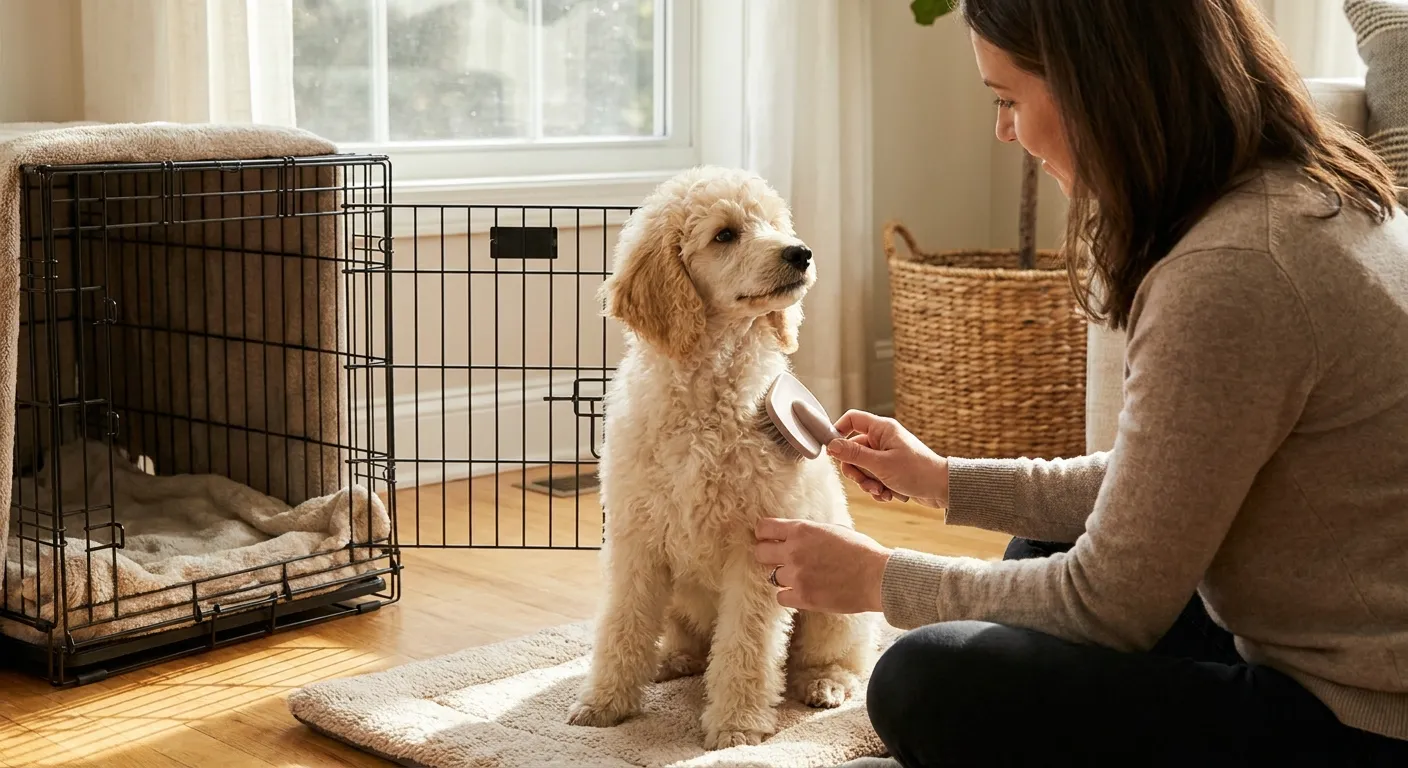
Poodles require regular grooming due to their unique non-shedding, curly coat. Start introducing grooming tools like brushes and combs early to get your puppy accustomed to the process. This early exposure makes future grooming sessions much easier. Gently brush their coat daily, even for short periods. Furthermore, pay attention to their ears, teeth, and nails. Regular checks at home, coupled with routine veterinary visits, are essential for maintaining your Poodle’s overall health. Your vet can provide a comprehensive health assessment and advise on vaccinations and parasite prevention. For detailed brushing techniques, refer to Essential Poodle Grooming: A Step-by-Step Guide to Brushing Your Poodle’s Coat.
Establishing a Grooming Routine
A consistent grooming routine is vital for preventing matting and keeping your Poodle’s coat healthy. Begin with short, positive sessions. Use a soft slicker brush and a metal comb to work through the coat. Introduce baths gradually using a puppy-specific shampoo. Dry your Poodle thoroughly to prevent skin issues. Most Poodle puppies will need their first professional groom around 12-16 weeks of age, focusing on a sanitary trim and tidying up. This early experience helps them become comfortable with the grooming environment.
Veterinary Care and Vaccinations
Upon bringing your Poodle puppy home, schedule a visit with your veterinarian. They will conduct a thorough examination, discuss vaccination schedules, deworming, and flea/tick prevention. Regular vet check-ups are crucial for monitoring growth and development. Discuss any concerns you have, from feeding habits to behavior. Your vet is an invaluable resource for ensuring your puppy receives the best possible start in life.
Advanced Poodle Puppy Care Guide Tips
As your Poodle puppy grows, their needs will evolve. Continue to build upon the foundational training and socialization you’ve established. This comprehensive Poodle puppy care guide emphasizes ongoing learning. Consider enrolling in puppy classes for continued socialization and to strengthen the bond between you and your dog. These classes often address common puppy challenges and provide an excellent environment for learning new skills.
Socialization Beyond the Basics
While early socialization is important, it is an ongoing process. Continue to expose your Poodle puppy to new environments, sounds, and friendly people. Introduce them to different types of surfaces, car rides, and supervised interactions with well-behaved, vaccinated dogs. Positive experiences during this period help shape a confident and resilient adult Poodle. Remember, the goal is always positive association, never forced or overwhelming situations.
Exercise and Mental Stimulation
Poodles are energetic and intelligent dogs, requiring both physical exercise and mental stimulation. Daily walks, playtime in a secure yard, and interactive toys are essential. Puzzle toys and training games can help keep their minds engaged, preventing boredom and potential destructive behaviors. Tailor the exercise to your Poodle’s size and age, ensuring it’s appropriate for their developing joints. This Poodle puppy care guide highlights the importance of balancing activity with rest.
Addressing Common Puppy Challenges
Even with the best preparation, Poodle puppies can present challenges. Nipping, chewing, and house-training accidents are common. Patience and consistency are your best tools. Redirect nipping with appropriate chew toys. Puppy-proof your home to prevent destructive chewing. For house-training, establish a consistent schedule and reward successes. This Poodle puppy care guide aims to equip you with the knowledge to navigate these hurdles effectively.
House-Training Success
House-training requires a consistent routine. Take your Poodle puppy out frequently – first thing in the morning, after meals, before bed, and after naps or playtime. Praise and reward them immediately when they relieve themselves outside. Clean up accidents indoors thoroughly to eliminate odors that might encourage repeat incidents. Crate training can significantly aid in house-training, as dogs are naturally inclined not to soil their den. For a detailed approach, explore our article on Mastering Potty Training: A Complete Guide for Your Poodle Puppy.
Managing Nipping and Chewing
Puppies explore the world with their mouths, so nipping and chewing are natural behaviors. Provide a variety of appropriate chew toys. When your puppy nips you, yelp loudly to mimic a littermate’s reaction, then immediately withdraw attention. Redirect their chewing to a toy. Consistency is key to teaching bite inhibition and what is acceptable to chew. Ensure they have plenty of engaging toys to satisfy their natural urges.
The Importance of Early Socialization and Training
The first few months of your Poodle puppy’s life are crucial for developing their personality and behavior. Early and positive socialization to various people, places, sounds, and other vaccinated animals is paramount. This helps prevent fear-based aggression or shyness later in life. Furthermore, consistent positive reinforcement training builds a strong bond and teaches your puppy appropriate behaviors. This comprehensive Poodle puppy care guide emphasizes that a well-socialized and trained Poodle is a joy to live with.
Finding a Reputable Breeder
Starting with a healthy, well-socialized puppy from a reputable breeder makes a significant difference. A good breeder will have provided early socialization and proper veterinary care, setting the stage for a well-adjusted puppy. They will also be a valuable resource for advice as your puppy grows. Choosing a responsible breeder is a critical first step in your Poodle puppy care journey. If you’re still looking, our guide on Choosing Wisely: How to Find a Reputable Poodle Breeder can help.
Long-Term Poodle Puppy Care Guide Considerations
As your Poodle transitions from puppyhood to adolescence and adulthood, their care needs will continue to evolve. This Poodle puppy care guide serves as a foundation, but ongoing commitment to their health, training, and well-being is essential. Continue with regular vet check-ups, maintain a balanced diet, and ensure they receive adequate exercise and mental stimulation. Your Poodle will thrive with consistent love and attention throughout their life.
Lifelong Learning and Bonding
Training should not stop after puppyhood. Poodles enjoy learning and excel in activities like agility, obedience, and even therapy work. Continuing to train and engage with your Poodle keeps their minds sharp and strengthens your bond. Regular walks and playtime are also crucial for their physical and mental health. A Poodle puppy care guide is just the beginning; the journey of companionship lasts a lifetime.
Resources for Poodle Owners
Beyond this Poodle puppy care guide, there are many resources available to Poodle owners. Reputable dog training clubs, breed-specific forums, and your veterinarian can offer ongoing support and advice. Organizations like the Poodle Club of America provide valuable information and connect Poodle enthusiasts. Staying informed and connected within the Poodle community can enhance your experience as a dog parent. For instance, the American Kennel Club (AKC) offers extensive breed information, and the Poodle Club of America is a great resource for specific breed insights and events.
Conclusion
Bringing a Poodle puppy into your life is a rewarding experience. By following this comprehensive Poodle puppy care guide, you are establishing a strong foundation for your new companion’s health, happiness, and well-being. From understanding their development and providing proper nutrition to mastering basic training, including crate training, and establishing a regular grooming routine, every step contributes to raising a well-adjusted and joyful Poodle. Remember, consistency, patience, and positive reinforcement are key. Enjoy every moment with your intelligent and affectionate Poodle puppy!
FAQ
How often should I feed my Poodle puppy?
Poodle puppies generally need to be fed three to four small meals a day until they are about six months old. After that, you can typically transition to two meals a day. Always follow the guidelines on your chosen puppy food packaging and consult your veterinarian for personalized advice based on your puppy’s specific needs and growth rate.
What’s the best way to start house-training a Poodle pup?
Successful house-training for your Poodle pup relies on consistency and a routine. Take your puppy out frequently, especially after waking up, eating, and playing. Reward them immediately with praise and a treat when they eliminate outside. Crate training can also be very effective, as puppies naturally avoid soiling their sleeping area. Clean indoor accidents thoroughly to remove odors.
When should my Poodle puppy get their first professional groom?
Most Poodle puppies are ready for their first professional groom between 12 to 16 weeks of age. This initial groom is often a gentle introduction, focusing on a sanitary trim, nail clipping, and light tidying. It helps them get accustomed to the sounds and sensations of a grooming salon, making future visits less stressful. Regular home brushing should start even earlier.
How much exercise does a young Poodle require?
Poodle pups, regardless of size, are energetic and need regular exercise. Daily walks, supervised playtime in a secure area, and interactive games are essential. The amount will vary by individual puppy and size. Avoid over-exercising young puppies, especially larger Standard Poodles, to protect their developing joints. Short, frequent play sessions are better than one long, strenuous activity.
Are Poodles good with children and other pets?
Poodles are generally known for their good temperament and can be excellent family pets. However, early socialization is crucial. Exposing your Poodle puppy to children and other pets in a positive, controlled manner from a young age helps them develop into well-adjusted companions. Always supervise interactions between puppies and young children or other animals to ensure everyone’s safety and positive experiences.