
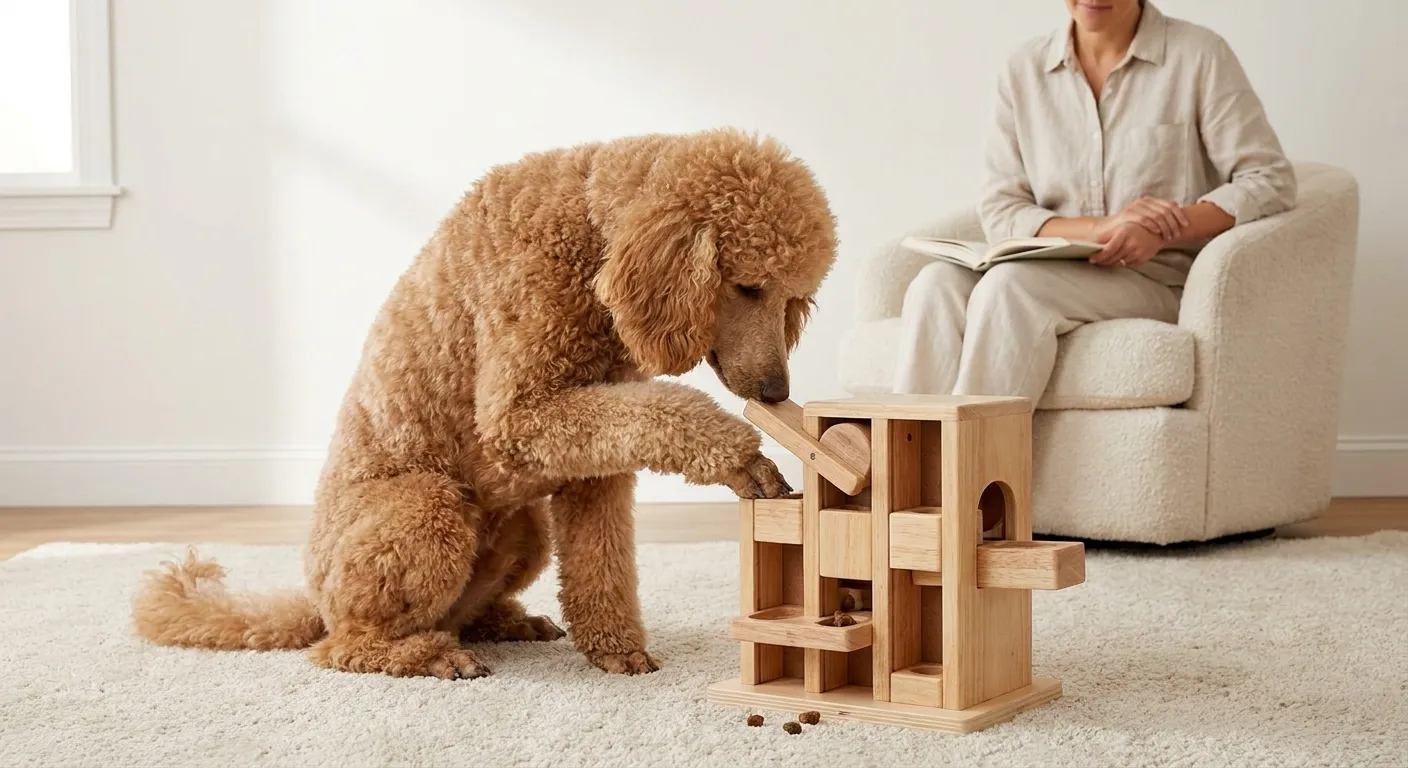
Poodles consistently rank among the most intelligent dog breeds, often second only to Border Collies. This exceptional intelligence is a hallmark of the breed, making them highly trainable and adaptable companions. However, this gift comes with a responsibility: a brilliant mind that isn’t adequately challenged can quickly become a bored mind, leading to undesirable behaviors. To truly enrich poodle’s mind, owners must move beyond basic obedience and tap into their profound cognitive abilities, aligning perfectly with the growing trend of pet humanization and holistic wellness.
Understanding the Poodle Brain: More Than Just ‘Smart’
Originally bred as water retrievers, Poodles possess an innate problem-solving ability, keen observation skills, and a remarkable memory. Their sensitivity also means they thrive on positive reinforcement and clear communication. However, their low boredom threshold means repetitive tasks or a lack of mental engagement can quickly lead to frustration, manifesting as destructive chewing, excessive barking, digging, or even anxiety. The average annual household spending on pets in the U.S. reaching $1,445 per pet by 2026 highlights a willingness to invest in comprehensive care, including mental well-being.
Beyond Basic Obedience: Advanced Mental Stimulation Techniques
While ‘sit’ and ‘stay’ are foundational, truly intelligent poodles crave more. Here are advanced strategies to keep their brains buzzing:
1. Dive into Dog Sports and Advanced Training
Poodles excel in structured activities that combine physical and mental effort:
- Agility: Navigating obstacle courses demands focus, speed, and teamwork. This sport is a fantastic way to challenge your poodle both physically and mentally.
- Rally Obedience: Following a course of numbered signs, performing specific obedience exercises at each station, requires precision and attention. It builds excellent communication between you and your dog.
- Scent Work: Utilizing their powerful noses to locate hidden odors is incredibly engaging and taps into their natural instincts. Moreover, it’s a sport suitable for dogs of all ages and energy levels.
- Complex Tricks: Teaching multi-step tricks (e.g., ‘put toys in a box,’ ‘fetch a specific item by name’) provides significant mental exercise. Furthermore, it strengthens your bond with your poodle.
2. Strategic Use of Puzzle Toys and Interactive Feeders
Don’t just hand over a puzzle toy; rotate them and increase difficulty. Start with easy puzzles and gradually introduce more complex ones. Consider food-dispensing toys that require manipulation or ‘snuffle mats’ for foraging. Making mealtime a mental exercise prevents gulping and adds engagement. For a wide selection of engaging options, explore our Toys & Enrichment section.
3. Give Your Poodle a ‘Job’
Poodles thrive when they feel useful. Assigning them small, consistent tasks can fulfill this need:
- Retrieving: Teach them to fetch the newspaper, your slippers, or specific items by name. This taps into their natural retrieving instincts.
- Carrying: Have them carry a lightweight doggy backpack on walks or bring in small groceries. Ensure the weight is appropriate for their size and health.
- ‘Helping’ with Chores: Simple tasks like picking up dropped items or putting toys away can make them feel like a valuable part of the family. Consequently, it builds their confidence.
The Importance of Variety and Consistency to Challenge a Poodle’s Mind
To truly keep your poodle engaged, variety is crucial. Introducing new challenges regularly prevents boredom and keeps their minds sharp. However, consistency in training and routine is equally important. Daily mental exercises, even short ones, are more effective than sporadic, intense sessions. For example, a 15-minute training session each day can be more beneficial than an hour-long session once a week.
Furthermore, understanding your poodle’s individual preferences is key. Some poodles might adore agility, while others might prefer the quiet focus of scent work. Observing their responses to different activities helps tailor a mental enrichment program that best suits them. This personalized approach will undeniably help to truly enrich poodle’s mind.
Integrating Cognitive Games into Daily Life
Beyond structured activities, there are many ways to integrate cognitive stimulation into your poodle’s everyday routine. Simple games can make a big difference.
- Hide-and-Seek: This classic game is not just for children. Hide yourself and call your poodle, rewarding them enthusiastically when they find you. It uses their tracking skills and strengthens their recall.
- Find the Treat: Hide treats around the house or yard and encourage your poodle to sniff them out. Start with easy hiding spots and gradually increase the difficulty. This activity stimulates their sense of smell and problem-solving abilities.
- Name Game: Teach your poodle the names of their toys. Start with two distinct toys, say