
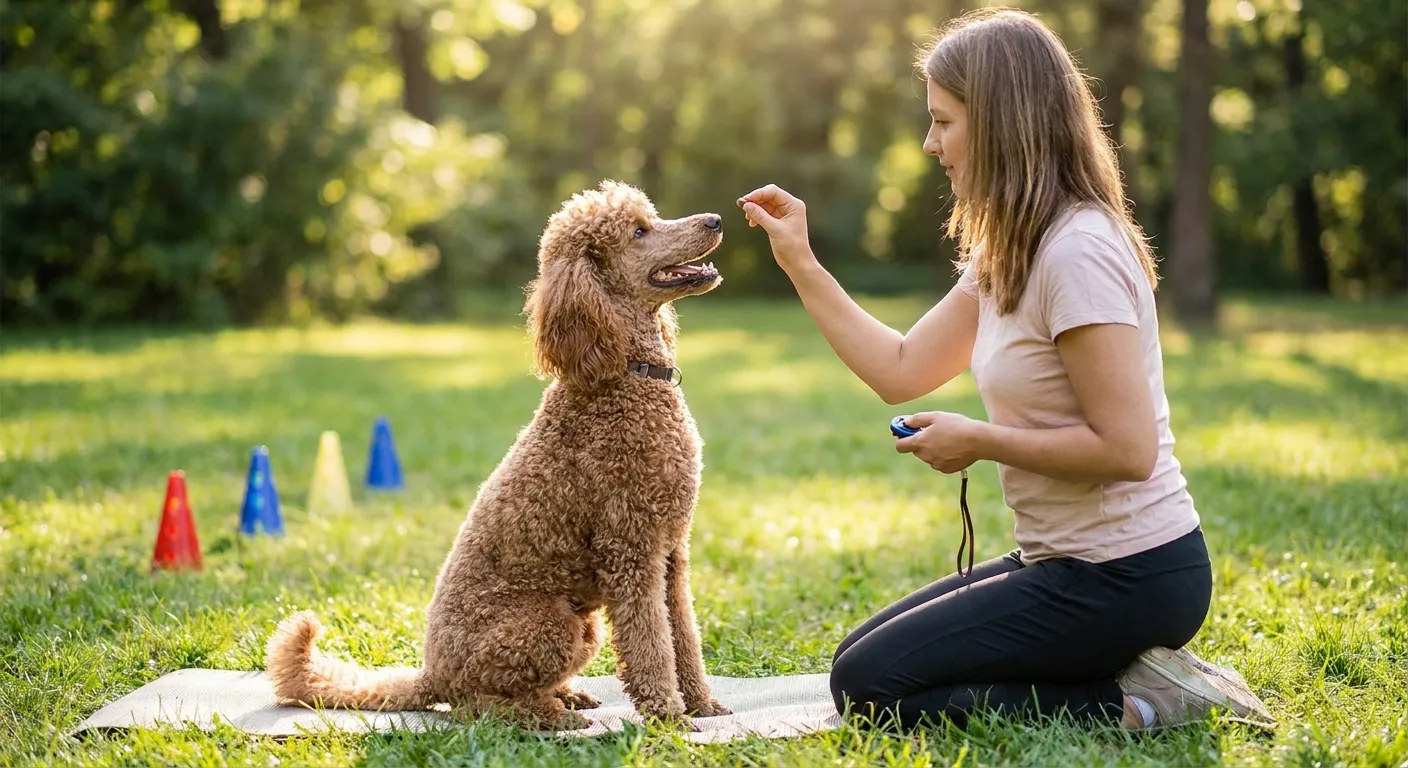
Poodles are renowned for their intelligence, making them highly trainable companions. Implementing effective Poodle training methods from an early age is crucial for fostering a well-behaved and happy dog. Their eagerness to please, combined with their sharp minds, means they can quickly grasp new commands and routines. Therefore, using consistent, positive reinforcement techniques is essential for success.
A well-trained Poodle integrates seamlessly into family life. Moreover, proper training provides vital mental stimulation, preventing boredom and potential behavioral issues. Understanding your Poodle’s unique personality and learning style will further enhance your training journey. Consequently, you can tailor your approach for optimal results.
Essential Poodle Training Methods
Positive reinforcement is the cornerstone of successful Poodle training. This involves rewarding desired behaviors with treats, praise, or toys immediately after they occur. For example, when your Poodle sits on command, offer a small, high-value treat and enthusiastic verbal praise. Consistency is key; ensure all family members use the same commands and rewards to avoid confusing your dog. Start with basic commands like “sit,” “stay,” “come,” and “down.” Practice these commands in a quiet environment before moving to more distracting locations. Short, frequent training sessions (5-10 minutes) are more effective than long, infrequent ones, as Poodles, like all dogs, have limited attention spans.
Furthermore, early socialization is a critical component of effective Poodle training methods. Exposing your Poodle puppy to various sights, sounds, people, and other friendly dogs helps them develop into confident, well-adjusted adults. Enroll in puppy classes to provide structured socialization opportunities and learn foundational obedience skills. These classes also offer an excellent chance to bond with your new companion and receive guidance from professional trainers. In addition, consistent exposure to new experiences in a positive way will help prevent fear-based behaviors later in life.
Clicker Training for Poodles
Clicker training is a highly effective positive reinforcement technique that many Poodle owners find beneficial. A clicker provides a precise marker for the exact moment your Poodle performs the desired behavior. Subsequently, you follow the click with a reward. This precision helps your dog understand exactly what action earned them the reward. To begin, “charge” the clicker by clicking and immediately giving a treat several times. Your Poodle will quickly associate the click with good things. Then, use the click to mark behaviors like sitting, lying down, or staying. This method enhances communication between you and your Poodle, making learning faster and more enjoyable for both of you.
Leash Training and Walking Etiquette
Teaching your Poodle to walk nicely on a leash is vital for enjoyable outings. Begin leash training indoors or in a quiet yard. Allow your Poodle to get accustomed to wearing a collar or harness. Then, attach the leash and let them drag it for short periods under supervision. When you start walking, reward loose-leash walking with treats and praise. If your Poodle pulls, stop walking until the leash slackens, then continue. This teaches them that pulling gets them nowhere. For example, a front-clip harness can be very helpful in discouraging pulling by redirecting their momentum. Consistency is paramount; every walk is a training opportunity.
Overcoming Common Training Challenges
Even with intelligent breeds like Poodles, challenges can arise. Common issues include leash pulling, excessive barking, and house-training accidents. For leash pulling, consider using a front-clip harness or head halter, and practice loose-leash walking in low-distraction areas. Address excessive barking by identifying the trigger (e.g., mailman, other dogs) and teaching an alternative behavior, such as going to their bed on command. House-training requires vigilance: regular potty breaks, immediate rewards for success outdoors, and supervising your Poodle indoors to prevent accidents. Never punish accidents, as this can lead to fear and secrecy. Instead, clean thoroughly to remove odors that might encourage repeat marking.
Addressing Separation Anxiety
Poodles are social dogs and can sometimes develop separation anxiety, manifesting as destructive chewing, excessive barking, or house-soiling when left alone. To mitigate this, start by leaving your Poodle for very short periods, gradually increasing the duration. Provide engaging puzzle toys or long-lasting chews to keep them occupied. Furthermore, ensure they get plenty of exercise before you leave, as a tired Poodle is a calm Poodle. Avoid making a big fuss when you leave or return; this helps to normalize your departures and arrivals. If severe, consult a professional dog behaviorist. For more detailed information, consider resources like ASPCA’s guide on separation anxiety.
Managing Nipping and Biting in Poodles
Puppy nipping is a normal part of development, but it needs to be managed to prevent it from becoming a problem. Poodles, especially as puppies, explore their world with their mouths. When your Poodle nips too hard, yelp loudly and withdraw attention immediately. This teaches them bite inhibition. Offer appropriate chew toys as alternatives. Consistency from all family members is crucial. If nipping persists or escalates, seek guidance from a professional trainer. Remember, these Poodle training methods are about guiding, not punishing.
Potty Training Your Poodle
Successful potty training relies on consistency and a routine. Establish a regular schedule for potty breaks, especially after waking up, after meals, and before bedtime. Take your Poodle to the designated potty spot, and reward them immediately with praise and a treat when they eliminate. Supervise your Poodle indoors and consider using a crate, which can aid in house-training because dogs are naturally reluctant to soil their sleeping area. Clean any accidents thoroughly with an enzymatic cleaner to eliminate odors. This prevents your Poodle from being drawn back to the same spot. Patience is truly a virtue when it comes to potty training, but these Poodle training methods will yield results.
Advanced Poodle Training Methods and Activities
Once your Poodle has mastered basic obedience, you can explore more advanced Poodle training methods. These activities provide excellent mental and physical stimulation, further strengthening your bond. Consider teaching complex tricks, such as