Toy Poodles may be small in size, but their personalities are anything but tiny. Understanding toy poodle temperament traits helps you decide whether this intelligent and lively breed fits your home and lifestyle. While their elegant appearance often draws attention first, their emotional depth and sharp minds truly define them.
Because personality shapes daily life with a dog, knowing what to expect prevents surprises. Toy Poodles bring affection, alertness, and impressive intelligence into nearly any household.
Core Personality Characteristics
At the heart of toy poodle temperament traits lies intelligence. This breed ranks among the smartest dogs worldwide. As a result, they learn commands quickly and adapt to new environments with ease.
However, intelligence comes with sensitivity. Toy Poodles respond strongly to tone and body language. Therefore, harsh training methods may create anxiety or fear. Positive reinforcement works far better.
Additionally, these dogs form strong bonds with their owners. Loyalty often turns into attachment, which makes them highly devoted companions. While this devotion feels rewarding, it also requires mindful socialization.
Although small, they carry themselves confidently. That confidence often translates into alert, watchful behavior.
Intelligence and Trainability
Because they excel in problem-solving, Toy Poodles thrive during training sessions. Their sharp memory allows them to master commands quickly. Consequently, many succeed in obedience and agility competitions.
Yet mental stimulation remains essential. Without structured learning, boredom may lead to unwanted behaviors. Puzzle toys and short training games prevent frustration.
In fact, toy poodle temperament traits often include eagerness to please. This desire makes them responsive to consistent routines.
Even first-time owners can succeed with this breed if they stay patient and structured. Consistency creates clarity, and clarity builds confidence.
Emotional Sensitivity and Attachment
Toy Poodles display deep emotional awareness. They sense shifts in mood and often respond with comforting behavior. As a result, many owners describe them as intuitive companions.
However, this sensitivity can increase separation anxiety. Because they bond strongly, extended isolation may cause stress.
Early independence training helps balance attachment. Gradual alone-time practice reduces emotional reliance.
Despite their small size, these dogs need stable leadership. Clear boundaries help them feel secure.
Understanding toy poodle temperament traits in emotional contexts allows owners to prevent overdependence while maintaining close bonds.
Social Behavior With Families and Strangers
Toy Poodles generally interact well with family members. They enjoy interactive play and affection. Therefore, households that offer attention suit them best.
With strangers, they may appear cautious at first. Early exposure builds confidence. Socialization during puppyhood reduces timid reactions later.
Children who understand gentle handling typically bond well with them. However, supervision remains important due to their delicate frame.
Because they stay alert, Toy Poodles sometimes bark at unfamiliar sounds. Training can manage this behavior effectively.
Energy Levels and Activity Needs
Although small, they carry moderate energy levels. Daily walks and short play sessions keep them balanced. Consequently, they adapt well to apartment living when exercise remains consistent.
Mental exercise matters just as much as physical movement. Because toy poodle temperament traits include high intelligence, boredom develops quickly without stimulation.
Interactive games, trick training, and scent work provide healthy outlets.
Without regular engagement, frustration may surface as barking or pacing. Therefore, structured activity supports emotional stability.
Balanced energy makes them flexible companions for both active individuals and quieter households.
Compatibility With Other Pets
Most Toy Poodles coexist peacefully with other pets when introduced properly. Early socialization shapes positive interaction patterns.
However, their alert nature may cause brief initial caution. Slow introductions help build comfort.
Because they crave companionship, many thrive alongside another gentle dog. Still, supervision ensures safety, especially with larger breeds.
Understanding toy poodle temperament traits in multi-pet homes allows smoother transitions and fewer conflicts.
Common Behavioral Challenges
No breed is without challenges. Toy Poodles may develop excessive barking if under-stimulated. Additionally, separation distress can emerge without proper independence training.
Some individuals display stubborn moments. However, consistency typically resolves these phases quickly.
Overprotectiveness sometimes appears in highly bonded dogs. Social exposure minimizes this tendency.
Fortunately, their intelligence makes behavioral correction manageable. Positive reinforcement yields strong results.
Addressing issues early strengthens the positive aspects of toy poodle temperament traits.
Adaptability to Different Living Environments
Toy Poodles adapt surprisingly well to various settings. Whether in apartments or houses, they adjust as long as exercise remains consistent.
Because they value human interaction, they prefer indoor living. Extended outdoor isolation does not suit them.
Their small size simplifies travel. Consequently, many owners bring them on trips comfortably.
Despite adaptability, routine remains important. Predictable feeding, walking, and play schedules promote calm behavior.
When structure stays consistent, this breed flourishes almost anywhere.
Grooming and Its Effect on Behavior
Regular grooming influences comfort and mood. Their curly coat requires brushing and trimming. When neglected, matting can cause discomfort and irritability.
Early grooming exposure prevents fear. Gentle handling builds trust during grooming sessions.
Because toy poodle temperament traits include sensitivity, positive grooming experiences strengthen confidence.
Clean, comfortable dogs tend to behave more calmly overall.
Ideal Owner Personality and Lifestyle
Toy Poodles thrive with attentive owners. Individuals who enjoy interaction and training make ideal companions.
Busy households can still succeed if daily engagement remains consistent. However, long work hours without enrichment may increase anxiety.
Retirees, families, and professionals who work from home often form strong bonds with this breed.
Patience and emotional awareness help owners match toy poodle temperament traits effectively.
Long-Term Temperament Development
Puppy personality continues to evolve through adolescence. Early training lays the foundation for adult stability.
Because intelligence matures quickly, adolescence may bring testing behaviors. Calm leadership guides them through this phase.
Adult Toy Poodles typically settle into balanced, affectionate companions. However, continued mental stimulation prevents regression.
Consistent structure enhances the best elements of toy poodle temperament traits over time.
Training Techniques That Work Best
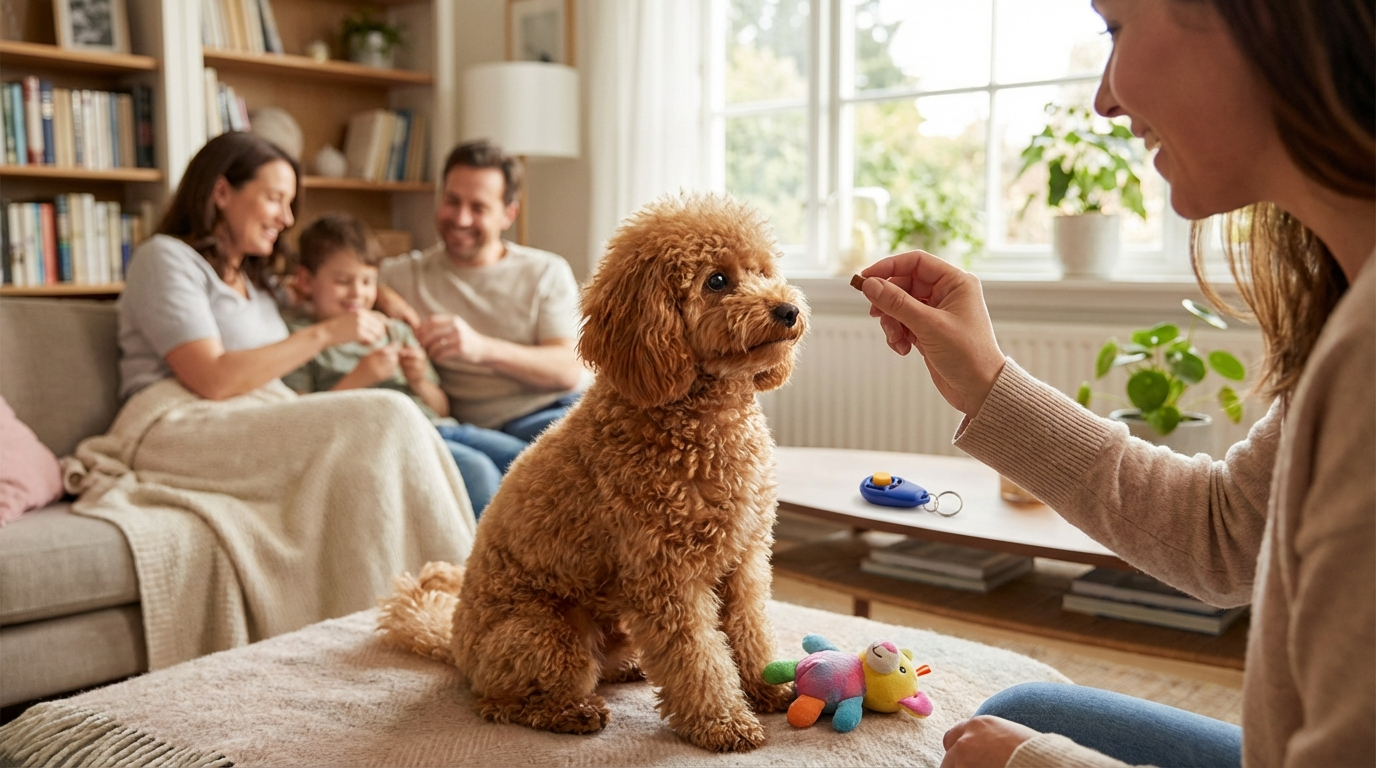
Positive reinforcement remains the gold standard. Reward-based methods build trust and cooperation.
Short, engaging sessions prevent boredom. Variety keeps their attention sharp.
Avoid harsh correction. Sensitive dogs respond poorly to negative tone.
Clicker training often works well because it provides clear communication.
When owners align methods with toy poodle temperament traits, progress happens quickly.
Health and Its Impact on Behavior
Health influences personality. Pain or discomfort may alter behavior temporarily.
Routine veterinary checkups support overall well-being. Balanced nutrition fuels energy and cognitive clarity.
Regular dental care also matters. Dental pain can affect mood and appetite.
Monitoring health helps maintain stable toy poodle temperament traits throughout life.
Conclusion: A Small Dog With a Big Personality
Toy Poodles combine intelligence, affection, and alertness in a compact frame. Toy poodle temperament traits reflect emotional depth and quick learning ability. When guided with patience and structure, they become devoted companions.
Although sensitivity requires thoughtful handling, their loyalty and adaptability reward attentive owners. With consistent training, socialization, and mental stimulation, this breed thrives in many environments.
Understanding personality before adoption ensures long-term harmony. Ultimately, this elegant little dog offers both companionship and brilliance in equal measure.
FAQ
- Are Toy Poodles good for first-time owners?
Yes, their intelligence and trainability make them manageable for beginners who use consistent, positive methods. - Do these dogs bark excessively?
They may bark at unfamiliar sounds, but proper training and stimulation usually control the behavior. - Can Toy Poodles live in apartments?
Absolutely. With daily walks and mental enrichment, they adapt well to smaller living spaces. - How do they handle being alone?
They bond deeply, so gradual independence training helps prevent separation anxiety. - Are they suitable for families with children?
Yes, when children handle them gently and respectfully, they form strong, affectionate bonds.