
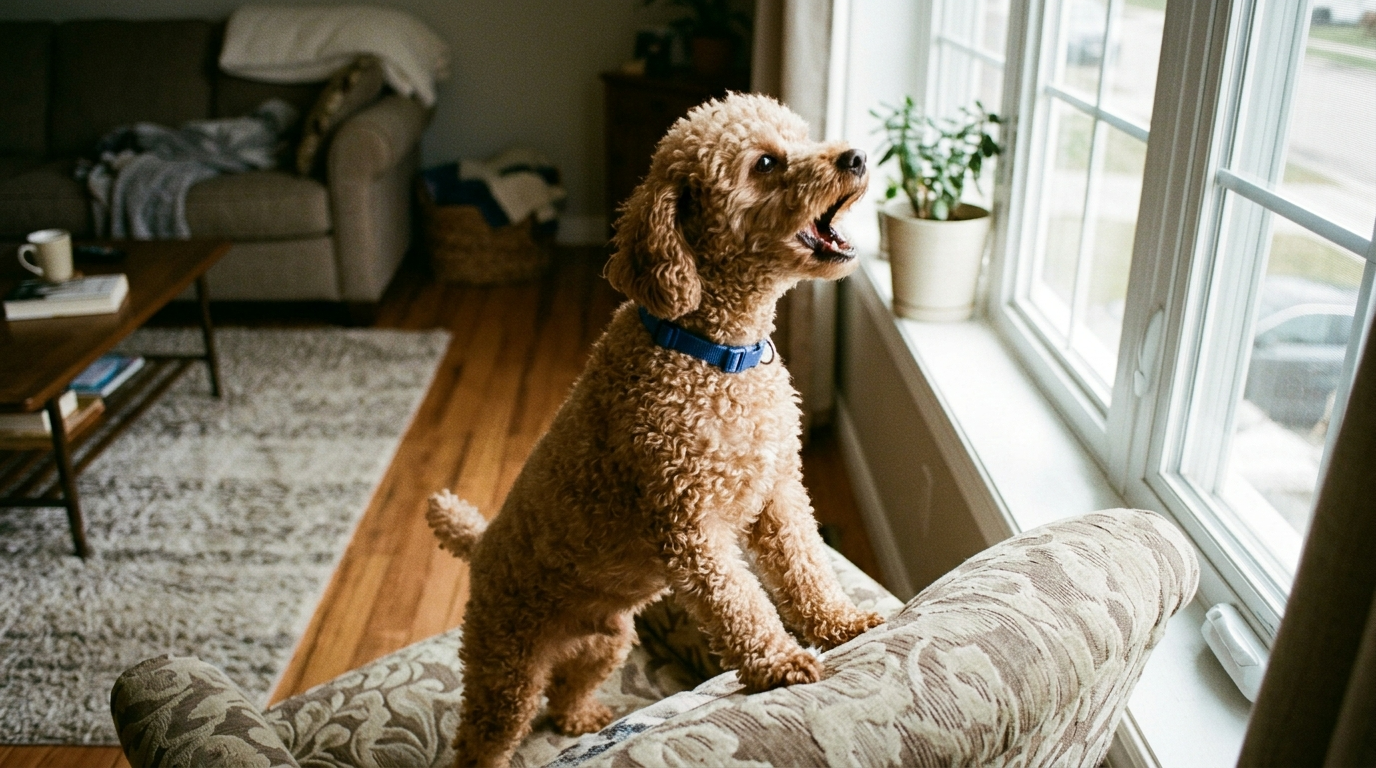
Toy Poodle excessive barking can quickly turn from a small annoyance into a daily frustration. Although this breed is intelligent and loyal, frequent vocalizing often signals unmet needs. Therefore, understanding the root cause is the first step toward lasting improvement.
Many owners assume barking is just part of the breed. However, constant noise usually reflects boredom, anxiety, or overstimulation. Once you identify the trigger, you can apply focused training methods that truly work.
In this guide, you will learn why Toy Poodles bark so much and how to correct the behavior safely. More importantly, you will discover calm, practical strategies that improve communication between you and your dog.
Why Toy Poodles Bark More Than Other Small Breeds
Toy Poodles are alert, intelligent, and deeply attached to their owners. Because of that strong bond, they react quickly to environmental changes. While this makes them excellent watchdogs, it can also fuel Toy Poodle excessive barking.
First, this breed has high mental energy. Without proper stimulation, that energy turns into vocal behavior. Second, they are naturally vigilant. Even minor sounds can trigger alert barking. Finally, separation anxiety often plays a major role.
Unlike some small breeds that bark out of habit, Toy Poodles often bark with purpose. Therefore, punishment rarely works. Instead, you must address the emotional or environmental trigger.
When you understand these traits, training becomes easier. You shift from stopping noise to solving the real issue.
Common Triggers Behind Constant Barking
Before applying solutions, identify what sparks the behavior. In many cases, Toy Poodle excessive barking stems from one of five causes.
1. Boredom and Lack of Mental Stimulation
Toy Poodles are highly intelligent. Consequently, repetitive days without challenges create frustration. That frustration often shows up as constant barking.
Interactive toys, scent games, and training drills reduce mental buildup. Even short daily sessions make a difference.
2. Separation Anxiety
Because Toy Poodles bond strongly, they struggle when left alone. As a result, barking may begin the moment you leave the house.
Signs include pacing, scratching doors, and whining. If anxiety drives the behavior, you must use gradual desensitization rather than correction.
3. Attention-Seeking Behavior
Sometimes, barking works. If you respond each time, your dog learns that noise brings rewards.
Although it feels harsh, ignoring attention barking is necessary. Otherwise, the pattern continues.
4. Territorial or Alert Barking
Toy Poodles often bark at strangers, delivery drivers, or passing cars. Their protective instincts are strong.
In this case, the goal is controlled alerting, not silence. Teach a “quiet” command after the first bark.
5. Overstimulation
Busy households, loud televisions, or frequent visitors can overwhelm small dogs. When overstimulated, Toy Poodles vocalize to release tension.
Creating a calm rest area reduces this trigger significantly.
Toy Poodle Excessive Barking Solutions That Work Long Term
Quick fixes rarely solve the issue. Instead, consistency and calm training build reliable results. The following Toy Poodle excessive barking solutions address the root problem, not just the sound.
Establish a Clear “Quiet” Command
First, teach your dog to bark on command. This may seem counterintuitive. However, once they understand “speak,” you can introduce “quiet.”
When barking starts, calmly say “quiet.” The moment silence appears, reward immediately. Over time, the cue becomes reliable.
Consistency matters. Therefore, every family member must use the same command.
Increase Physical and Mental Exercise
A tired Toy Poodle barks less. While short walks help, mental work is even more powerful.
Puzzle feeders, obedience drills, and trick training drain mental energy. Additionally, scent games inside the house create calm focus.
Because this breed thrives on engagement, daily stimulation prevents many barking episodes.
Use Controlled Desensitization
If outside sounds trigger Toy Poodle excessive barking, gradual exposure helps. For example, play doorbell sounds at low volume. Reward calm responses. Then increase the volume slowly over days.
This method rewires your dog’s emotional reaction. Instead of panic, they learn neutrality.
Create a Calm Safe Space
Dogs need a retreat area. Therefore, set up a quiet corner with a comfortable bed and limited distractions.
Soft background noise, such as white noise, can reduce outside triggers. When your dog chooses the calm area, reward the behavior.
Over time, they associate that space with relaxation.
How to Stop Attention-Seeking Barking
Attention barking requires a different approach. Unlike anxiety barking, it is reinforced by your reaction.
First, avoid eye contact, speech, or touch when barking begins. Even negative attention rewards the behavior. Once silence happens, give calm praise.
Second, reward quiet moments before barking starts. This reinforces desirable behavior early.
Third, teach alternative behaviors. For example, ask your dog to sit before receiving affection.
These small changes significantly reduce Toy Poodle excessive barking over time.
Managing Separation Anxiety Effectively
If your dog barks when alone, structured training is essential. Start with very short absences. Leave for one minute, then return calmly.
Gradually increase the duration. However, never make departures emotional. Calm exits and calm returns prevent heightened anxiety.
Provide enrichment before leaving. Frozen food toys or puzzle feeders occupy their mind. Consequently, barking decreases because focus shifts.
In severe cases, consult a certified trainer. Professional guidance can speed improvement safely.
Tools That Help Reduce Barking
Training remains the foundation. However, certain tools support Toy Poodle excessive barking solutions.
White Noise Machines
These block outside triggers like passing cars or neighbors.
Interactive Toys
Food puzzles reduce boredom-driven noise.
Training Clickers
Clickers improve timing during quiet command training.
Avoid shock collars or harsh devices. While they may stop barking briefly, they increase anxiety long term. Therefore, they rarely provide lasting results.
Preventing Future Barking Problems
Prevention works better than correction. Once progress appears, maintain structure.
Continue daily mental stimulation. Rotate toys weekly to maintain novelty. Reinforce quiet behavior consistently.
Additionally, monitor stress signals. Yawning, pacing, or lip licking often precede barking. If you intervene early, you prevent escalation.
Regular socialization also reduces fear-based vocalization. Controlled exposure builds confidence.
Because Toy Poodles are sensitive, stable routines create security. When your dog feels safe and stimulated, Toy Poodle excessive barking becomes far less frequent.
When to Seek Professional Help
Sometimes barking persists despite consistent effort. If so, consult a certified trainer or veterinary behaviorist.
Medical issues, such as pain or cognitive decline, may contribute. Therefore, rule out health problems first.
Professional guidance helps refine your approach. Moreover, early intervention prevents deeper behavioral patterns.
Seeking help does not mean failure. Instead, it shows commitment to your dog’s well-being.
Final Thoughts on Creating a Quieter Home
Toy Poodle excessive barking does not mean your dog is disobedient. In most cases, it reflects intelligence, sensitivity, and unmet needs.
When you identify the trigger and apply structured training, results appear. Although progress takes patience, consistency pays off.
Focus on calm communication rather than punishment. Provide stimulation, safe spaces, and gradual exposure. Over time, your dog learns that silence brings rewards.
Ultimately, the goal is not to eliminate your Toy Poodle’s voice. Instead, you want controlled, appropriate barking. With the right Toy Poodle excessive barking solutions, you restore peace while strengthening your bond.
FAQ
- Why does my Toy Poodle bark at everything?
Small Poodles are highly alert and sensitive to sound. Often, barking comes from boredom, anxiety, or protective instincts rather than stubbornness. - How long does it take to reduce constant barking?
With daily consistency, improvement may appear within two to four weeks. However, anxiety-related issues can take longer. - Are anti-bark collars safe for small Poodles?
Most trainers discourage shock-based devices. They may suppress noise temporarily but often increase stress and fear. - Can exercise alone solve the problem?
Physical activity helps, yet mental stimulation plays a larger role. Combining both delivers stronger results. - Should I ignore barking completely?
Ignoring attention-seeking noise works well. However, anxiety or fear-related vocalizing requires structured training and reassurance.