
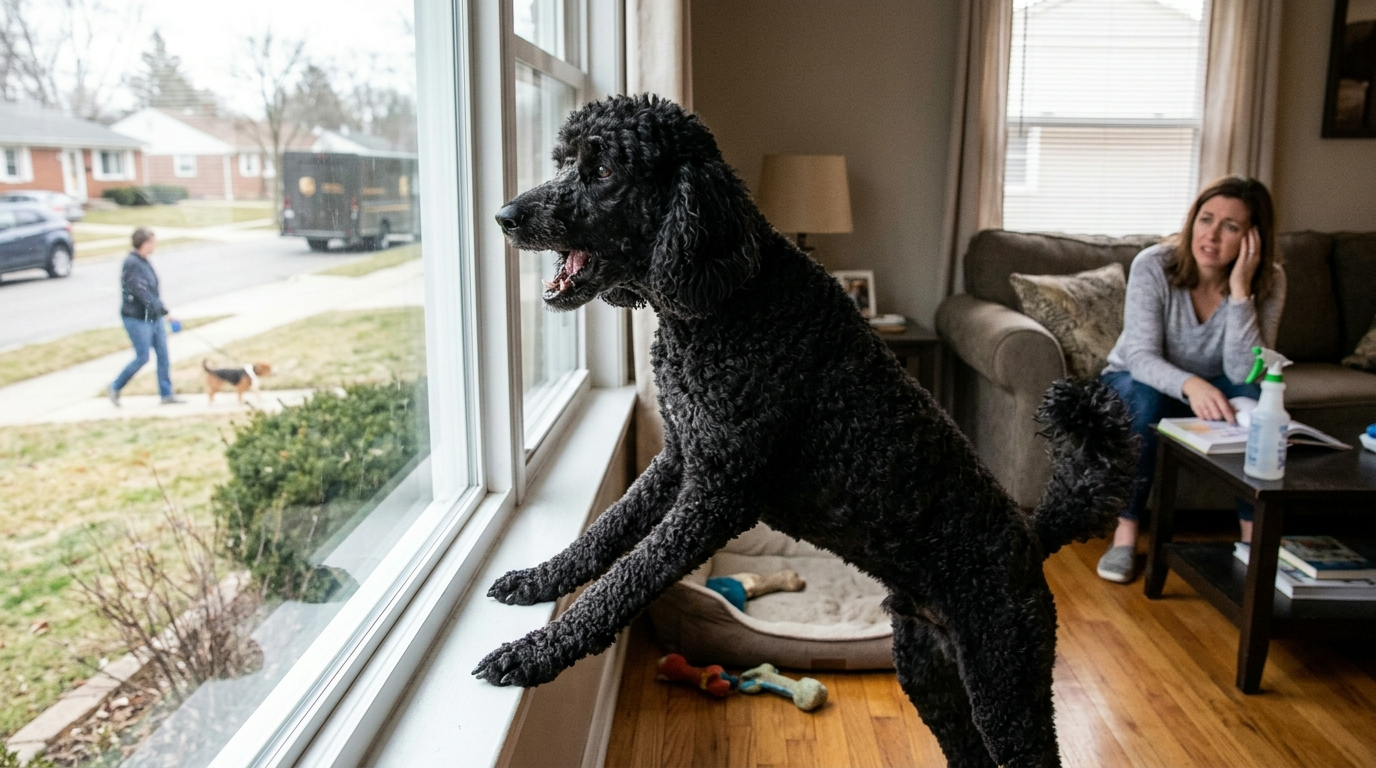
Standard Poodle excessive barking outdoors often starts as alert behavior but can quickly become overwhelming. Because this breed is intelligent, athletic, and highly aware of its surroundings, outside environments stimulate strong reactions. Therefore, managing outdoor vocalization requires understanding both instinct and environment.
Many owners feel confused when barking increases only outside. However, the outdoor setting introduces movement, sounds, and unfamiliar stimuli. As a result, your dog may respond with repeated vocal alerts.
This guide explains how to reduce Standard Poodle excessive barking outdoors using structured training, environmental control, and consistent leadership. More importantly, it focuses on long-term solutions rather than temporary suppression.
Why Standard Poodles Bark More Outdoors
Standard Poodles are naturally observant. Outdoors, they encounter moving objects, wildlife, people, and other dogs. Because their protective instincts activate quickly, barking often follows.
Additionally, open spaces amplify sounds. Distant noises that go unnoticed indoors may trigger reactions outside. Consequently, your dog becomes more alert and reactive.
Energy levels also increase outdoors. Excitement combined with stimulation fuels Standard Poodle excessive barking. Without clear direction, your dog may interpret every movement as something worth announcing.
Understanding these triggers helps you respond strategically rather than emotionally.
Common Outdoor Barking Triggers
Identifying specific triggers is the first step toward progress. In many cases, Standard Poodle excessive barking outdoors stems from predictable situations.
Passing Dogs or Wildlife
Movement often sparks immediate vocal response. Fast-moving objects increase arousal levels.
Territorial Boundaries
Fences create clear borders. When strangers approach those boundaries, barking intensifies.
Noise Sensitivity
Loud vehicles, lawn equipment, or distant sirens can trigger defensive reactions.
Attention-Seeking
Sometimes barking continues because it earns a reaction from owners.
By observing patterns, you can tailor your training approach effectively.
Building a Calm Foundation Indoors First
Before tackling outdoor behavior, reinforce calm commands inside. Teaching “quiet,” “leave it,” and “come” indoors creates strong communication.
Start with low distractions. Reward immediate compliance. Gradually increase challenges over time.
If your dog ignores commands indoors, outdoor training will likely fail. Therefore, establish reliable obedience before addressing Standard Poodle excessive barking outside.
Consistency at home strengthens your authority in stimulating environments.
Teaching a Reliable Quiet Command Outdoors
Transitioning commands outdoors requires patience. Begin in your yard during calm moments.
When barking begins, calmly say “quiet.” The moment your dog pauses, reward immediately. Timing matters greatly.
Avoid yelling. Raised voices often escalate excitement. Instead, use steady and confident tone.
Practice daily in short sessions. Gradually introduce mild distractions, such as a family member walking nearby.
Over time, your dog learns that silence earns praise. Structured repetition reduces Standard Poodle excessive barking consistently.
Using Leash Control for Outdoor Training
Leash training provides immediate structure. Even within fenced yards, using a leash during training increases control.
If barking starts, gently guide your dog away from the trigger. Redirect attention with a command such as “sit” or “focus.”
Reward calm eye contact. By redirecting attention consistently, you weaken the barking habit.
Short, structured outdoor sessions build confidence. Gradually increase freedom as reliability improves.
Leash guidance helps interrupt Standard Poodle excessive barking before escalation.
Managing Environmental Triggers
Sometimes adjusting the environment produces faster improvement than training alone.
Block visual triggers by using privacy fencing or landscaping. If your dog reacts to street activity, reduce visibility.
White noise machines outdoors may mask distant sounds. Additionally, scheduling yard time during quieter hours minimizes stimulation.
For dogs reacting strongly to wildlife, supervised outings reduce uncontrolled exposure.
Environmental management complements behavioral training effectively.
Increasing Mental and Physical Stimulation
A tired Standard Poodle barks less. Because this breed requires mental engagement, boredom often fuels outdoor reactivity.
Incorporate structured play sessions before yard time. Puzzle toys and scent games drain excess energy.
Long walks or training drills satisfy mental needs. Consequently, outdoor stimuli become less overwhelming.
Without sufficient stimulation, Standard Poodle excessive barking increases due to pent-up energy.
Daily enrichment remains essential for long-term improvement.
Preventing Reinforcement of Barking
Unintentionally rewarding barking prolongs the behavior. If you rush outside and shout, your dog may interpret that as participation.
Instead, respond calmly and redirect attention immediately. Reward silence rather than noise.
Avoid allowing prolonged unsupervised yard time if barking becomes habitual. Repetition strengthens the unwanted pattern.
Consistent response ensures barking does not become self-reinforcing.
Desensitization and Counterconditioning
For persistent triggers, structured desensitization helps significantly.
Expose your dog to mild versions of the trigger at a safe distance. Reward calm behavior consistently.
Gradually reduce distance as tolerance increases. Move slowly to prevent overwhelming your dog.
For example, if other dogs trigger barking, start observing them from far away. Reward quiet focus.
Over time, this process rewires emotional reactions and reduces Standard Poodle excessive barking outdoors.
When to Seek Professional Help
If barking becomes intense or aggressive, professional support may be necessary.
Certified trainers can evaluate subtle cues and create structured plans. Additionally, they ensure safe exposure during desensitization.
In rare cases, anxiety disorders may contribute. Veterinary consultation rules out medical concerns.
Seeking help early prevents escalation and strengthens long-term success.
Maintaining Long-Term Outdoor Calm
Even after improvement, continue reinforcing calm behavior. Reward quiet responses randomly to maintain reliability.
Rotate outdoor activities to prevent boredom. Structured yard games reduce idle scanning for triggers.
Monitor changes in environment, such as new neighbors or construction noise. Adjust training accordingly.
By maintaining consistency, Standard Poodle excessive barking remains manageable rather than returning.
Final Thoughts on Outdoor Barking Control
Standard Poodle excessive barking outdoors often reflects alertness, intelligence, and high energy rather than disobedience. When you identify triggers and apply structured training, progress follows steadily.
Start with strong indoor obedience. Then transition gradually to outdoor environments with clear commands and consistent rewards.
Manage environmental stimuli and increase mental stimulation daily. Avoid reinforcing unwanted behavior unintentionally.
Although change takes patience, calm leadership transforms reactive barking into controlled alerting. With steady guidance, Standard Poodle excessive barking becomes manageable, allowing peaceful outdoor experiences for both you and your dog.
FAQ
- Why does my Standard Poodle bark more outside than indoors?
Outdoor environments provide more stimulation, movement, and unfamiliar sounds, which increase alert behavior. - How long does it take to reduce outdoor barking?
With consistent daily practice, noticeable improvement often appears within a few weeks. - Should I use a bark collar?
Most trainers discourage shock-based collars because they may increase anxiety and fear. - Can exercise alone solve the issue?
Exercise helps significantly, but structured training and trigger management remain essential. - Is some barking normal for this breed?
Yes, controlled alert barking is natural, but persistent or excessive noise requires training intervention.