
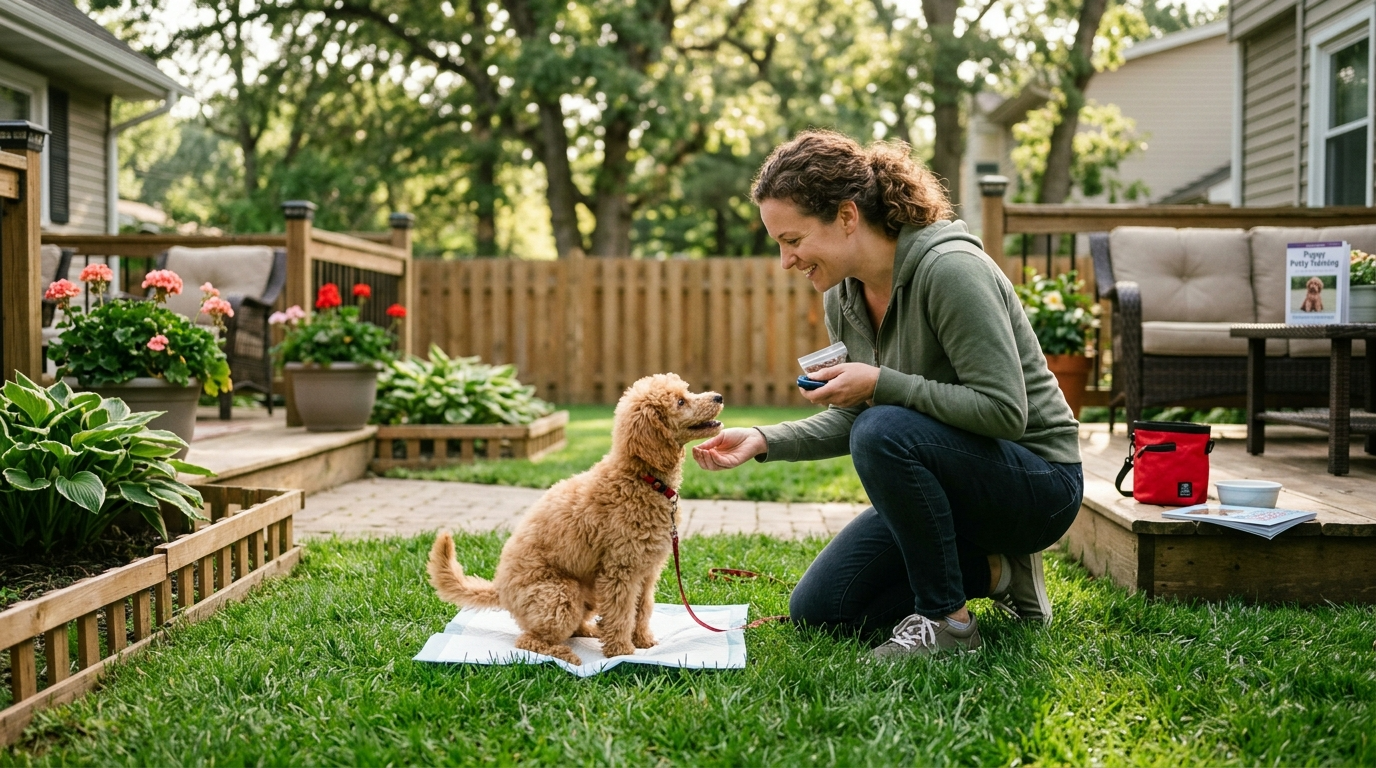
Creating a consistent Poodle potty training schedule is the most effective way to reduce accidents and build reliable bathroom habits. Because Poodles are intelligent and sensitive, they respond well to structure and routine. Therefore, adjusting your schedule by age makes housebreaking smoother and faster.
Many new owners feel frustrated when accidents happen. However, bladder control develops gradually. As your Poodle matures, their ability to hold urine improves steadily. When you align your expectations with developmental stages, training becomes far less stressful.
This guide explains a clear Poodle potty training schedule by age. More importantly, it outlines how to prevent setbacks and support long-term success.
Why Age Matters in Poodle Potty Training
Bladder and bowel control strengthen over time. At eight weeks, most Poodle puppies can only hold urine for about two hours. By four months, many can manage four hours during the day.
Because Toy and Miniature Poodles are small, they may need more frequent breaks than Standard Poodles. Body size directly affects bladder capacity.
Additionally, excitement and play shorten holding time. Therefore, structured outings prevent accidents caused by overstimulation.
When you follow a realistic Poodle potty training schedule, you avoid placing unrealistic demands on your puppy. Consistency paired with patience builds dependable habits.
Poodle Potty Training Schedule for 8–10 Weeks
At eight weeks, puppies are still very young. Therefore, frequent bathroom trips are essential.
Take your puppy outside immediately after waking. Additionally, go out after eating, drinking, playing, and napping. Most puppies at this age require bathroom breaks every two hours.
Nighttime breaks remain necessary. Set an alarm every three to four hours to prevent overnight accidents.
Use the same outdoor location each time. Familiar scents encourage faster elimination.
Although this phase feels demanding, a structured Poodle potty training schedule during early weeks creates strong foundations.
Schedule for 10–12 Weeks
During this stage, bladder control improves slightly. However, supervision remains critical.
Plan outdoor trips every two to three hours. Continue taking your puppy out immediately after meals and naps.
Gradually extend nighttime intervals if your puppy wakes dry. Nevertheless, stay attentive to signals such as pacing or whining.
Reward elimination outdoors immediately with praise or a small treat. Quick reinforcement strengthens the connection.
By maintaining a consistent Poodle potty training schedule, you help your puppy develop confidence and understanding.
Poodle Potty Training Schedule for 3–4 Months
Between three and four months, progress becomes noticeable. Many Poodles can now hold urine for three to four hours during the day.
However, consistency remains essential. Even if accidents decrease, continue structured outings.
At this stage, you may allow short periods of supervised indoor freedom. Still, avoid leaving your puppy alone for extended periods.
Crate training supports this phase effectively. Since dogs avoid soiling their sleeping area, crates reinforce bladder control.
Following a steady Poodle potty training schedule during this period prevents regression.
Schedule for 4–6 Months
Bladder capacity increases significantly between four and six months. Most Poodles can hold urine for four to six hours during the day.
Nighttime breaks may no longer be necessary for many puppies. However, adjust based on individual needs.
Continue monitoring for pre-potty signals such as circling or sniffing. Quick action prevents setbacks.
Adolescence may bring brief regression due to growth spurts or increased independence. Therefore, remain consistent and calm.
Maintaining a reliable Poodle potty training schedule during this stage ensures smoother transition into adulthood.
How to Adjust for Toy, Miniature, and Standard Poodles
Toy Poodles often require more frequent breaks due to smaller bladders. Therefore, shorter intervals may remain necessary for longer periods.
Miniature Poodles typically fall in the middle range. Meanwhile, Standard Poodles may develop bladder control slightly faster.
Despite size differences, personality and energy levels also influence timing. Active puppies often need more frequent outings.
Observe your individual dog carefully. Then adjust your Poodle potty training schedule accordingly.
Flexibility combined with structure produces the best results.
Sample Daily Routine by Age
While every household differs, structured examples help guide planning.
For an eight-week-old puppy, outings every two hours work well. Include breaks after meals and naps.
At three months, schedule bathroom trips every three hours during the day.
By five months, four-hour intervals often become manageable.
Always add immediate outings after exciting play sessions. Excitement shortens holding time significantly.
Consistency matters more than perfection. Even small timing adjustments improve success rates.
Common Mistakes That Disrupt Potty Training
Inconsistent timing confuses puppies. Therefore, avoid random bathroom breaks.
Punishing accidents creates fear without teaching the correct behavior. Instead, redirect calmly and reward outdoor success.
Allowing too much freedom too soon often leads to setbacks. Gradual independence works better.
Skipping nighttime breaks during early weeks increases accident risk.
By avoiding these mistakes, your Poodle potty training schedule remains effective.
Using Crate Training to Support Your Schedule
Crates provide structure and prevent unsupervised accidents. Because dogs avoid soiling their sleeping area, crates reinforce bladder control.
Ensure the crate is appropriately sized. It should allow standing and turning but not excessive space.
Do not use the crate as punishment. Instead, create positive associations through treats and praise.
Crate intervals should align with your Poodle potty training schedule based on age.
When used correctly, crate training accelerates housebreaking progress.
Handling Accidents Calmly
Accidents are part of learning. Therefore, respond calmly and clean thoroughly with enzymatic cleaners.
If you catch your puppy mid-accident, interrupt gently and take them outside immediately. Reward completion outdoors.
Avoid yelling or harsh corrections. Poodles are sensitive and may develop anxiety.
Consistency and patience matter more than intensity.
Over time, structured repetition makes accidents increasingly rare.
Transitioning to Adult Potty Habits
By six to eight months, most Poodles develop reliable bladder control. However, continue structured routines for reinforcement.
Gradually extend time between outings as reliability increases. Still, monitor signals carefully.
Adult dogs typically manage six to eight hours during the day. Nevertheless, frequent outdoor access remains beneficial.
Even after mastering housebreaking, maintaining a predictable Poodle potty training schedule supports lifelong habits.
Final Thoughts on Building Long-Term Success
A well-planned Poodle potty training schedule by age eliminates guesswork and reduces frustration. Instead of reacting to accidents, you prevent them through structure.
Start with frequent breaks during early weeks. Then extend intervals gradually as bladder control improves.
Remain consistent, patient, and observant. Although setbacks may occur, steady routines rebuild progress quickly.
With time and dedication, your Poodle learns exactly where and when to go. Ultimately, a structured Poodle potty training schedule transforms housebreaking from stress into success.
FAQ
- How long does housebreaking usually take for a Poodle?
Most Poodles show strong progress within two to three months with consistent routines. - Should Toy Poodles follow the same timing as Standards?
Toy Poodles often need shorter intervals due to smaller bladder capacity. - Is nighttime training necessary?
Yes, during early weeks nighttime breaks prevent accidents and reinforce control. - What if my puppy regresses suddenly?
Growth stages or routine changes may cause setbacks. Return to a stricter schedule temporarily. - Can crate training speed up housebreaking?
Yes, crates encourage bladder control and prevent unsupervised accidents when used properly.