If you have a white, cream or apricot poodle, you have probably noticed rusty streaks from the eyes down the muzzle. Poodle tear stains frustrate owners because marks seem to return after wiping. This guide links primary veterinary pages, outlines gentle cleaning habits to confirm with your vet, and lists signs that need a clinic visit — without inventing product cures or restating treatment schedules from memory.
Not veterinary advice: This content is not a substitute for professional veterinary advice, diagnosis or treatment. Always consult your veterinarian about your own dog, and never put any product in or near your poodle’s eyes without their guidance.
Primary sources worth reading
- PetMD — Watery eyes (epiphora) in dogs
- Canadian Veterinary Medical Association — The Crying Game: Why Dogs Cry
Those pages explain watery eyes, staining context and when tearing may need more than a wipe. Read them yourself before you buy a new product.
What tear stains are about
Stains are discoloured fur below the eyes. PetMD discusses watery eyes (epiphora) and how tears on the face can darken light coats. Overflow can relate to tear production or drainage — open their page for the full framing rather than treating a blog summary as diagnosis.
Why light-coated poodles show marks clearly
Staining shows more on white or apricot coats than on dark coats. Facial furnishings can hold moisture against the skin. Face shape and eyelid conformation vary. PetMD and CVMA discuss breed and cosmetic tearing themes — use their wording, not forum myths.
When to see the vet first
New or worsening stains deserve an exam before a shopping spree. CVMA and PetMD both discuss when tearing may signal eye discomfort or drainage problems. Book promptly for squinting, redness, thick coloured discharge, pawing at the face, sudden one-eye changes or a cloudy look.
Related: poodle health issues.
Gentle cleaning after your vet clears the eyes
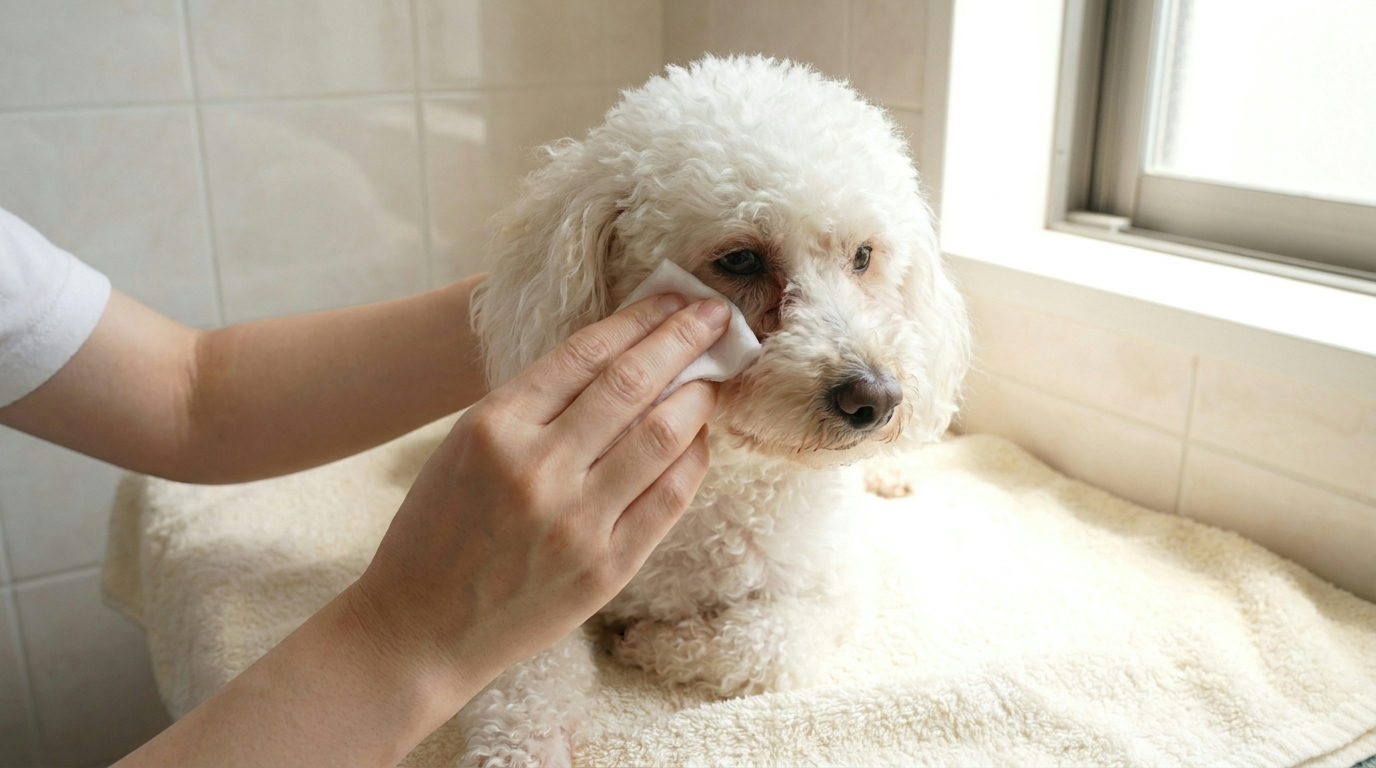
Once your veterinarian says hygiene care is appropriate, keep the area clean and dry using the method they approve. A common clinic-friendly approach owners practise is:
- Pick a calm moment after a walk or meal.
- Use a soft, clean cloth or cotton pad with lukewarm water; fresh pad per eye.
- Wipe gently away from the eye, inner corner down the muzzle — never across the eyeball.
- Dry with a second clean pad.
- Reward with praise or a small treat.
Confirm cadence with your vet (and skim CVMA’s cleaning comments) rather than copying a generic calendar from a blog. Improvement often shows as new hair grows; ask your groomer what to expect for this coat.
Grooming that helps
- Ask your groomer to keep hair around the eyes tidy so it does not poke the eye or hold moisture.
- Do not trim near the eyes yourself unless you are confident and careful.
- Comb the face gently to remove crust before it hardens.
- Dry the face after baths and after drinking if the muzzle drips.
See reducing grooming stress for face-handling practice.
Tear stain products and supplements
Shelves are full of wipes and supplements. Ask your veterinarian before anything near the eyes, any supplement, or any diet change aimed at stains. Prefer dog-formulated products they approve. Skip bleach, peroxide and human cosmetics. Management, not a miracle cure, is the realistic goal when tearing is breed-related — read CVMA’s product caveats on their page.
Checklist for poodle tear stains
- Read PetMD and CVMA; write short notes.
- Photograph the face in daylight.
- Book a vet exam for red-flag signs or sudden change.
- Confirm a wipe-and-dry plan with your veterinarian.
- Ask the groomer for a face trim that keeps hair clear of the eyes.
FAQ: poodle tear stains
Are they painful?
Staining itself is often cosmetic, but tearing can signal eye pain — check squinting, redness or discharge with a vet. See CVMA for that distinction.
Why does my white poodle show stains more than my black one?
Light coats show pigment more clearly. Read PetMD’s light-coat framing.
How long until stains fade?
Ask your groomer and vet. Stained hair usually needs new growth and trimming; do not invent a timeline here.
Can I use human eye wipes?
Ask your veterinarian first.
Will a diet change fix this?
Do not invent diet fixes. Discuss any change with your veterinarian.
What not to do
- Do not put bleach or human cosmetics on the face.
- Do not skip the vet for sudden one-eye changes.
- Do not invent medication doses.
- Do not scrape crust with sharp tools near the eye.
Household coordination
Write who handles face care and who books the vet. Shared dogs miss wipe-downs when everyone assumes someone else did it. Keep soft pads, a towel and treats in a small kit by the door.
Realistic expectations
For some poodles, staining never disappears completely. A clean, dry face and regular vet checks matter most for comfort. Monthly daylight photos help you spot true change.
Travel and boarding
Pack the vet-approved plan and pads so caregivers follow the same steps.
Environment notes
Log weather and activities if tearing seems to flare. Bring the log to the exam. Do not self-diagnose allergies from social media.
Water bowls and damp muzzles
Ask your groomer whether a shallower bowl helps keep the chin drier. Dry the face after drinks when dripping is heavy, if that fits your vet’s plan.
Building a face-handling cue
Pair a calm word with treats before any wipe so the cue predicts snacks. That makes approved daily care easier for nervous Toys and Miniatures.
When to recheck
If marks lighten then suddenly worsen, or discharge changes, book a recheck rather than switching products on your own.
Puppies versus adults
Ask your veterinarian whether tearing in a young dog needs a different workup than an adult’s cosmetic staining.
Social media claims to ignore
Skip bleach hacks and miracle powders. Return to PetMD, CVMA and your veterinarian when a friend forwards a tip.
Teaching the household
Children should not wipe near eyes unsupervised. An adult handles pads; kids can offer a treat after calm behaviour.
After the appointment
Write findings the same day. Note approved products and banned ones. Share the note with your groomer before the next salon visit.
If a follow-up is needed, put the date on the calendar immediately.
Kit inventory
Keep soft pads, a clean towel, treats and a copy of the vet-approved plan together. Replace pads often and do not share face pads between pets.
One calm week after clearance
Follow only the wipe-and-dry steps your veterinarian approved. End each session with a treat. Stop and call the clinic if the eye looks worse.
Multi-dog homes
Label each dog’s kit. Light-coated and dark-coated housemates need different photo baselines even when they share a groomer.
When you feel stuck
Message your clinic with photos rather than guessing a new product. Stuck is a reason to ask, not a reason to escalate DIY.
Insurance and records
Ask whether your pet insurer wants exam notes for eye visits. Store invoices with your notebook. This article does not interpret coverage rules.
Closing practice for the month
Once a week, reopen PetMD or CVMA for a few minutes and add one fresh note. Steady habits beat one frantic shopping trip when marks return.
Closing tip
Poodle tear stains care puts eye comfort first and cosmetics second.
This week, open the PetMD epiphora page and the CVMA article, photograph your dog’s face in daylight, and call your vet if you see redness, squinting or one-sided discharge — otherwise confirm a gentle wipe-and-dry plan they approve before you buy any new product.