
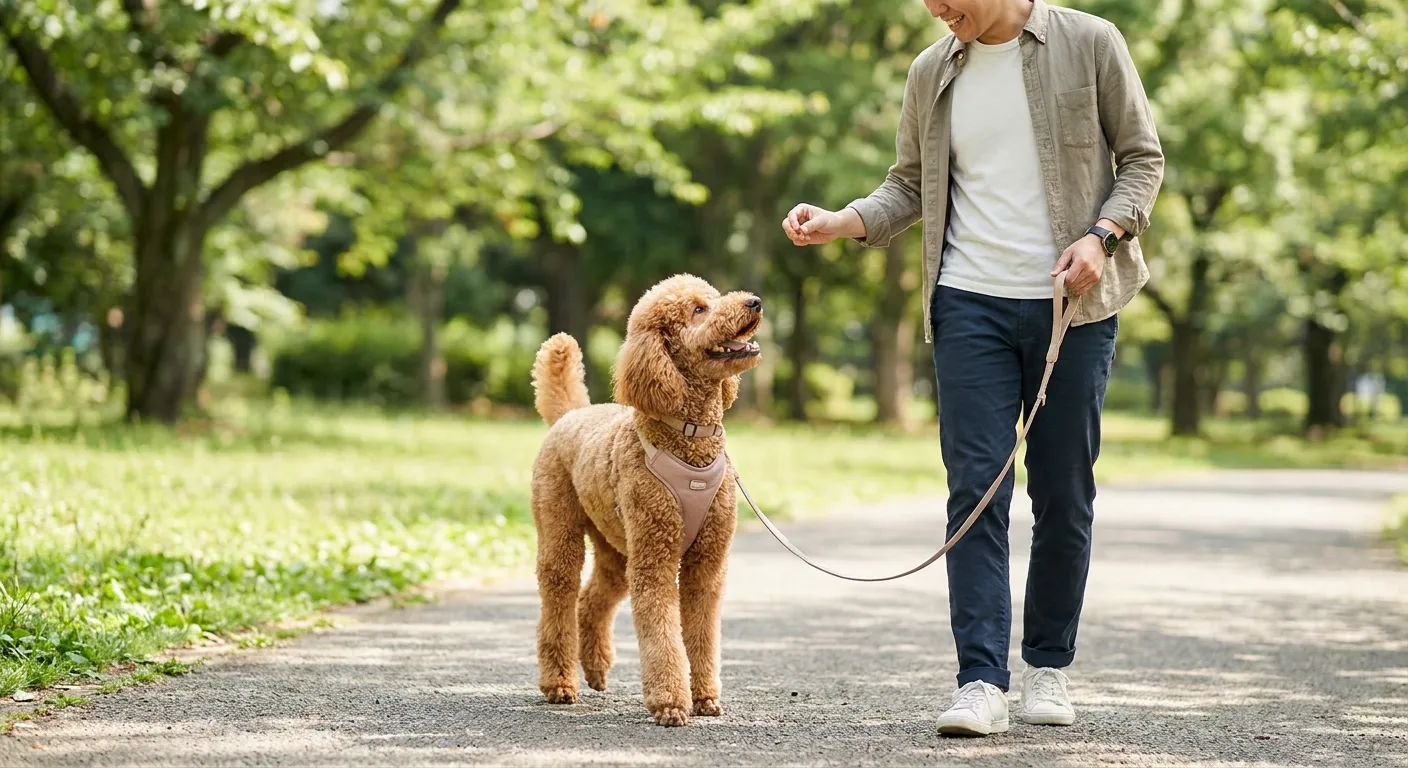
Walking your Poodle should be an enjoyable experience for both of you, not a tug-of-war. Effective Poodle leash training tips are essential for teaching your intelligent companion to walk politely by your side. These strategies transform chaotic strolls into pleasant outings. Poodles are quick learners, making them excellent candidates for positive reinforcement training methods that build confidence and cooperation.
Starting Strong: Equipment and Early Lessons
Begin with the right equipment for successful walks. A comfortable, well-fitting harness or a flat-buckle collar is ideal, especially for puppies or Poodles still learning. Furthermore, avoid retractable leashes. They can inadvertently teach pulling and offer less control. Start training in a low-distraction environment, perhaps your backyard. The primary goal is to teach your Poodle that a loose leash equals rewards.
When your Poodle walks calmly beside you, with a loose leash, mark the behavior. Use a verbal marker like “yes!” or a clicker. Immediately reward them with a high-value treat. If they pull, stop walking immediately. Only resume when the leash slackens. This teaches them that pulling gets them nowhere, while a loose leash keeps the walk going. Consistency, therefore, is paramount for building good habits.
Building a Foundation: The “Stop and Go” Method
The “Stop and Go” method is fundamental for teaching proper leash manners. As your Poodle starts to pull, stop moving instantly. Stand still until the leash becomes loose again. This might mean your Poodle turns to look at you, or simply takes a step back. Once the leash is slack, praise them gently and continue walking. Repeat this process every time they pull. This technique consistently reinforces that pulling stops forward momentum. Conversely, a loose leash allows progress. Many Poodle parents find this method highly effective for developing a calm walking pace.
Introducing the “Heel” Command
Once your Poodle understands loose-leash walking, you can introduce a formal “heel” command. This teaches your Poodle to walk precisely at your side. Start by holding a treat near your Poodle’s nose, luring them into the correct heel position. As they walk beside you, say “Heel” and reward them for maintaining that position. Practice this in short bursts. Gradually increase the duration and distance. Remember, the heel command is about precise positioning, whereas loose-leash walking is simply about not pulling. For more insights into your Poodle’s intelligence and trainability, consider reading about Unveiling the Poodle Personality: What Makes These Dogs So Unique?
Advanced Poodle Leash Training Tips for Distractions
Once your Poodle understands the basics in a quiet environment, gradually introduce distractions. Start with mild distractions, like walking further down your street. Slowly build up to busier parks or sidewalks. Continue to reward heavily for loose-leash walking, especially when they choose to focus on you instead of the distraction. Practice changing directions frequently. This keeps your Poodle engaged and focused on anticipating your next move.
If your Poodle gets overly excited by another dog or person, increase the distance from the distraction. Work on getting their attention back to you before slowly moving closer. Remember, patience and positive reinforcement are key to building good habits. Never punish pulling. This can create a negative association with walks. Instead, redirect their attention. Offer a treat when they look at you instead of the distraction. These Poodle leash training tips are crucial for real-world success.
Addressing Common Leash Training Challenges
Many Poodle owners encounter specific challenges during leash training. Jumping up on people or other dogs, excessive barking, or reactivity can be frustrating. For example, if your Poodle jumps, turn your back and ignore the behavior. Reward them only when all four paws are on the ground. For barking, try to identify the trigger. Then, work on desensitizing your Poodle to it from a distance. Always keep training sessions positive and short, especially when addressing challenging behaviors. Furthermore, ensure your Poodle gets enough daily exercise before training. A tired Poodle is often a better-behaved Poodle. You can find more information on this here: Beyond the Backyard: Fulfilling Your Poodle’s Daily Exercise Needs.
The Importance of Proper Equipment
Choosing the right gear is a fundamental aspect of successful Poodle leash training tips. As mentioned, harnesses are often preferred for Poodles. They distribute pressure more evenly across the chest and shoulders, preventing strain on the neck. Look for a harness that fits snugly but allows full range of motion. A front-clip harness can be particularly useful for Poodles who pull. It redirects their momentum back towards you when they try to forge ahead. Additionally, a standard 6-foot leash made of nylon or leather provides optimal control and communication. Always ensure the leash is comfortable for you to hold. This helps maintain consistent control.
Consistency and Patience: The Keys to Success
Consistency is perhaps the most important element in all Poodle leash training tips. Every family member who walks the Poodle should use the same commands and methods. Inconsistent training can confuse your Poodle and slow down progress. Patience is equally vital. Training takes time and effort. There will be good days and challenging days. Celebrate small victories and don’t get discouraged by setbacks. Your Poodle is learning a new skill, and like any learner, they need understanding and encouragement. Positive reinforcement builds a strong bond and makes training a positive experience for both of you. For further reading on positive reinforcement, you might find resources from the ASPCA helpful.
Making Walks Enjoyable for Your Poodle
Beyond just training, ensure walks are a positive experience for your Poodle. Allow them time to sniff and explore. Sniffing is a natural and enriching activity for dogs. It helps them process their environment and reduces stress. Incorporate short play sessions during walks, such as a quick game of fetch if appropriate. Vary your walking routes to keep things interesting. A happy Poodle is more likely to be a cooperative Poodle. Remember that different Poodle sizes, from Standard to Toy, may have varying energy levels and attention spans, which can influence their training pace. Learn more about this here: Standard, Miniature, Toy: Understanding Poodle Size Differences & Care Needs.
When to Seek Professional Help
While these Poodle leash training tips are comprehensive, some Poodles may benefit from professional guidance. If you’re struggling with severe pulling, reactivity, or aggression on walks, a certified professional dog trainer or behaviorist can provide tailored support. They can assess your Poodle’s specific needs and offer personalized strategies. Early intervention for behavioral issues can prevent them from escalating. Never hesitate to seek expert advice if you feel overwhelmed. Many reputable organizations, such as the Association of Professional Dog Trainers (APDT), can help you find a qualified professional in your area.
Conclusion
Implementing these Poodle leash training tips will lead to more enjoyable walks and a stronger bond with your well-behaved companion. A Poodle that walks politely on a leash is a joy to take anywhere. With patience, consistency, and positive reinforcement, you can transform your Poodle into a confident and courteous walking partner. Happy walking!
FAQ:
How do I stop my Poodle puppy from pulling on the leash?
To stop your Poodle puppy from pulling, use the “Stop and Go” method. When your puppy pulls, immediately stop walking. Only resume once the leash slackens. Reward them with praise and treats for a loose leash. Consistency is key.
What kind of leash and collar is best for Poodle walk training?
For Poodle walk training, a comfortable, well-fitting harness (especially a front-clip harness for pullers) or a flat-buckle collar is recommended. Use a standard 6-foot leash made of nylon or leather. Avoid retractable leashes.
How long does it take to train a Poodle to walk nicely on a lead?
The time it takes to train a Poodle to walk nicely on a lead varies for each dog. Poodles are intelligent, so with consistent daily practice (short, positive sessions), you can see significant improvement within a few weeks to a couple of months. Patience is crucial.
Should I use treats during Poodle lead training?
Yes, absolutely! Treats are a powerful tool for positive reinforcement during Poodle lead training. Use high-value treats to reward your Poodle immediately when they walk calmly on a loose leash or offer desired behavior. This helps them associate good walking with positive outcomes.
What if my Poodle gets distracted easily during walks?
If your Poodle gets easily distracted, start training in very low-distraction environments. Gradually introduce more distractions. When a distraction appears, try to get your Poodle’s attention with a treat or a verbal cue. Reward them for focusing on you. Increase distance from the distraction if needed, and slowly work closer as they improve.