Poodles are renowned for their elegant, curly coats, but maintaining that pristine look requires regular attention. Mastering Poodle grooming at home can save you time and money, while also strengthening the bond with your beloved companion. This guide provides practical steps for keeping your Poodle comfortable and looking their best between professional grooming appointments, whether you have a Standard, Miniature, or Toy Poodle. Furthermore, consistent home grooming contributes significantly to their overall health and well-being.
Understanding Your Poodle’s Unique Coat Needs
Before diving into the grooming process, it’s essential to understand the unique characteristics of a Poodle’s coat. Unlike many other breeds, Poodles have a single layer of dense, curly hair that continuously grows and doesn’t shed much. Consequently, this non-shedding trait means their hair is highly prone to matting if not regularly brushed and maintained. Mats can be incredibly painful, pulling on the skin and potentially leading to skin infections. Therefore, a proactive approach to grooming is not just about aesthetics but also about preventing discomfort and health issues for your Poodle.
Different Poodle sizes, such as the Standard, Miniature, and Toy Poodle, may have slightly varied coat densities or growth rates, but the fundamental grooming principles remain the same. For instance, a Standard Poodle’s larger size means more coat to manage, which can take longer. Regardless of size, establishing a consistent routine from a young age is crucial. This helps your Poodle become accustomed to the handling and tools involved in their care.
Essential Tools for Effective Poodle Grooming at Home
Having the right tools is the first step toward successful Poodle care. Investing in quality equipment will make the process easier for both you and your Poodle. Here’s a list of must-have items:
- Slicker Brush: This brush features fine, wire bristles and is ideal for working through tangles and removing loose hair. It’s excellent for the initial brush-out.
- Metal Comb: A good quality metal comb with both wide and fine teeth is indispensable. Use it to check for any mats the slicker brush might have missed, especially in sensitive areas.
- Pin Brush: While not as critical as a slicker, a pin brush can be useful for fluffing and finishing touches, particularly on longer coats.
- Dog-Specific Shampoo and Conditioner: Always use products formulated for dogs to avoid skin irritation. Look for moisturizing formulas, as Poodles can sometimes have dry skin.
- Absorbent Towels: You’ll need these for the initial drying after a bath.
- High-Velocity Dryer (or Low-Heat Hairdryer): A high-velocity dryer dramatically speeds up drying time and helps straighten the coat to prevent mats. If you don’t have one, a regular hairdryer on a low-heat setting is an acceptable alternative, but remember to keep it moving.
- Blunt-Nosed Scissors: Essential for carefully trimming hair around the eyes, paw pads, and sanitary areas. The blunt tips prevent accidental pokes.
- Dog Clippers (with various blades): A quiet, cordless clipper is a valuable investment for hygiene trims, paw pads, and even full body clips if you become proficient. Start with a #10 blade for sanitary areas and paw pads.
- Nail Clippers or Grinder: Keep your Poodle’s nails short to prevent discomfort and potential paw issues.
- Styptic Powder: A must-have for minor nicks during nail trims or other grooming accidents.
- Grooming Table (optional but recommended): A sturdy grooming table with an arm and noose can make the process much safer and more comfortable for both of you, especially for a Standard Poodle.
By gathering these tools, you will be well-prepared to tackle various aspects of Poodle grooming at home.
Step-by-Step Guide to Brushing Your Poodle’s Coat
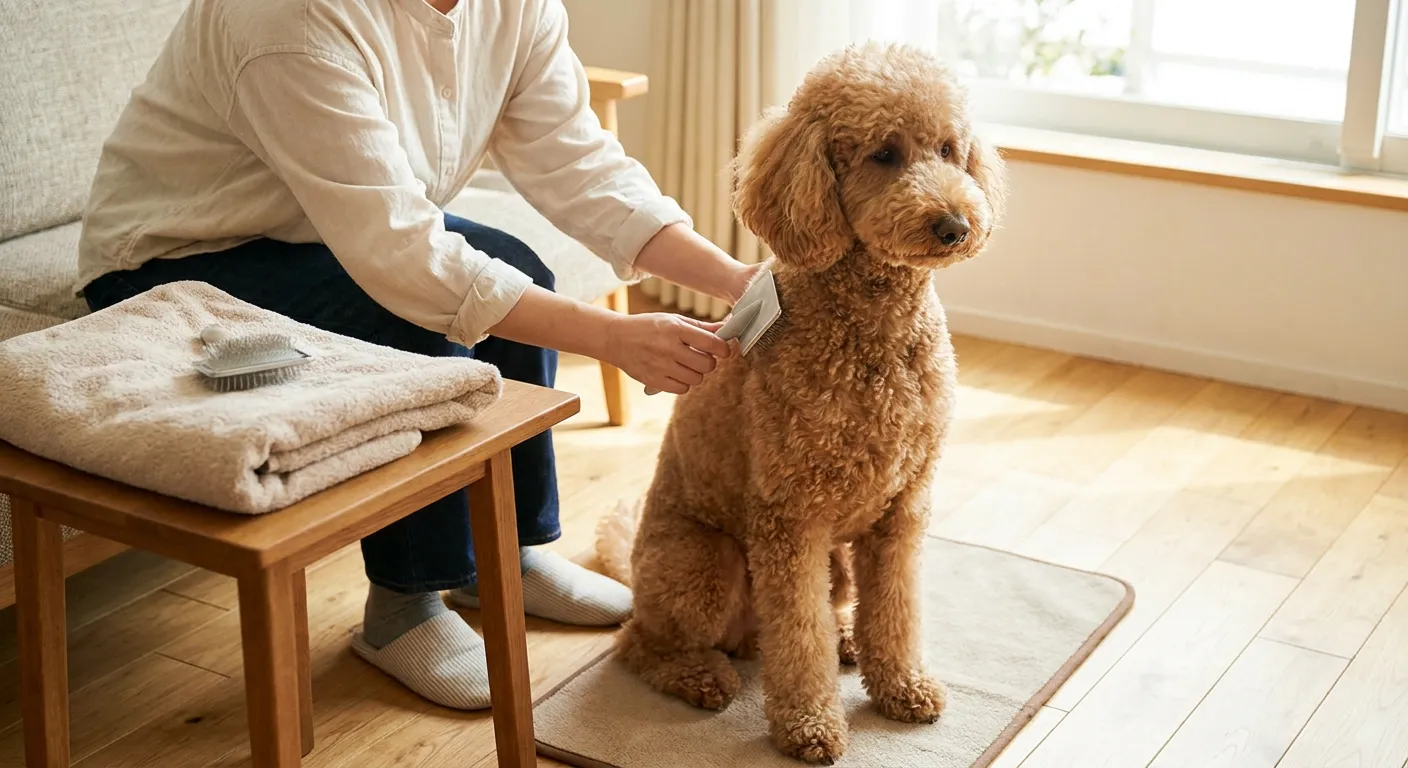
Brushing is the cornerstone of Poodle coat maintenance. Neglecting this step leads quickly to painful mats. Aim for daily or at least every-other-day brushing, depending on your Poodle’s coat length and activity level. Here’s how to do it effectively:
- Preparation: Find a comfortable, elevated surface where your Poodle can stand or sit steadily. Use a grooming table if you have one. Gather your slicker brush and metal comb.
- Section the Coat: Do not try to brush the entire coat at once. Instead, work in small sections. Start with one leg, then move to the body, then the head and ears. This systematic approach ensures no area is missed.
- Line Brushing Technique: This is the most effective method for Poodles. Part the hair down to the skin with your hand or the comb. Using the slicker brush, brush downward and outward, working through the hair in small sections from the skin out. Gradually move your part upward, always ensuring you reach the skin with the brush.
- Focus on Mat-Prone Areas: Pay extra attention to behind the ears, armpits, groin, and under the collar. These are common spots where mats form due to friction.
- Check with a Metal Comb: After using the slicker brush on a section, follow up with your metal comb. If the comb glides smoothly through the hair from the skin to the tip without snagging, that section is mat-free. If it snags, go back with the slicker brush until the comb passes through easily.
- Gentle Approach: Always brush gently to avoid pulling on the skin. If you encounter a mat, do not yank. Instead, try to gently tease it apart with your fingers or the fine end of your comb, working from the outside edges of the mat inward. For stubborn mats, a mat splitter or blunt-nosed scissors might be needed, but use extreme caution.
- Reward and Praise: Make brushing a positive experience with treats and praise. This reinforces good behavior and makes future grooming sessions easier.
Consistent brushing is the most important step in keeping your Poodle’s coat healthy and preventing painful matting. This routine is essential for all Poodle sizes.
Bathing Your Poodle: Keeping Them Clean and Fresh
While brushing is daily, bathing is generally needed every 3-4 weeks, or more often if your Poodle gets particularly dirty. Proper bathing techniques are crucial to prevent skin irritation and ensure a clean, fluffy coat. Here’s how to do it right:
- Pre-Bath Brush: Always give your Poodle a thorough brush-out before bathing. Water will tighten any existing mats, making them nearly impossible to remove afterward. Refer to the guide to brushing your Poodle’s coat for detailed instructions.
- Prepare the Bath Area: Use a non-slip mat in the tub or shower. Have all your shampoo, conditioner, and towels within easy reach. The water should be lukewarm, not too hot or too cold.
- Wet Thoroughly: Completely saturate your Poodle’s coat with water. Ensure the water penetrates all the way to the skin.
- Apply Shampoo: Dilute dog shampoo according to package directions. Apply it evenly, working it into a lather. Be careful around the eyes and ears. You can use cotton balls in the ears to prevent water from entering, but remove them immediately after the bath.
- Rinse Thoroughly: This is a critical step. Rinse, rinse, and rinse again. Any shampoo residue left on the skin can cause irritation, dryness, and itching. Squeeze the coat to check for suds, and keep rinsing until the water runs clear and there are no bubbles.
- Apply Conditioner: Follow up with a dog-specific conditioner. This helps to moisturize the coat and skin, making it easier to brush. Leave it on for the recommended time, then rinse even more thoroughly than the shampoo.
- Initial Drying: After rinsing, gently squeeze excess water from the coat. Then, towel dry your Poodle as much as possible. Avoid vigorous rubbing, which can create tangles.
- Blow Drying: This is where a high-velocity dryer shines. If using a regular hairdryer, set it to low heat. While drying, continuously brush your Poodle’s coat with a slicker brush. This helps to straighten the curls, prevent mats from forming as the coat dries, and achieve that fluffy, elegant Poodle look. Ensure your Poodle is completely dry, especially at the skin, to prevent hot spots or fungal infections.
Mastering the bath and dry cycle is a vital component of successful Poodle grooming at home.
Trimming and Hygiene: Keeping Your Poodle Neat and Healthy
Beyond brushing and bathing, regular trimming is essential for hygiene, comfort, and maintaining your Poodle’s signature appearance. This includes nail care, ear cleaning, and specific hair trims.
Nail Care: Keeping Paws Healthy
Long nails can be painful, affect your Poodle’s gait, and even lead to paw injuries. Aim to trim nails every 2-4 weeks. If you hear their nails clicking on hard floors, they are too long.
- Tools: Use dog-specific nail clippers (scissor-style or guillotine-style) or a nail grinder.
- Technique: Only trim the very tip of the nail, avoiding the quick (the pink part containing blood vessels and nerves). If your Poodle has dark nails, it can be harder to see the quick. Trim small amounts at a time.
- Styptic Powder: Keep styptic powder handy. If you accidentally cut the quick, apply the powder to stop the bleeding.
- Positive Reinforcement: Make nail trims a positive experience with treats and praise. If your Poodle is very resistant, consider a professional groomer or vet for demonstrations.
Ear Cleaning: Preventing Infections
Poodles are prone to ear infections due to their floppy ears and hair growth inside the ear canal. Check their ears weekly and clean them as needed.
- Tools: Use a dog-specific ear cleaner and cotton balls or gauze. Never use cotton swabs inside the ear canal.
- Technique: Apply ear cleaner to a cotton ball and gently wipe the visible parts of the ear. You can also squirt a small amount of cleaner into the ear canal, massage the base of the ear, and then let your Poodle shake their head. Wipe away any loosened debris.
- Ear Hair Plucking: Some Poodles require hair plucking from their ear canals to improve air circulation. This is best done by a vet or professional groomer, as it can be painful if done incorrectly.
Sanitary Trims: Essential for Cleanliness
Trimming the hair around the sanitary area and paw pads is crucial for hygiene and comfort. This is an important part of Poodle grooming at home.
- Sanitary Area: Use blunt-nosed scissors or a small clipper with a #10 blade. Carefully trim the hair around the anus and genitals to prevent waste from clinging to the fur. Always work slowly and carefully to avoid nicking the skin.
- Paw Pads: Hair grows between the paw pads and can collect dirt, debris, and ice in winter. Use blunt-nosed scissors or a #10 clipper blade to carefully trim this hair flush with the paw pads. This improves traction and keeps paws cleaner.
- Around the Eyes: Excess hair around the eyes can obstruct vision and cause irritation. Use blunt-nosed scissors to carefully trim this hair, always pointing the scissors away from the eye.
These detailed trims contribute significantly to your Poodle’s overall comfort and cleanliness, making Poodle grooming at home a comprehensive process.
Introducing Grooming to a Poodle Puppy: Building Positive Associations
Starting grooming routines early in your Poodle puppy’s life is paramount for a lifetime of stress-free grooming. Early exposure helps them view grooming as a normal, positive experience rather than a frightening ordeal. This is particularly important for Poodle grooming at home.
When you welcome home your Poodle puppy, begin with short, gentle sessions. Start by simply handling their paws, ears, and mouth. Offer plenty of praise and high-value treats. Introduce grooming tools one by one. Let them sniff the brush or clippers, turn them on briefly (away from the puppy) so they get used to the sound, and then reward them. Gradually increase the duration of these sessions.
For instance, during brushing, do a few gentle strokes, then give a treat. Slowly build up to longer brushing sessions. Similarly, touch their nails with the clippers without actually clipping, then reward. This positive reinforcement method is key to creating a well-behaved dog for future grooming sessions, making the entire process of home grooming for Poodles much easier as they mature.
Common Poodle Grooming Challenges and Solutions
Even with the best intentions, you might encounter some challenges when performing Poodle grooming at home. Knowing how to address them can save you frustration.
- Mats and Tangles: The most common challenge. Prevention is key through daily brushing. If mats occur, try to gently work them out with your fingers, a comb, and a detangling spray. For severe mats close to the skin, professional help might be necessary to avoid pain or injury to your Poodle. Never try to cut out mats with sharp scissors against the skin.
- Skin Irritation: This can result from incomplete rinsing of shampoo, over-brushing, or using human products. Ensure thorough rinsing and use dog-specific, gentle products. If irritation persists, consult your vet.
- Fear of Clippers or Dryers: Many Poodles are sensitive to noise and vibration. Introduce these tools gradually and positively. Start with the tool off, then on at a distance, rewarding calm behavior. Gradually bring it closer. If your Poodle is very anxious, consider a quieter, cordless clipper or desensitization training.
- Resistance to Nail Trims: This is common. Start early with puppies. If your adult Poodle is fearful, try a nail grinder, which some dogs tolerate better than clippers. Alternatively, frequent short sessions, focusing on one or two nails at a time, can help. Always reward profusely.
- Difficulty Remaining Still: Patience and positive reinforcement are your best tools. A grooming table with a restraint loop can help keep your Poodle safely in place. Short, frequent sessions are often more effective than one long, stressful one.
Addressing these challenges effectively will make Poodle grooming at home a more pleasant experience for everyone involved.
Beyond the Basics: Maintaining Coat Health Through Diet and Lifestyle
While external grooming is crucial, a Poodle’s coat health is also significantly influenced by their internal health. A balanced diet and healthy lifestyle play a vital role in maintaining a shiny, strong, and manageable coat.
- Nutrition: Ensure your Poodle is eating a high-quality dog food rich in essential fatty acids, particularly Omega-3 and Omega-6. These nutrients contribute to skin and coat health, reducing dryness and promoting a healthy luster. Consider consulting our guide on choosing the best dry food for Poodles for optimal nutrition.
- Hydration: Adequate water intake is fundamental for overall health, including skin hydration. Always provide fresh, clean water.
- Regular Exercise: Exercise promotes good circulation, which in turn supports healthy skin and hair growth. Engage in regular activities that fulfill your Poodle’s daily exercise needs.
- Stress Reduction: Stress can sometimes manifest in skin and coat issues. A calm environment and consistent routine can help reduce stress.
- Veterinary Check-ups: Regular vet visits ensure any underlying health issues that might affect coat quality are identified and treated promptly. Skin conditions, allergies, or nutritional deficiencies can all impact coat health.
By combining diligent external care with attention to internal health, you can ensure your Poodle’s coat remains beautiful and vibrant, showcasing the full elegance of the breed. This holistic approach enhances all your efforts in Poodle grooming at home.
When to Seek Professional Grooming Help
While mastering Poodle grooming at home is rewarding, there are times when professional help is invaluable. Don’t hesitate to consult a professional groomer or your veterinarian if:
- Severe Matting: If your Poodle has extensive or very tight mats close to the skin, a professional groomer can safely remove them, often requiring a full shave-down. Attempting this at home can be painful and dangerous.
- Specific Cuts or Styles: If you desire a particular Poodle cut (e.g., Continental, English Saddle, or even a simple puppy cut) that requires precision and experience, a professional groomer is best equipped.
- Behavioral Challenges: If your Poodle exhibits extreme fear or aggression during grooming, a professional groomer may have specialized techniques or equipment to handle them safely. Your vet might also offer sedated grooming options for highly anxious dogs.
- Skin Issues: Any persistent skin irritation, redness, bumps, or hair loss should be evaluated by a veterinarian. They can diagnose underlying conditions and recommend appropriate treatment.
- Lack of Time or Confidence: If you simply don’t have the time, physical ability, or confidence to perform certain grooming tasks, there’s no shame in seeking professional help. Regular professional appointments can supplement your home efforts.
Ultimately, a combination of consistent Poodle grooming at home and occasional professional visits often provides the best care for your Poodle’s coat and overall well-being. This ensures their coat stays healthy and beautiful, reflecting the care you provide. For further reading, consult resources like the American Kennel Club (AKC) Poodle breed guide for breed standards and care, or the ASPCA’s general dog grooming advice.
Conclusion
Keeping up with your Poodle’s grooming needs at home is a vital part of their overall health and well-being. By following these essential steps – regular brushing, proper bathing, diligent trimming, and a holistic approach to health – you can ensure your Poodle’s coat remains healthy, beautiful, and free of painful mats. This consistent care contributes to a comfortable and happy life for your cherished companion. Remember, a well-groomed Poodle is not just a beautiful Poodle; it’s a healthy and happy one.
FAQ Section
How often should I brush my Poodle’s coat?
You should brush your Poodle’s coat daily or at least every other day. Their curly, continuously growing hair is highly prone to matting, and frequent brushing prevents painful tangles and keeps their skin healthy.
What are the essential tools for Poodle coat maintenance?
Essential tools include a slicker brush, a metal comb, dog-specific shampoo and conditioner, absorbent towels, a low-heat hairdryer, blunt-nosed scissors, and nail clippers or a grinder. A quiet dog clipper can also be very useful for hygiene trims.
Can I use human shampoo on my Poodle?
No, it’s strongly recommended to use only dog-specific shampoos and conditioners. Human products have different pH levels that can irritate your Poodle’s skin, leading to dryness, itching, or other dermatological issues.
How do I prevent mats in my Poodle’s fur?
Preventing mats involves consistent daily brushing using the line brushing technique, ensuring you reach the skin. Always brush out any tangles before bathing, as water will tighten mats. Regular trims and a healthy diet also contribute to a more manageable coat.
When should I take my Poodle to a professional groomer?
You should consider a professional groomer for severe matting that you cannot safely remove, for specific breed-standard cuts, if your Poodle has extreme behavioral issues during grooming, or if you simply lack the time or confidence for certain tasks like intricate clipping. Your vet can also assist with persistent skin problems.