Dental health is often overlooked, yet it is a critical component of your Poodle’s overall well-being. Just like humans, Poodles can suffer from plaque buildup, tartar, gum disease, and tooth decay. These issues can lead to pain, tooth loss, and even systemic health problems. Implementing consistent Poodle dental care tips can prevent these issues. Furthermore, it ensures your Poodle enjoys a long, healthy life with a sparkling smile.
The Importance of Oral Hygiene for Poodles
Poodles are particularly susceptible to dental issues, partly due to their genetic predisposition. The structure of their mouths also plays a role. Small and Miniature Poodles, in particular, often have crowded teeth. This can make them more prone to plaque and tartar accumulation. If left unaddressed, dental disease can progress from gingivitis to periodontitis. Consequently, this causes severe pain, infection, and ultimately affects organs like the heart, kidneys, and liver. Regular dental care not only keeps their breath fresh but also significantly reduces the risk of serious health complications, thereby improving their quality of life. Proactive care is far more effective and less costly than treating advanced dental disease. In fact, a healthy mouth contributes greatly to a Poodle’s overall Poodle health and wellness.
Practical Poodle Dental Care Tips
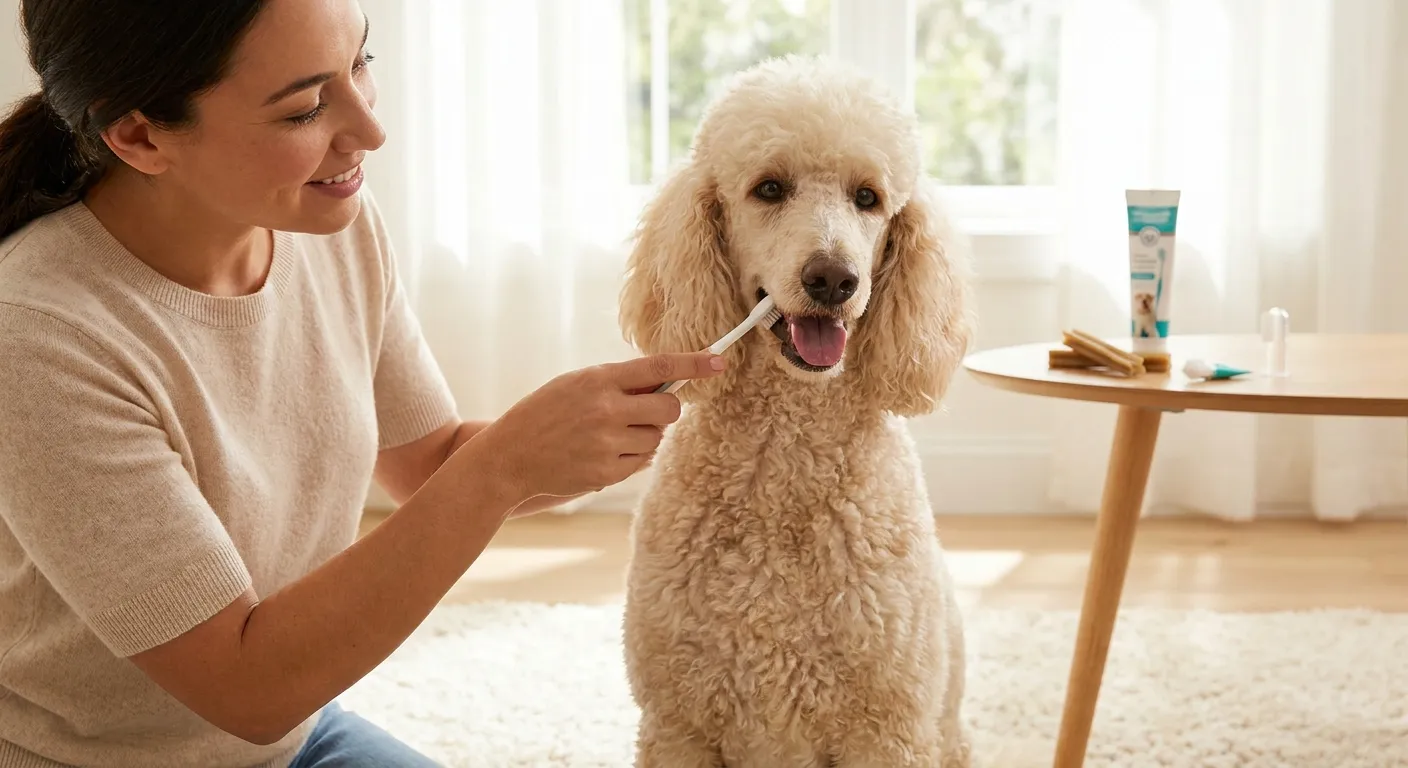
Incorporating these Poodle dental care tips into your routine can make a big difference. The most effective method is daily toothbrushing. Use a soft-bristled dog toothbrush and veterinary-approved dog toothpaste. Never use human toothpaste, which contains xylitol, toxic to dogs. Start slowly, introducing the brush and paste gradually to make it a positive experience. Focus on the outside surfaces of the teeth, especially where the gums meet the teeth. Beyond brushing, consider dental chews and toys specifically designed to reduce plaque and tartar. Look for products with the VOHC (Veterinary Oral Health Council) seal of acceptance. Dental diets, formulated with special kibble that scrapes teeth clean, can also be beneficial. Regular professional dental cleanings by your veterinarian are essential. These procedures involve scaling and polishing teeth under anesthesia. This allows for thorough examination and addressing issues below the gumline that at-home care cannot reach. Your vet can recommend the appropriate frequency for these cleanings based on your Poodle’s individual needs. Moreover, consistent at-home dental care complements these professional cleanings.
Starting a Dental Routine for Your Poodle Puppy
Establishing good oral hygiene habits early is crucial. For Poodle puppy essential care, begin by gently touching your puppy’s mouth and gums. Gradually introduce a finger brush or a piece of gauze wrapped around your finger. Apply a tiny amount of dog-specific toothpaste. The goal is to make this a positive, calm experience. Reward your puppy with praise and treats after each session. Consistency is key. Even if you only manage a few seconds initially, those small steps build tolerance. Over time, your Poodle puppy will become more comfortable with the process, making future dental care much easier. Furthermore, early exposure helps prevent fear or resistance to dental procedures later in life.
Choosing the Right Dental Products for Your Poodle
The market offers a wide array of dental products for dogs. Selecting the right ones is important for effective oral care. For instance, always choose a dog-specific toothbrush. These brushes are designed to fit a dog’s mouth comfortably. Dog toothpastes come in various flavors like poultry or peanut butter, which can make brushing more appealing. When it comes to dental chews, ensure they are appropriate for your Poodle’s size and chewing style. Some chews are too hard and can fracture teeth, while others might be too soft to provide adequate cleaning action. Always look for the VOHC seal, as this indicates scientific evidence of plaque and tartar reduction. Similarly, water additives and dental sprays can offer additional benefits. However, they should not replace brushing or professional cleanings. Consult your veterinarian for recommendations tailored to your Poodle’s specific needs. They can guide you on the best combination of products to support your Poodle’s oral health.
Recognizing Signs of Dental Disease in Poodles
Even with the best at-home care, it’s vital to recognize the signs of developing dental disease. Early detection can prevent more serious problems. Common indicators include bad breath (halitosis), which is often the first noticeable sign. Red, swollen, or bleeding gums are also clear warning signs of gingivitis. You might also observe yellow or brown tartar buildup on the teeth. Behavioral changes can also signal oral pain. For example, your Poodle might show reluctance to eat hard kibble, chew on one side of their mouth, or drop food. Pawing at the mouth, excessive drooling, or facial swelling are more severe symptoms. If you notice any of these signs, schedule an immediate visit with your veterinarian. Prompt attention can save your Poodle from significant discomfort and prevent the spread of infection to other parts of the body. Timely intervention is critical for maintaining your Poodle’s overall health and well-being.
The Role of Nutrition in Poodle Oral Health
Diet plays a significant role in maintaining good oral hygiene for your Poodle. While wet food is palatable, it tends to stick to teeth more readily, potentially increasing plaque formation. Dry kibble, especially specifically formulated dental diets, can help scrape away plaque as your Poodle chews. These dental diets often have larger, uniquely shaped kibble that encourages mechanical cleaning. Furthermore, some dental foods contain ingredients designed to reduce plaque and tartar chemically. Always ensure your Poodle has access to fresh, clean water. Hydration is important for saliva production, which helps rinse away food particles and neutralize acids. Discuss your Poodle’s diet with your veterinarian. They can recommend the best nutritional plan to support not only their overall health but also their dental health. For instance, proper nutrition is also vital for optimal nutrition for your senior Poodle.
Professional Dental Cleanings: A Cornerstone of Poodle Dental Care
While at-home care is essential, professional dental cleanings are irreplaceable. These procedures are performed under general anesthesia, which allows your veterinarian to conduct a thorough examination of your Poodle’s entire mouth. They can identify issues like fractured teeth, gum pockets, and lesions that are impossible to detect in an awake animal. During the cleaning, specialized ultrasonic scalers are used to remove plaque and tartar from above and below the gumline. This is crucial because bacteria below the gumline cause periodontal disease. After scaling, the teeth are polished to create a smooth surface, which makes it harder for plaque to adhere. X-rays are often taken to assess the health of the tooth roots and jawbone. Your veterinarian will discuss the findings and recommend any necessary extractions or further treatments. The frequency of these cleanings varies. It depends on your Poodle’s age, breed, genetics, and the effectiveness of your home care routine. Many Poodles benefit from annual cleanings, while others may need them more or less frequently. Regular professional care is a cornerstone of effective Poodle dental care tips.
Addressing Common Dental Myths and Misconceptions
Several myths surround canine dental care. Dispelling these can help owners provide better care. One common misconception is that feeding only dry kibble is sufficient for cleaning teeth. While dry food is better than wet food, it rarely provides the comprehensive cleaning needed to prevent dental disease entirely. Another myth suggests that a dog’s bad breath is normal. In reality, bad breath usually indicates an underlying oral health problem. It should prompt a veterinary visit. Some owners believe that anesthesia for dental cleanings is too risky. While any anesthesia carries a small risk, modern veterinary anesthesia protocols are very safe. Pre-anesthetic blood work and careful monitoring minimize risks. The benefits of a thorough cleaning far outweigh these minimal risks. Finally, relying solely on dental treats or toys without brushing is often insufficient. These products are adjuncts, not replacements, for comprehensive dental hygiene. Understanding these facts is crucial for effective Poodle dental care tips.
Long-Term Benefits of Consistent Poodle Dental Care
Committing to consistent Poodle oral health practices offers numerous long-term benefits. Firstly, it prevents pain and discomfort for your beloved companion. Imagine living with a constant toothache – this is what many dogs experience with untreated dental disease. Secondly, it significantly reduces the risk of systemic health issues. Oral bacteria can travel through the bloodstream, affecting vital organs such as the heart, kidneys, and liver. By maintaining good oral hygiene, you protect your Poodle from these serious secondary conditions. Thirdly, consistent care can extend your Poodle’s lifespan. A healthy mouth contributes to overall vitality. Fourthly, it saves money in the long run. Preventing dental disease is generally less expensive than treating advanced periodontal disease, which might require extensive extractions and medications. Ultimately, following these Poodle dental care tips ensures your Poodle maintains a sparkling smile, fresh breath, and a higher quality of life for many years. This proactive approach is a true testament to responsible pet ownership. For more on overall health, explore Poodle health and wellness.
When to Consult Your Veterinarian About Your Poodle’s Teeth
Knowing when to seek professional veterinary advice for your Poodle’s dental health is as important as daily care. If you observe any of the warning signs of dental disease, such as persistent bad breath, visible tartar, red or bleeding gums, or changes in eating habits, schedule an appointment immediately. Your veterinarian can assess the severity of the issue and recommend the appropriate course of action, which might include professional cleaning or other treatments. Furthermore, if you are unsure about how to properly brush your Poodle’s teeth or what products to use, your vet or a veterinary technician can provide a demonstration and personalized recommendations. They can also help you create a tailored dental care plan based on your Poodle’s age, health status, and breed-specific predispositions. Regular check-ups, even without obvious symptoms, are vital. These allow your vet to monitor your Poodle’s oral health proactively. For example, during a routine check-up, your vet might suggest an early professional cleaning to prevent future problems. This ensures your Poodle benefits from the best possible preventive care, supporting their long-term health. Timely professional guidance reinforces effective Poodle dental care tips.
Conclusion
Prioritizing your Poodle’s dental health is an act of responsible pet ownership. By consistently following these essential Poodle dental care tips, you contribute significantly to their comfort, health, and happiness. From daily brushing and appropriate dental products to regular professional cleanings, each step plays a crucial role. A healthy mouth not only ensures fresh breath and a sparkling smile but also safeguards against serious systemic health issues. Remember, proactive care is always more effective and less stressful than reactive treatment. Invest in your Poodle’s oral hygiene today to ensure they enjoy a long, vibrant life with a happy, healthy smile for years to come. Your dedication to their dental well-being is a fundamental part of providing them with the best possible life.
FAQ
What are the best ways to keep my Poodle’s teeth clean at home?
The most effective home care method is daily toothbrushing using a soft-bristled dog toothbrush and veterinary-approved dog toothpaste. Additionally, dental chews, toys with the VOHC seal, and specialized dental diets can help reduce plaque and tartar buildup. Consistency is key for optimal results.
How often should my Poodle have professional dental cleanings?
The frequency of professional dental cleanings varies depending on your Poodle’s individual needs, age, and breed. Many Poodles benefit from annual cleanings, but your veterinarian will recommend the appropriate schedule after assessing your Poodle’s oral health. They can provide personalized advice.
Can bad breath in my Poodle indicate a serious health problem?
Yes, persistent bad breath (halitosis) is a common sign of underlying dental disease in Poodles. It often indicates plaque and tartar buildup, gingivitis, or even more severe periodontal disease. If you notice bad breath, it’s important to consult your veterinarian for an examination.
Are there any specific Poodle breeds more prone to dental issues?
Yes, smaller Poodle varieties like Toy and Miniature Poodles are often more prone to dental issues. Their smaller mouths can lead to crowded teeth, which makes them more susceptible to plaque and tartar accumulation. This highlights the importance of diligent oral care for these breeds.
What kind of toothpaste should I use for my Poodle?
Always use a veterinary-approved dog toothpaste. These toothpastes are formulated specifically for dogs and are safe if swallowed. Never use human toothpaste, as it often contains xylitol, an artificial sweetener that is highly toxic to dogs. Dog toothpastes come in flavors dogs enjoy, like poultry or peanut butter.