Poodles are renowned for their intelligence and elegance. Beyond their charming looks, they communicate a wealth of information through subtle cues. Understanding Poodle body language signals is fundamental to fostering a deeper bond. It helps address their needs proactively and ensures their well-being. Your Poodle is constantly “talking” to you through their posture, tail wags, ear positions, and facial expressions. Learning to interpret these silent messages can help you anticipate their moods. Furthermore, it helps prevent behavioral issues and respond appropriately to their comfort or distress.
Interpreting Poodle Body Language Signals: Positive & Relaxed Cues
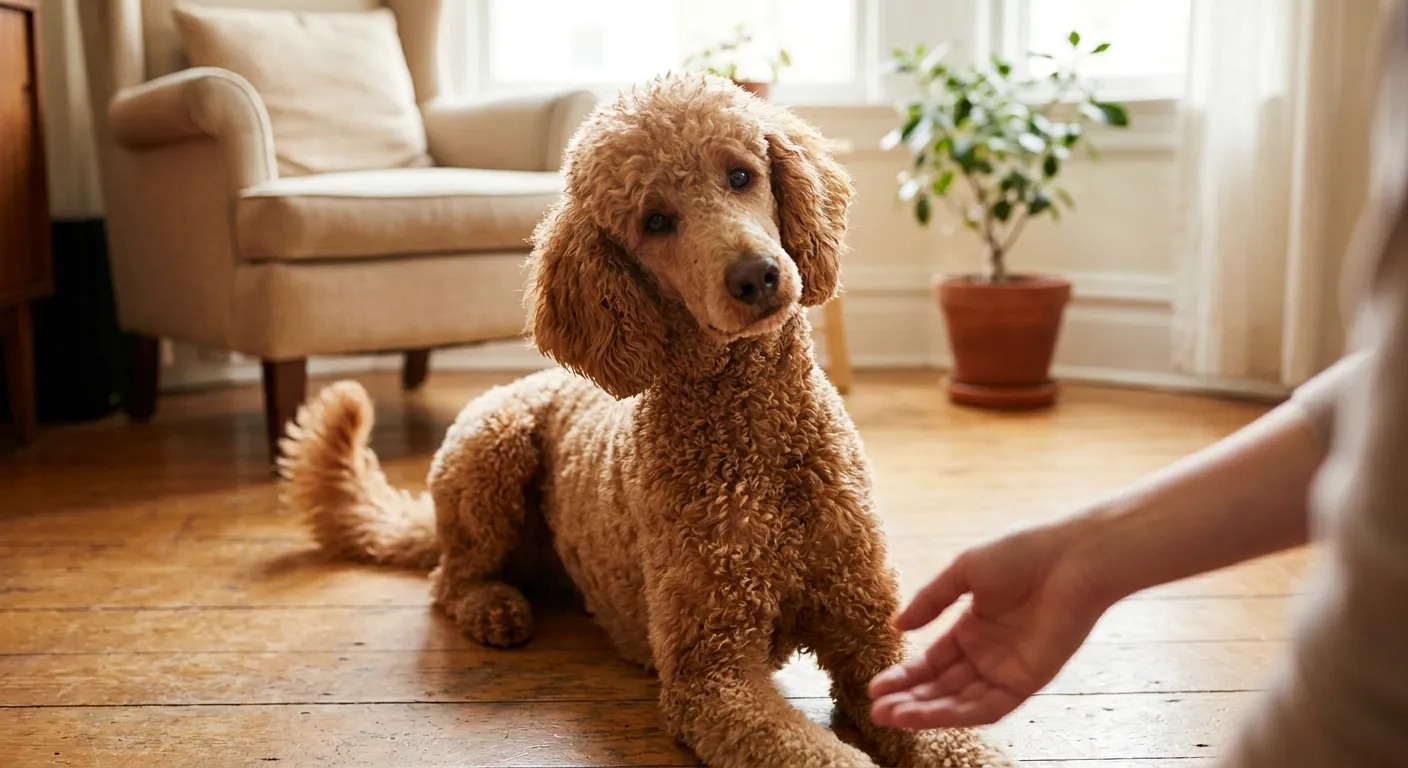
A happy, relaxed Poodle often displays clear signs of contentment. Look for a soft, relaxed gaze, sometimes with slightly squinted eyes. This indicates trust and comfort. Their ears might be in a natural position, not flattened back or rigidly forward. A loose, wagging tail, often in a wide sweep, signals joy and friendliness. A Poodle inviting play might perform a “play bow,” lowering their front end while keeping their rear elevated. A relaxed mouth, sometimes slightly open with a “smile,” or a quick tongue flick (not a frantic lip lick) can also indicate a calm state. These positive signals show a Poodle that feels safe and secure in their environment and with their human companions. Therefore, observing these signs is crucial for understanding your dog’s happiness.
Recognizing Signs of Stress or Anxiety in Your Poodle
Just as important as recognizing happiness is understanding when your Poodle is feeling stressed or anxious. Subtle stress signals can escalate if ignored. A Poodle experiencing mild discomfort might yawn excessively (when not tired), lick their lips repeatedly, or turn their head away to avoid direct eye contact. Their ears might be slightly flattened or pulled back. A tucked tail, low posture, or general stiffness can indicate fear or unease. Sometimes, a Poodle might even shake or tremble. Persistent panting without exertion or sudden shedding can also be stress indicators. Learning these cues allows you to intervene early, remove them from a stressful situation, or provide comfort before their anxiety escalates. For instance, understanding these signs can prevent issues like Poodle separation anxiety.
Understanding Warning Signals and Discomfort
While Poodles are generally amiable, any dog can show warning signs if they feel threatened or overwhelmed. A hard stare, a stiff body posture, or a low, slow tail wag can indicate discomfort or a potential warning. Growling, baring teeth, or snapping are clear indications that your Poodle feels cornered or is at their limit. Their hackles might be raised, and their body might appear rigid. It’s crucial to respect these signals and never push a Poodle past their comfort zone. Instead, calmly remove them from the situation and assess what caused their distress. Understanding these warning signs is vital for preventing bites and ensuring the safety of both your dog and others. Always prioritize your Poodle’s comfort.
The Nuances of Poodle Communication
Poodle communication extends beyond these basic categories. Their eyes are particularly expressive. Soft, blinking eyes convey contentment, while wide, unblinking eyes can signal fear or a challenge. The direction of their gaze also matters. Direct eye contact can be a sign of confidence or a challenge, depending on the context and the rest of their body. On the other hand, avoiding eye contact is often a sign of submission or discomfort. For example, a dog that looks away might be trying to de-escalate a tense situation. Furthermore, the position of their mouth, whether open in a relaxed pant or closed in a tight line, provides additional clues. A tightly closed mouth might suggest tension or discomfort. Conversely, a relaxed, slightly open mouth is typically a sign of ease. It’s truly fascinating to observe these subtle variations in Poodle body language signals.
Tail Talk: A Deeper Look at Poodle Tail Positions
The tail is one of the most dynamic indicators of a Poodle’s emotional state. However, it’s not just about the wag. The height, speed, and stiffness of the wag all contribute to the message. A high, fast wag often indicates excitement and happiness. A low, slow wag can signify uncertainty or apprehension. A tail tucked firmly between the legs is a clear sign of fear or submission. Conversely, a tail held high and stiff, with a minimal wag, might suggest arousal or a challenge. It’s important to remember that a wagging tail doesn’t always mean happiness. Sometimes, a Poodle may wag their tail when they are feeling conflicted or unsure. Therefore, always consider the tail in conjunction with other body cues. This comprehensive approach helps you truly understand your Poodle’s non-verbal communication.
Ear Expressions: What Your Poodle’s Ears Are Telling You
Poodles have drop ears, which can make their expressions slightly harder to read than dogs with erect ears. Nevertheless, their ears still convey significant information. Relaxed ears lie naturally against the head. Ears slightly pulled back or flattened can indicate submission, fear, or discomfort. Ears that are slightly raised and pointed forward might signal interest or alertness. If your Poodle’s ears are held very stiffly forward, they might be highly focused or even showing aggression. Paying attention to these subtle shifts in ear position provides valuable insight into your Poodle’s emotional state. In fact, combining ear observations with other Poodle body language signals offers a more complete picture. This careful observation builds a stronger connection between you and your companion.
Decoding Poodle Facial Expressions
Beyond the eyes and ears, a Poodle’s entire facial expression offers clues. A relaxed face with soft eyes and a slightly open mouth indicates contentment. A wrinkled brow, often accompanied by a worried or squinted gaze, can signal confusion, concern, or mild anxiety. A Poodle might also show a “grin” by pulling back their lips without baring teeth, which is often a submissive gesture. Excessive lip licking, especially when no food is present, is a common sign of stress. Yawning, when not tired, also falls into this category. Observing these facial cues can help you understand your Poodle’s immediate reactions to their environment. Furthermore, it helps you respond appropriately to their needs. Understanding these nuances of Poodle body language signals enhances your ability to care for them.
The Role of Posture and Overall Body Stance
A Poodle’s overall body posture is a crucial component of their communication. A relaxed Poodle will have a soft, fluid stance. Their weight will be evenly distributed, and their muscles will not appear tense. A “play bow” is a clear invitation to play, signaling a friendly and energetic mood. Conversely, a stiff, rigid body posture suggests tension, fear, or even aggression. A Poodle trying to make themselves look smaller, with a crouched posture and tucked tail, is likely feeling fearful or submissive. A Poodle standing tall, with hackles raised and a stiff tail, is likely feeling threatened or assertive. Recognizing these postures helps you gauge their comfort level. It also allows you to manage interactions with other dogs or people. In addition, understanding these elements of Poodle body language signals helps prevent potential conflicts.
Vocalizations and Their Connection to Body Language
While this article focuses on silent cues, it’s important to note that vocalizations often accompany and reinforce Poodle body language signals. A happy bark might come with a loose, wagging tail and an invitation to play. A distressed whine or whimper will likely be paired with a tucked tail, lowered posture, and averted gaze. Growling or snarling, clear warning signs, are almost always accompanied by a stiff body, bared teeth, and a hard stare. Therefore, interpreting your Poodle’s vocalizations in context with their physical cues provides the most accurate understanding of their state. Never ignore a growl; it’s a vital communication from your dog. For more on your Poodle’s unique traits, consider reading about Poodle personality traits.
Building Trust Through Understanding Poodle Cues
Consistently observing and responding appropriately to your Poodle’s communication builds trust. When you acknowledge their stress signals by removing them from a difficult situation, you teach them that you are their protector. When you engage in play in response to their play bows, you reinforce your bond. This continuous feedback loop strengthens your relationship and helps your Poodle feel understood and secure. Furthermore, it can prevent many behavioral problems that stem from miscommunication. A well-understood Poodle is a happier, more confident Poodle. Therefore, dedicating time to learn and apply your knowledge of Poodle body language signals is an investment in your shared life. For instance, this understanding is vital when welcoming home a Poodle puppy.
Common Misinterpretations of Poodle Body Language
It’s easy to misinterpret some Poodle body language signals. For example, a quick lip lick can sometimes be a sign of anticipation, but if it’s repeated and accompanied by other stress signals, it indicates anxiety. Similarly, a yawn when your Poodle isn’t tired is often a calming signal or a sign of stress. Many owners might confuse a dog rolling onto their back as an invitation for a belly rub, when in fact, it can be a sign of submission or fear, especially if the dog’s body is stiff and eyes are averted. Therefore, always consider the full context of their posture, facial expression, and environment. Educating yourself on these common misinterpretations helps you avoid inadvertently reinforcing unwanted behaviors or missing signs of distress. Understanding these subtleties truly helps in decoding your Poodle’s communication.
How to Respond to Different Poodle Signals
Knowing what your Poodle is communicating is only half the battle; knowing how to respond is equally important. If your Poodle shows signs of stress or fear, calmly remove them from the situation. Avoid forcing interaction. If they are showing warning signs like growling, respect their boundaries and give them space. Never punish a growl, as it’s their way of communicating discomfort before resorting to a bite. For positive signals, reciprocate! Engage in play, offer affection, and reinforce their happy behaviors. By responding thoughtfully and consistently, you foster a safe and trusting environment for your Poodle. This proactive approach is essential for preventing issues and promoting a harmonious home. For further insights, resources like the ASPCA’s guide to common dog behaviors offer valuable information. Also, the AKC provides guidance on reading dog body language.
Conclusion: Becoming Fluent in Your Poodle’s Language
In conclusion, becoming fluent in your Poodle’s body language is one of the most valuable skills a Poodle owner can develop. By paying close attention to their posture, tail movements, ear positions, and facial expressions, you gain unparalleled insight into their inner world. This understanding allows you to meet their needs more effectively, strengthen your bond, and prevent potential behavioral issues. Remember, your Poodle is always communicating. It’s up to us, as their loving companions, to listen with our eyes and respond with empathy and knowledge. Continuously observing and learning these Poodle body language signals will lead to a happier, healthier, and more harmonious relationship with your beloved companion.
FAQ: How do Poodles show they are happy?
Poodles show happiness with a soft, relaxed gaze, sometimes squinted eyes, and a loose, wide wagging tail. They might also have a relaxed, slightly open mouth, or perform a “play bow” to invite interaction.
FAQ: What are common signs of stress in a Poodle?
Common signs of stress in a Poodle include excessive yawning (when not tired), repeated lip licking, turning their head away, flattened or pulled-back ears, a tucked tail, low posture, or general body stiffness.
FAQ: How can I tell if my Poodle is afraid?
If your Poodle is afraid, they might tuck their tail, lower their body posture, tremble, avoid eye contact, or try to make themselves appear smaller. Their ears might be pulled back, and they might lick their lips repeatedly.
FAQ: What does a Poodle’s tail position indicate?
A Poodle’s tail position indicates various emotions. A high, fast wag usually means excitement, while a low, slow wag can suggest uncertainty. A tucked tail signals fear, and a stiff, high tail might indicate arousal or a challenge.
FAQ: Why is understanding my Poodle’s non-verbal cues important?
Understanding your Poodle’s non-verbal cues is important because it allows you to anticipate their moods, address their needs proactively, prevent behavioral problems, and strengthen your bond. It helps ensure their overall well-being and safety.