Poodle allergies and ear health are closely connected, especially in this sensitive and intelligent breed. Because Poodles often react to environmental and food triggers, their ears frequently show the first signs of trouble. Therefore, long-term management focuses on both allergy control and routine ear care.
Many owners treat symptoms only when infections appear. However, lasting improvement requires prevention rather than reaction. When you address underlying triggers early, you reduce discomfort and repeated vet visits.
This guide explains how to manage Poodle allergies and ear health step by step. More importantly, it outlines sustainable habits that protect your dog’s comfort for years to come.
Why Poodles Are Prone to Allergies and Ear Problems
Poodles have a genetic predisposition to skin sensitivities. Because of this, they often develop chronic itching, redness, and inflammation. While these symptoms may appear mild at first, they can worsen without intervention.
Their ear structure also increases risk. Poodles have narrow ear canals and dense hair growth inside the ears. As a result, airflow becomes limited. Warm, moist environments create ideal conditions for yeast and bacteria.
Additionally, allergic reactions cause inflammation inside the ear canal. That swelling traps debris and moisture. Consequently, infections become more frequent.
Understanding the connection between skin reactions and ear issues helps you create a prevention plan. Instead of treating each infection separately, you manage the underlying cause.
Common Allergy Triggers in Poodles
Long-term success begins with identifying triggers. Although each dog differs, certain allergens frequently contribute to Poodle allergies and ear health challenges.
Environmental Allergens
Pollen, dust mites, and mold commonly irritate sensitive Poodles. Seasonal changes often increase flare-ups. If symptoms worsen during specific months, environmental triggers may be responsible.
Food Sensitivities
Some dogs react to certain proteins or grains. Common culprits include chicken, beef, dairy, and wheat. Food-related allergies often cause ear infections along with skin irritation.
Contact Irritants
Shampoos, cleaning products, and lawn chemicals sometimes trigger reactions. Switching to gentle, hypoallergenic products reduces risk.
Identifying triggers may require trial and error. However, consistent observation speeds the process.
Signs Your Poodle Has Allergy-Related Ear Issues
Early detection prevents complications. Therefore, watch for subtle changes in behavior.
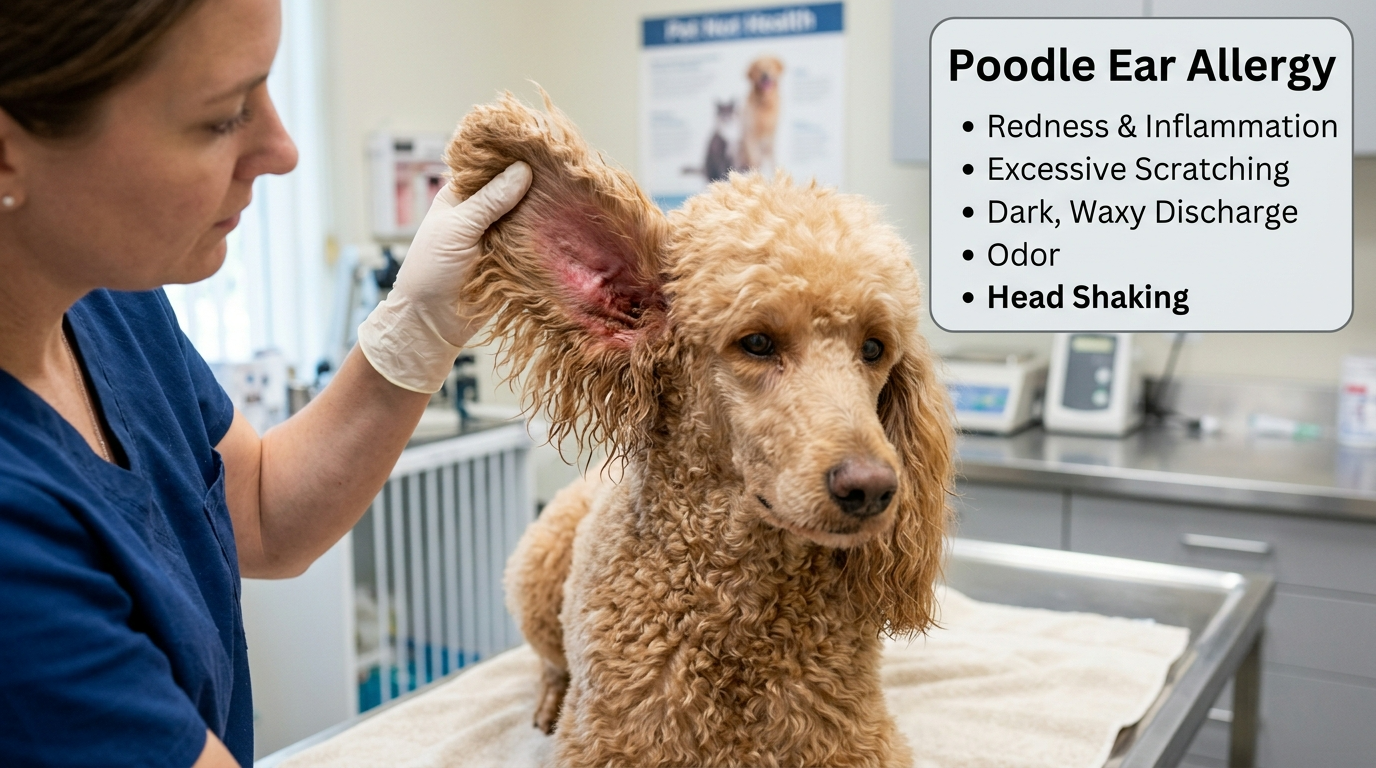
Frequent head shaking signals irritation. Scratching at the ears also indicates discomfort. Additionally, redness or odor suggests infection.
Discharge inside the ear canal often appears brown or yellow. In severe cases, swelling causes pain when touched.
Because Poodle allergies and ear health issues overlap, skin symptoms usually appear at the same time. You may notice paw licking, facial rubbing, or hot spots.
Prompt action limits damage. When treated early, infections resolve faster and with fewer medications.
Long-Term Strategies for Managing Poodle Allergies and Ear Health
Sustainable management combines multiple approaches. Instead of relying on medication alone, focus on prevention, nutrition, and hygiene.
Regular Ear Cleaning Routine
Consistent cleaning reduces debris buildup. Use vet-approved ear cleaners designed for dogs. Avoid alcohol-based solutions because they dry the skin excessively.
Clean ears once weekly if your dog has chronic issues. However, adjust frequency based on veterinary advice. Over-cleaning can irritate delicate tissue.
After bathing or swimming, dry ears thoroughly. Moisture encourages bacterial growth. Therefore, always check ears after water exposure.
Dietary Adjustments for Allergy Control
Nutrition significantly affects immune response. High-quality diets rich in omega fatty acids support skin barrier function.
If food sensitivities are suspected, consider an elimination diet. Work with your veterinarian to identify safe protein sources. Hydrolyzed or limited-ingredient formulas often help.
When you reduce internal inflammation, Poodle allergies and ear health improve simultaneously.
Grooming Practices That Support Ear Health
Routine grooming helps control allergens. Keep hair trimmed around the ears to improve airflow. However, avoid aggressive plucking unless advised by a professional.
Brush coats regularly to remove pollen and dust. Additionally, wipe paws after outdoor walks to limit allergen exposure.
Bathing every three to four weeks with hypoallergenic shampoo maintains skin balance. Frequent baths may dry the skin, so moderation remains key.
Environmental Control Measures
Reducing allergens inside the home creates measurable improvement. While you cannot eliminate all triggers, you can minimize exposure.
Use HEPA air filters to capture airborne particles. Wash bedding weekly in hot water to remove dust mites. Vacuum carpets frequently, especially during high pollen seasons.
Limit your dog’s access to treated lawns or heavily wooded areas during peak allergy periods. When outdoor exposure increases symptoms, shorten walks temporarily.
These small adjustments significantly support Poodle allergies and ear health over time.
When Medication Becomes Necessary
Despite careful management, flare-ups sometimes occur. In these cases, veterinary intervention prevents complications.
Topical ear drops treat infections quickly. Oral medications may reduce inflammation during severe episodes. However, long-term reliance on steroids should be avoided when possible.
Newer therapies, such as allergy injections or immune-modulating treatments, may provide relief. Discuss options with your veterinarian to determine suitability.
Medication should complement preventive care, not replace it. Therefore, continue grooming and dietary strategies even during treatment.
Preventing Chronic Ear Infections
Recurring infections often stem from incomplete treatment. Always finish prescribed medications fully. Stopping early increases relapse risk.
Schedule follow-up visits to confirm resolution. Even if symptoms improve, lingering bacteria may remain.
Keep a symptom journal to track flare-ups. Noting seasonal patterns helps identify triggers.
Consistency remains essential. When preventive habits become routine, episodes decrease in frequency and severity.
Strengthening the Immune System Naturally
A strong immune system reduces allergic reactions. Balanced nutrition, regular exercise, and stress reduction all contribute.
Probiotic supplements may support gut health. Because much of the immune system resides in the digestive tract, gut balance influences skin reactions.
Avoid unnecessary antibiotics, which disrupt healthy bacteria. Instead, focus on targeted treatments when required.
Hydration also matters. Ensure fresh water remains available daily.
Although natural strategies require time, they build long-term resilience.
Monitoring Changes as Your Poodle Ages
Allergy patterns may shift over time. Puppies sometimes outgrow mild sensitivities. Conversely, adult dogs may develop new reactions.
Senior Poodles may experience thinner skin and reduced immunity. Therefore, regular veterinary exams become increasingly important.
Adjust care routines as your dog ages. What worked at two years old may require modification at eight.
By staying attentive, you maintain steady progress in managing Poodle allergies and ear health.
Working With Your Veterinarian
Partnership with a trusted veterinarian strengthens outcomes. Annual exams provide baseline information. If symptoms worsen, diagnostic testing may identify hidden triggers.
Skin scrapings, cytology tests, and food trials clarify complex cases. Although testing may feel extensive, accurate diagnosis prevents repeated infections.
Ask questions about preventive strategies. Many clinics offer tailored care plans for chronic allergy patients.
Collaborative care ensures that Poodle allergies and ear health remain manageable long term.
Final Thoughts on Long-Term Care
Managing Poodle allergies and ear health requires commitment, observation, and patience. While quick fixes may provide temporary relief, prevention delivers lasting comfort.
Start with consistent ear cleaning and balanced nutrition. Then reduce environmental triggers within your home. Monitor changes closely and adjust routines when needed.
Although setbacks may occur, steady care reduces frequency and severity over time. Most importantly, early intervention prevents chronic complications.
With proactive habits and veterinary guidance, your Poodle can live comfortably despite sensitivities. Long-term attention to Poodle allergies and ear health protects both quality of life and overall well-being.
FAQ
- How often should I clean my Poodle’s ears?
Most allergy-prone Poodles benefit from weekly cleaning, but always follow veterinary guidance for frequency. - Can food changes really reduce ear infections?
Yes, dietary adjustments often lower inflammation and decrease recurring ear problems. - Are seasonal allergies permanent in dogs?
Seasonal sensitivities may return yearly, but proactive management reduces severity significantly. - What signs indicate a serious ear infection?
Strong odor, thick discharge, swelling, and pain when touched require immediate veterinary care. - Do probiotics help with skin and ear sensitivity?
Probiotics may support immune balance and improve overall skin health when used consistently.