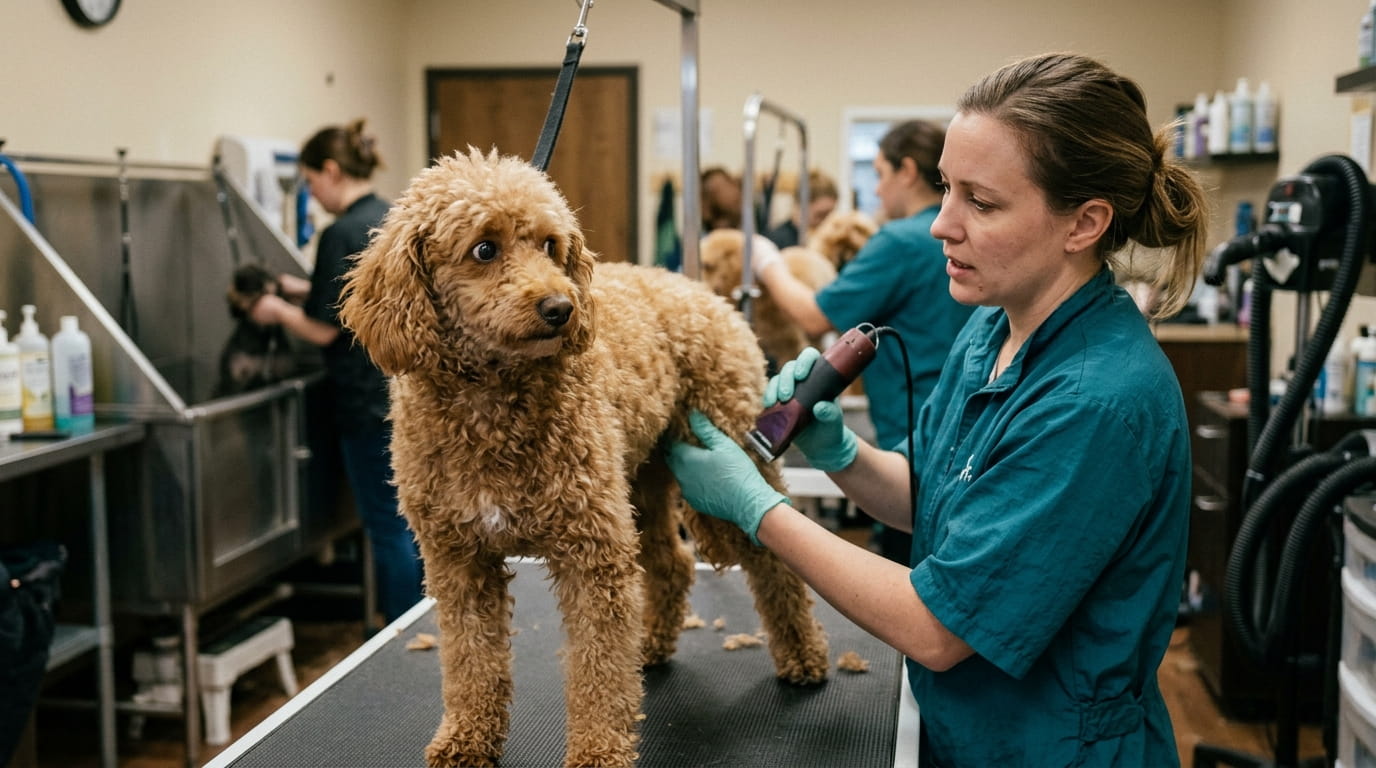
Anxious Poodle grooming requires more than a neat haircut and a quick appointment. Poodles have dense, curly coats that need regular care, yet many sensitive dogs find grooming stressful because of noise, handling, clippers, dryers, new smells, and unfamiliar people. The right groomer can help your dog feel safer, while the wrong setting can make fear worse. Therefore, choosing a groomer for an anxious Poodle should focus on patience, communication, gentle handling, coat knowledge, and realistic expectations. When you choose carefully, grooming becomes less like a battle and more like a calm routine your dog can learn to tolerate with confidence.
Why Anxious Poodles Need a Different Grooming Approach
Poodles need regular brushing, bathing, trimming, ear care, nail care, and coat maintenance. Because their coats can mat close to the skin, skipped grooming can lead to pulling, discomfort, and skin irritation. However, anxious dogs often resist the very care they need most. They may shake, pant, hide, freeze, bark, snap, or try to escape. These signs do not mean your dog is being difficult. Instead, they often show fear, confusion, or stress.
Anxious Poodle grooming works best when the groomer understands behavior as well as coat care. A groomer should know how to read body language, slow down when needed, and avoid forcing a dog through every step at once. This matters because fear can build quickly. If a Poodle feels trapped, rushed, or overwhelmed, future visits may become harder.
A thoughtful groomer also understands that a perfect haircut is not always the first goal. For an anxious dog, safety and trust matter more than a flawless finish. A shorter, simpler trim may work better than a complicated style if it keeps the session calm. Over time, your dog may handle more as confidence improves.
Owners also play a major role. A groomer sees your dog for a limited time, but you manage coat care between visits. Regular brushing, gentle touch practice, and calm handling at home can help your Poodle arrive better prepared. As a result, the groomer can focus on progress instead of crisis management.
Look for Experience With Poodles and Nervous Dogs
A good groomer for an anxious Poodle should have real experience with curly coats and sensitive behavior. Poodle coats require skill because mats can hide under curls, especially behind ears, under legs, around the collar area, and near the tail. If a groomer lacks coat knowledge, they may pull too hard, miss problem areas, or choose a style that does not suit your dog’s maintenance needs.
Anxious Poodle grooming also requires emotional awareness. Ask whether the groomer regularly works with nervous, senior, rescue, or reactive dogs. Their answer should sound calm and practical, not dismissive. A skilled groomer will not promise that every dog “gets over it” after one visit. Instead, they will explain how they adjust the session, reduce stress, and build trust over time.
Pay attention to how the groomer talks about difficult dogs. If they blame, shame, or laugh at fearful behavior, keep looking. A kind professional will describe anxious dogs with respect. They may mention breaks, shorter sessions, quiet handling, low-stress restraint, or gradual introductions. These details show that they think beyond the haircut.
Also, ask about Poodle-specific styles. The groomer should understand practical pet trims, clean face trims, sanitary trims, teddy bear styles, and low-maintenance cuts. For anxious dogs, a manageable style often works better than a high-maintenance look. This reduces brushing pressure at home and shortens future appointments.
Visit the Salon Before Booking
Before booking anxious Poodle grooming, visit the salon or request a short meet-and-greet. The space does not need to look fancy, but it should feel organized, clean, and controlled. Notice the noise level, the smell, the number of dogs waiting, and how staff handle pets. A busy salon can still work well, but a chaotic one may overwhelm a nervous Poodle.
Ask whether your dog can visit briefly without a full groom. Some groomers offer introduction sessions, puppy visits, or comfort appointments. These shorter visits can help your Poodle sniff the space, meet the groomer, receive treats, and leave before stress builds. This creates a better first impression than jumping straight into bath, dryer, clippers, and nail trimming.
A quieter setup may help some dogs. Mobile groomers, one-on-one salons, home-based grooming studios, or low-volume salons can reduce noise and waiting time. However, the groomer’s skill still matters more than the setting alone. A quiet space with rough handling will not help. A busy salon with calm systems may still be a good fit.
Watch how the groomer greets your dog. They should avoid rushing into your dog’s face or grabbing the leash immediately. Instead, they should allow a little space and observe your Poodle’s body language. Calm introductions can set the tone for the whole relationship.
Ask the Right Questions Before the First Appointment
Good questions reveal how a groomer thinks. Ask how they handle dogs that shake, hide, growl, or panic. Ask whether they use breaks during the appointment. Also, ask what they do if a dog becomes too stressed to continue. A trustworthy groomer should have a clear answer. They should never suggest pushing through severe fear just to finish the groom.
Anxious Poodle grooming often improves when the groomer customizes the plan. Ask whether they can split services across visits. For example, one appointment may focus on bathing and brushing, while another handles the haircut. Some dogs do better when sessions stay shorter. Others do better when grooming happens in one calm appointment without long cage time.
Discuss drying methods too. High-velocity dryers can scare anxious dogs because they create strong noise and air pressure. Some groomers can use lower settings, towel drying, happy hoodies, or gradual dryer introductions. Your Poodle still needs safe drying because damp curly coats can mat. However, the process should match your dog’s tolerance.
You should also ask about restraint. Grooming requires safety tools, but restraint should never feel harsh. A professional may use grooming loops, non-slip surfaces, and steady support. Still, they should avoid excessive force. If your dog needs more support than a normal salon can safely provide, the groomer should say so honestly.
Choose a Groomer Who Communicates Clearly
Clear communication builds trust between you, your dog, and the groomer. Before the first appointment, share your Poodle’s history. Mention fears, bite history, medical issues, sore spots, past grooming problems, matting, ear sensitivity, or nail anxiety. Honest details help the groomer plan safely. Hiding problems can put everyone at risk.
Anxious Poodle grooming should include realistic expectations. If your dog has mats, the groomer may need to clip the coat short rather than brush painfully through tangles. This can disappoint owners who want a fluffy look, but comfort should come first. A good groomer will explain the reason and help you prevent matting in the future.
After the appointment, the groomer should give helpful feedback. They might tell you which parts your dog handled well, which parts caused stress, and what you can practice at home. This information matters because it turns each visit into a learning step. It also helps you track progress over time.
Avoid groomers who refuse to discuss the process or dismiss your concerns. You do not need to hover during every appointment, but you deserve clear answers. A professional groomer should welcome respectful questions, especially when anxiety affects your dog’s welfare.
Watch for Red Flags That Signal the Wrong Fit
Some warning signs are easy to spot. If a groomer handles dogs roughly, shouts, jerks leashes, or mocks fearful behavior, leave. If the salon smells strongly of waste, looks unsafe, or has loose dogs running without control, keep searching. Your anxious Poodle needs a calm and predictable environment.
Anxious Poodle grooming can also go wrong when a groomer overpromises. Be cautious if someone guarantees a perfect result on the first visit without meeting your dog. Fearful dogs need patience, and some need several sessions to improve. A better groomer will promise care, safety, and honest communication, not instant perfection.
Another red flag is poor transparency around injuries or stress. Small nicks can happen in grooming, especially with mats or sudden movement. However, a trustworthy groomer tells you what happened and explains next steps. If a groomer hides problems or blames your dog harshly, that relationship may not feel safe.
Pay attention to your dog after the appointment. Some tiredness is normal, especially after a full groom. However, extreme fear, unusual pain, limping, new sensitivity, or sudden behavior changes deserve attention. If something feels wrong, ask questions and consider a different grooming plan.
Prepare Your Poodle Before the Visit
Preparation can make anxious Poodle grooming much easier. Start by helping your dog feel comfortable with gentle handling at home. Touch their paws, ears, legs, tail, and face for a few seconds, then reward calm behavior. Keep sessions short and positive. Over time, your dog can learn that handling predicts good things.
Brush your Poodle regularly, even if you keep the coat short. Use the right tools and avoid pulling through mats. If you find a tangle, work slowly or ask the groomer for advice. Regular brushing reduces discomfort during appointments and helps your dog trust the process more.
Practice grooming sounds at a low level. You can play dryer or clipper sounds softly while offering treats, then increase volume gradually. Do not rush this step. If your dog leaves, hides, or refuses food, the sound may be too intense. Calm exposure works best when your dog still feels safe.
Exercise before the appointment can help, but avoid overdoing it. A gentle walk may reduce nervous energy. However, an exhausted dog may feel less patient during handling. Aim for calm movement, a bathroom break, and enough time to settle before arrival.
Create a Low-Stress First Grooming Plan
The first appointment should focus on building trust. Tell the groomer that you prefer a calm experience over a perfect style. If your dog is very anxious, ask about a shorter visit. A bath, face trim, or nail introduction may be enough for the first session. Small wins can lead to better long-term results.
Anxious Poodle grooming may require a practical haircut. Shorter trims can reduce brushing stress and make home care easier. While long fluffy styles look beautiful, they demand frequent maintenance. If your dog dislikes brushing, a lower-maintenance trim may protect both the coat and your relationship.
Bring familiar rewards if the groomer allows them. Small treats can help create positive associations. However, tell the groomer about allergies or stomach sensitivity. Some dogs also find comfort in a familiar mat, blanket, or calm handoff routine. Keep goodbyes brief and relaxed because emotional farewells can increase stress.
After the visit, let your Poodle decompress. Offer water, a bathroom break, and quiet rest. Avoid crowding your dog with too much excitement. Later, check the coat, skin, ears, nails, and behavior. This helps you understand how the session affected your dog.
Support Progress Between Grooming Appointments
A groomer can help, but progress continues at home. Keep grooming tools visible without making them scary. Touch the brush, offer a treat, then put it away. Later, brush one small area and reward. Gradual practice often works better than forcing a full brushing session when mats already exist.
Anxious Poodle grooming becomes easier when visits follow a steady schedule. Waiting too long can lead to mats, longer sessions, and more stress. Many Poodles do best with grooming every four to eight weeks, depending on coat length and style. Your groomer can suggest a schedule that fits your dog’s coat and anxiety level.
Use calm routines before each appointment. Pack treats, arrive on time, and avoid rushing. If you feel stressed, your dog may pick up on that energy. Speak normally, move slowly, and keep the handoff simple. A predictable routine helps your Poodle understand what happens next.
Stay flexible. Some dogs improve quickly, while others need ongoing accommodations. That does not mean you failed. It means your dog needs a plan built around trust. With the right groomer and steady practice, many anxious Poodles become more cooperative over time.
Conclusion: The Right Groomer Builds Trust First
Anxious Poodle grooming should always put safety, comfort, and trust before appearance. A skilled groomer understands that nervous dogs need patience, not pressure. They know how to read body language, adjust the session, communicate clearly, and choose practical coat styles that reduce stress. Most importantly, they treat your Poodle as a sensitive individual, not just another appointment on the schedule.
Choosing the right groomer may take time, but it is worth the effort. Visit salons, ask direct questions, watch how staff handle dogs, and trust your instincts. Then support the process at home with gentle handling, regular brushing, and consistent appointments. When your Poodle feels understood, grooming can become calmer and safer. Over time, each positive experience can help your dog build confidence, one gentle session at a time.
FAQ
1. How Do I Know If a Groomer Is Good With Nervous Dogs?
A good groomer explains how they use breaks, calm handling, slow introductions, and realistic expectations. They also ask about your dog’s history and body language. If they dismiss fear or promise instant results, keep looking.
2. Should I Stay With My Poodle During the Appointment?
It depends on the dog and the groomer’s policy. Some dogs stay calmer when owners leave, while others need gradual handoffs. Ask the groomer what works best for safety and focus.
3. How Often Should a Poodle Visit the Groomer?
Most Poodles need grooming every four to eight weeks, depending on coat length, lifestyle, and brushing routine. An anxious dog may benefit from shorter, more frequent visits at first.
4. What If My Dog Has Mats and Feels Scared?
A groomer may need to clip mats short rather than brush them out painfully. This protects your dog’s skin and comfort. Afterward, ask for a simpler trim and a better brushing plan.
5. Can Grooming Anxiety Improve Over Time?
Yes, many dogs improve with gentle handling, consistent visits, and positive experiences. Progress may take time, but patient training and the right groomer can make each session easier.