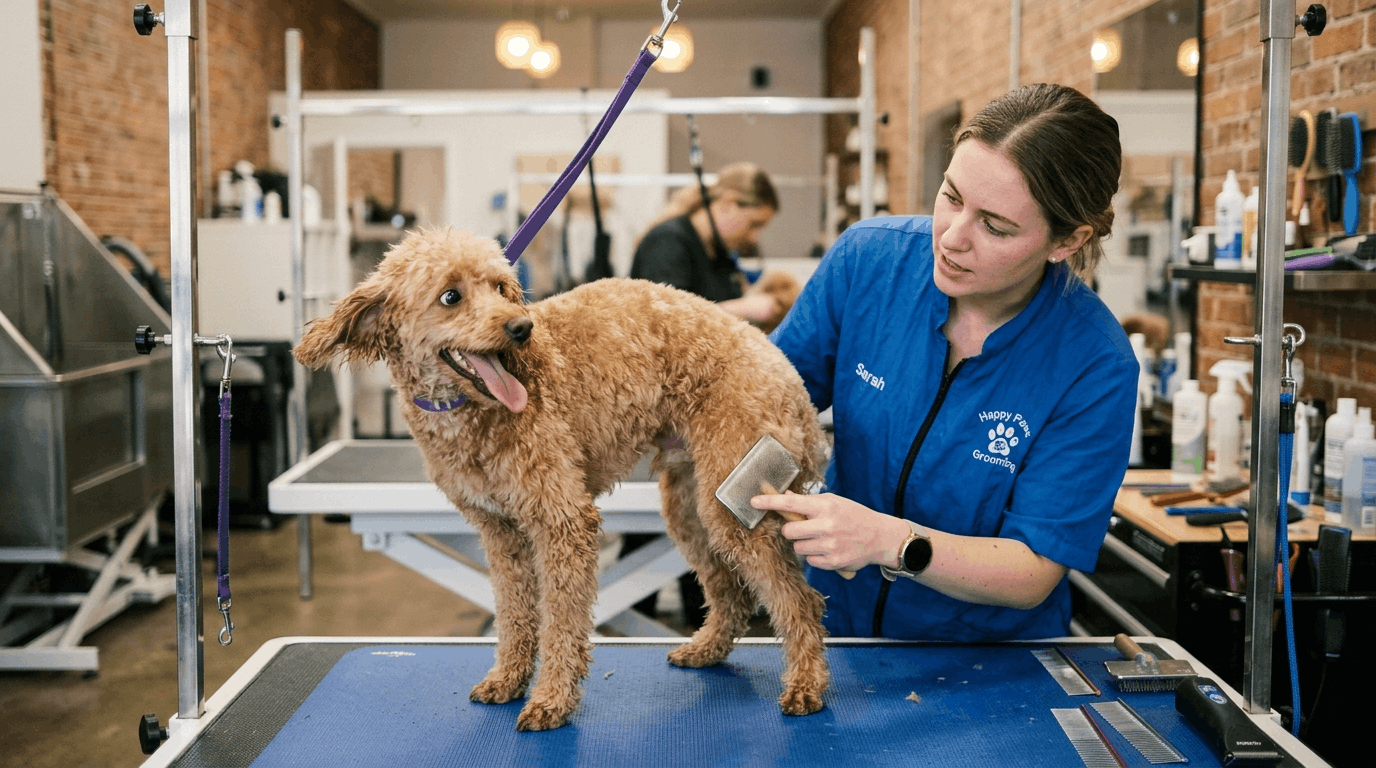
Grooming is an essential part of caring for a Poodle, but not every dog enjoys the process equally. While some Poodles remain calm and cooperative, others become anxious, fearful, or overwhelmed during brushing, bathing, nail trimming, or clipping sessions. Recognizing the signs your poodle is stressed during grooming can help owners reduce fear and create safer, more comfortable experiences for their dogs.
Poodles require regular grooming because of their curly, continuously growing coats. Without proper maintenance, mats and tangles can quickly develop, leading to discomfort and skin irritation. However, grooming involves close handling, loud equipment, unfamiliar sensations, and physical restraint, which may feel stressful for sensitive dogs.
Stress during grooming often develops gradually. Some Poodles tolerate mild discomfort quietly at first, while others display obvious nervous behaviors immediately. Therefore, owners should learn how to recognize both subtle and clear stress signals before anxiety worsens over time.
Understanding the signs your poodle is stressed allows owners and groomers to respond more appropriately. Early intervention often prevents fear-based behaviors from escalating into aggression, panic, or long-term grooming anxiety.
Why Grooming Feels Stressful for Some Poodles
Poodles are intelligent, emotionally sensitive dogs that often react strongly to unfamiliar situations or uncomfortable handling. Although regular grooming becomes necessary throughout their lives, some dogs still struggle emotionally with the experience.
The signs your poodle is stressed may appear because grooming combines multiple uncomfortable sensations at once. Clippers vibrate loudly, scissors move close to the face, water changes body temperature, and nail trimming creates unfamiliar pressure on the paws.
Past negative experiences may also contribute to anxiety. A painful mat removal, accidental nail injury, or rough handling during earlier grooming sessions can create lasting fear associations.
Some Poodles naturally possess more sensitive temperaments than others as well. Toy and Miniature Poodles, in particular, sometimes display heightened nervousness around loud sounds or physical restraint.
Lack of early grooming exposure can worsen the issue. Puppies that never experienced gentle brushing, bathing, or handling during early development may become fearful as adults.
Excessive Panting and Restlessness
One of the most common signs your poodle is stressed involves excessive panting unrelated to heat or physical activity. Nervous dogs often breathe faster because stress activates the body’s natural fight-or-flight response.
Panting may appear alongside pacing, shifting weight constantly, or struggling to settle on the grooming table. Some Poodles repeatedly reposition themselves because they feel emotionally uncomfortable during the session.
Restlessness can also include frequent head turning, difficulty standing still, or attempting to move away from grooming tools. Although occasional movement is normal, persistent inability to relax often signals elevated stress levels.
Owners should watch for escalating behavior patterns. Mild restlessness may progress into stronger fear responses if the dog feels trapped or overwhelmed for too long.
Shorter grooming sessions sometimes help highly anxious dogs build confidence gradually without becoming emotionally overloaded.
Lip Licking and Yawning
Many stress signals remain subtle and easy to miss. Lip licking and repeated yawning are among the most overlooked signs your poodle is stressed during grooming sessions.
Dogs frequently lick their lips when feeling nervous or uncertain. Although lip licking sometimes occurs around food naturally, repeated licking during grooming often reflects emotional discomfort instead.
Yawning can also indicate stress rather than tiredness. Dogs sometimes yawn repeatedly when trying to calm themselves in uncomfortable situations.
These calming signals help dogs communicate unease before stronger reactions appear. Consequently, owners who recognize these early signs may prevent escalating anxiety more effectively.
Poodles often display subtle body language before becoming visibly fearful. Therefore, careful observation during grooming becomes extremely important for identifying emotional stress early.
Tucked Tail and Body Tension
Body posture reveals a great deal about emotional state. One of the clearest signs your poodle is stressed involves a tucked tail combined with stiff or tense muscles.
Relaxed dogs typically maintain loose posture and natural movement. In contrast, stressed dogs often appear rigid, hunched, or unusually still. Some Poodles freeze completely because they feel uncertain or afraid.
Ears pinned backward may also accompany tense body language. Additionally, stressed dogs sometimes lower their heads or avoid direct eye contact during grooming.
Trembling occasionally occurs in more anxious individuals, especially around loud clippers or nail trimming tools. Small Poodles may display shaking more noticeably because of their naturally sensitive temperaments.
Body tension should never be ignored simply because the dog remains quiet. Silent stress can still indicate significant emotional discomfort.
Trying to Escape or Hide
Some of the most obvious signs your poodle is stressed involve active avoidance behaviors. Dogs may try stepping off the grooming table, hiding behind owners, or pulling away from brushes and clippers.
Escape behavior occurs because dogs naturally seek distance from situations they perceive as threatening or uncomfortable. Consequently, repeated attempts to flee usually indicate rising anxiety rather than stubbornness.
Certain Poodles may hide when they see grooming tools appear. Others suddenly resist entering grooming salons or bathing areas after negative experiences.
Owners should avoid punishing avoidance behaviors because punishment often increases fear further. Instead, gradual desensitization and positive reinforcement usually create better long-term results.
Allowing short breaks during grooming sessions may also help anxious dogs recover emotionally before continuing.
Whining, Barking, or Vocalization
Vocal behavior often increases when dogs feel overwhelmed emotionally. Whining, barking, or crying are common signs your poodle is stressed during grooming.
Some Poodles vocalize continuously throughout stressful procedures, while others become louder only during specific tasks such as nail clipping or ear cleaning.
Vocalization sometimes reflects frustration as well as fear. Intelligent breeds like Poodles often become highly expressive when uncomfortable or confused.
Sudden silence after intense vocalization can also signal shutdown behavior in extremely stressed dogs. Therefore, owners should monitor overall body language rather than focusing only on sound.
Calm reassurance and gradual exposure often reduce vocal stress responses over time. However, forcing dogs through overwhelming situations may worsen anxiety significantly.
Excessive Shedding or Drooling
Stress affects the body physically as well as emotionally. Some dogs shed more heavily during anxious situations because stress hormones influence hair follicles temporarily.
Excessive shedding represents one of the lesser-known signs your poodle is stressed, although it appears fairly commonly during veterinary visits and grooming sessions.
Drooling may also increase unexpectedly in nervous dogs. While some drooling occurs naturally during bathing, sudden excessive saliva often reflects emotional discomfort instead.
Sweaty paw pads sometimes accompany stress responses too. Owners may notice damp paw prints on grooming tables or floors during anxious moments.
Physical stress symptoms often decrease gradually as dogs become more comfortable with grooming routines through positive exposure and consistency.
Growling or Defensive Behavior
Fear sometimes escalates into defensive reactions if dogs feel trapped or overwhelmed. Growling, snapping, or baring teeth are serious signs your poodle is stressed and should never be ignored.
Aggressive behavior during grooming usually develops from fear rather than dominance. Dogs often react defensively because they feel unable to escape uncomfortable situations safely.
Pain may also contribute to defensive responses. Mats pulling on the skin, sensitive ears, or accidental cuts can increase fear significantly during grooming.
Owners should avoid punishing warning signals such as growling. Punishment may suppress communication temporarily while increasing underlying anxiety.
Professional trainers or veterinary behaviorists may help severely anxious dogs develop healthier emotional responses through structured desensitization programs.
How to Make Grooming Less Stressful
Understanding the signs your poodle is stressed is only part of the solution. Owners should also focus on creating calmer and more positive grooming experiences consistently.
Early exposure helps tremendously. Puppies introduced gradually to brushing, bathing, nail handling, and grooming sounds often develop greater confidence later.
Positive reinforcement remains extremely effective for sensitive breeds like Poodles. Treats, praise, and calm encouragement help dogs associate grooming with rewarding experiences.
Short sessions usually work better than long overwhelming appointments for anxious dogs. Breaking grooming into smaller steps often reduces emotional overload significantly.
Owners should also handle dogs gently and patiently. Rushing or forcing fearful dogs through procedures often increases resistance and stress.
Regular grooming matters too. Severely matted coats may create painful grooming sessions that reinforce negative emotional associations.
The Importance of Choosing the Right Groomer
Not every grooming environment suits every dog equally well. Sensitive Poodles often respond best to calm groomers who understand canine body language and fear signals.
The signs your poodle is stressed may worsen in loud, chaotic salons with excessive barking, rushed handling, or long waiting times. Therefore, environment plays an important role in emotional comfort.
Some groomers specialize in anxious or nervous dogs specifically. These professionals often use slower pacing, quieter equipment, and fear-reduction handling techniques.
Owners should communicate openly with groomers about anxiety triggers, past experiences, and behavioral concerns before appointments begin.
Trial sessions focused only on positive exposure rather than full grooming sometimes help nervous dogs build confidence gradually.
Building Long-Term Grooming Confidence
Emotional progress takes time, especially for dogs with previous negative experiences. However, patient and consistent handling often improves grooming tolerance significantly over months or years.
Recognizing the signs your poodle is stressed allows owners to respond with empathy rather than frustration. Dogs rarely behave fearfully without reason.
Routine grooming at home between professional appointments may also help maintain familiarity and confidence. Gentle brushing sessions paired with rewards create positive associations gradually.
Predictability helps sensitive dogs feel safer as well. Consistent grooming schedules and familiar routines often reduce anxiety because dogs know what to expect.
Most importantly, owners should focus on emotional comfort rather than perfection. Calm and cooperative grooming experiences matter far more than achieving flawless styling every session.
Poodles thrive when they feel secure, understood, and supported. By recognizing stress signals early and responding thoughtfully, owners can transform grooming from a frightening experience into a calmer and more manageable routine.
FAQ
1. Why do some Poodles become anxious during grooming?
Sensitive temperaments, loud equipment, past negative experiences, and unfamiliar handling often contribute to grooming anxiety.
2. Is panting always a sign of grooming stress?
Not always, although excessive panting during calm indoor grooming sessions commonly indicates emotional discomfort or nervousness.
3. Can puppies learn to enjoy grooming more easily?
Yes, early positive exposure and gentle handling usually help puppies develop greater grooming confidence as adults.
4. Should owners stop grooming if a dog becomes fearful?
Short breaks and gradual desensitization often help, although severe fear may require professional behavioral support.
5. How often should Poodles receive grooming care?
Most Poodles benefit from regular brushing several times weekly and professional grooming every four to eight weeks.