Finding the best brushes for Poodles is essential for keeping their unique coats healthy and mat-free. Because Poodles have dense, curly hair that grows continuously, grooming requires more than a basic brush. Therefore, selecting the right tools protects both coat quality and skin health.
Unlike many breeds, Poodles do not shed heavily. However, loose hair becomes trapped within curls. As a result, mats can form quickly without consistent brushing.
In this complete guide, you will learn how to choose the best brushes for Poodles based on coat texture, length, and lifestyle. More importantly, you will discover how to brush properly for long-term coat care and comfort.
Understanding the Unique Poodle Coat
Poodles have a single-layer coat made of tight curls. Because the hair grows continuously, routine grooming becomes critical. Without proper maintenance, tangles form near the skin.
Toy, Miniature, and Standard Poodles share similar coat structure. However, grooming needs may vary slightly based on thickness and activity level.
Additionally, coat styles influence brushing routines. A short sporting clip requires less maintenance than a full show coat. Therefore, your grooming tools should match the style you maintain.
When you understand coat characteristics, selecting the best brushes for Poodles becomes far easier.
Why the Right Brush Matters for Curly Coats
Curly coats trap dirt, debris, and loose hair. If you use the wrong brush, you may only smooth the surface while leaving deeper tangles untouched.
The best brushes for Poodles reach down to the skin without causing irritation. Because mats often start at the base, deep brushing remains essential.
Improper tools can pull hair painfully. As a result, your dog may begin resisting grooming sessions.
However, when you choose the correct brush, grooming becomes more efficient and comfortable. Therefore, investing in quality tools benefits both you and your Poodle.
Best Brushes for Poodles with Short Clips
Many owners prefer low-maintenance trims. Although shorter cuts reduce matting risk, regular brushing still matters.
Slicker Brush
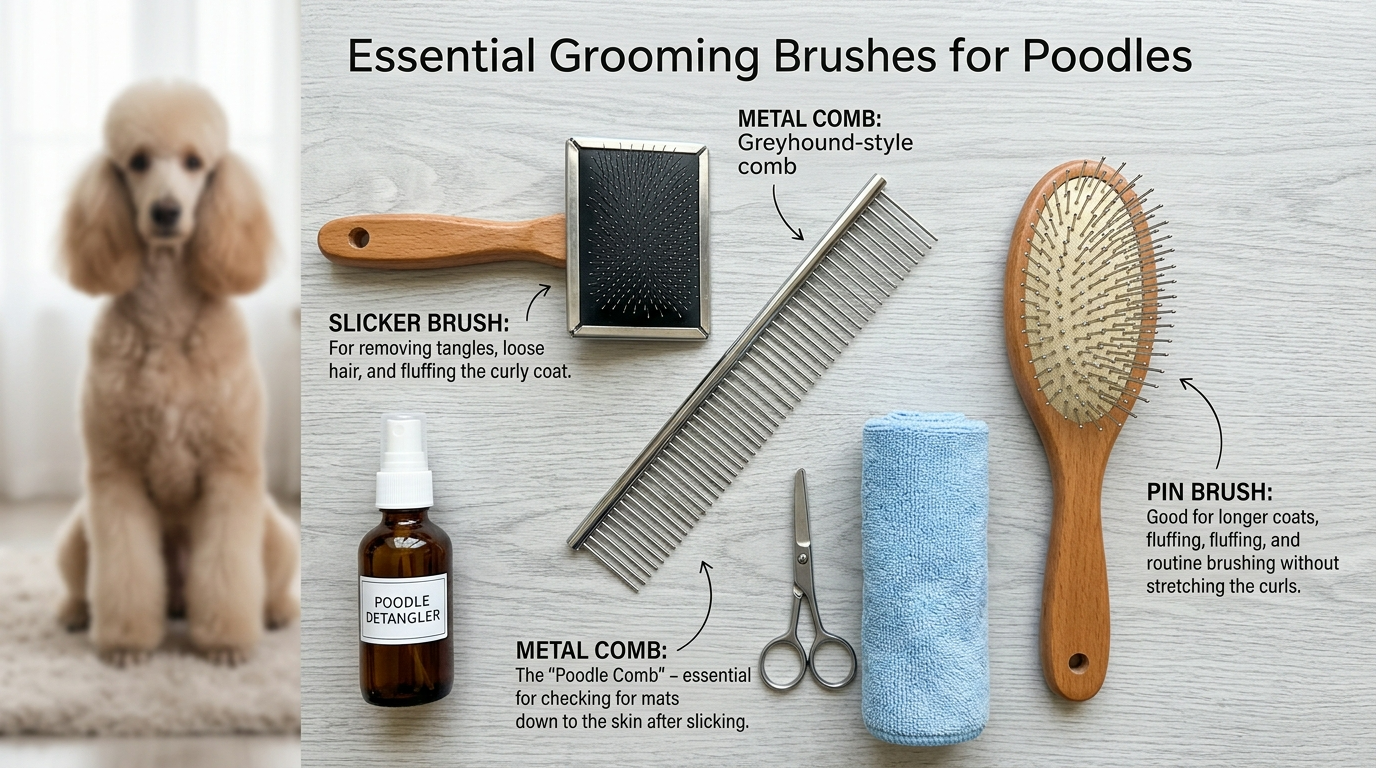
A slicker brush remains one of the best brushes for Poodles with short coats. Its fine wire bristles remove loose hair and minor tangles effectively.
Use gentle pressure and brush in small sections. Additionally, lift the hair slightly to reach the base.
Steel Comb
After brushing, use a metal comb to check for hidden knots. If the comb glides smoothly, the coat remains tangle-free.
Even short styles require brushing at least two to three times per week. Consistency prevents buildup.
Best Brushes for Poodles with Medium-Length Coats
Medium trims demand more attention. Because curls begin to thicken, mats form faster.
High-Quality Slicker Brush
Choose a flexible slicker brush with fine, angled pins. This tool penetrates dense curls while minimizing skin irritation.
Detangling Comb
A wide-tooth comb works well for stubborn knots. Always start at the ends and work upward gradually.
For active Poodles, daily brushing may become necessary. Outdoor activity increases debris accumulation within curls.
When selecting the best brushes for Poodles with medium coats, durability and comfort should guide your decision.
Best Brushes for Full or Show Coats
Longer coats require advanced grooming techniques. Without thorough care, matting becomes severe quickly.
Professional Slicker Brush
Professional-grade slickers feature longer pins. These reach deep into thick curls effectively.
Greyhound-Style Comb
A fine-toothed steel comb ensures no tangles remain close to the skin. Section brushing proves essential for thorough grooming.
Divide the coat into layers. Brush one small section at a time before moving upward. This method prevents hidden mats.
For show coats, daily grooming remains necessary. With the best brushes for Poodles, you maintain texture and prevent breakage.
How to Brush a Poodle Properly
Proper technique matters as much as tool selection. Start by misting the coat lightly with a conditioning spray. Dry brushing may cause breakage.
Brush in small sections using a line-brushing method. Lift a thin layer of hair and brush from the roots outward. Then move upward gradually.
Check each section with a comb to confirm smoothness. If resistance occurs, return to the slicker brush gently.
Keep sessions calm and positive. Offer praise frequently to build cooperation.
With correct technique, the best brushes for Poodles produce smooth, healthy curls without discomfort.
Common Grooming Mistakes to Avoid
Brushing only the surface leaves deeper tangles untouched. Instead, always brush to the skin.
Skipping grooming sessions leads to rapid mat formation. Even a few missed days can create difficult knots.
Using excessive force damages hair shafts. Therefore, apply steady but gentle pressure.
Ignoring friction areas such as underarms and behind ears increases mat risk. These zones require extra attention.
By avoiding these mistakes, you protect coat integrity and reduce grooming stress.
How Often Should You Brush a Poodle?
Frequency depends on coat length and lifestyle. Short trims may require brushing every two to three days. Meanwhile, longer coats demand daily attention.
During humid weather, curls tighten and mat more easily. Therefore, increase brushing frequency if needed.
Regular grooming not only prevents tangles but also distributes natural oils evenly. As a result, the coat appears shinier and healthier.
Consistent use of the best brushes for Poodles keeps maintenance manageable rather than overwhelming.
When to Consider Professional Grooming
Even experienced owners benefit from professional grooming. Complex trims require skilled handling.
Severe matting often needs expert removal. Attempting to cut out mats yourself may cause injury.
Professional groomers also check skin condition and detect early issues. Therefore, periodic appointments support overall coat health.
Home brushing combined with professional care creates balanced grooming routines.
Maintaining Your Brushes
Proper brush maintenance extends tool lifespan. Remove trapped hair after each session.
Wash slicker brushes periodically using warm water and mild soap. Dry thoroughly before storage.
Inspect pins regularly. Bent or damaged bristles may irritate your dog’s skin.
Investing in high-quality tools ensures that the best brushes for Poodles remain effective for years.
Supporting Coat Health Beyond Brushing
Grooming tools work best alongside proper nutrition. Diets rich in omega fatty acids strengthen hair structure.
Regular bathing with gentle, Poodle-safe shampoo prevents buildup. However, avoid overbathing, which may dry the skin.
Additionally, hydration supports elasticity and shine. Fresh water should always remain available.
Balanced care combines brushing, nutrition, and routine trimming.
Final Thoughts on Choosing the Right Brush
Selecting the best brushes for Poodles transforms grooming into a smooth and rewarding routine. Instead of struggling with mats, you maintain consistent coat health.
Match tools to coat length and thickness. Then apply proper brushing techniques with patience and care.
Consistency prevents problems before they start. Although curly coats require effort, the results justify the commitment.
With the best brushes for Poodles and regular maintenance, your dog’s coat stays soft, healthy, and beautifully defined.
FAQ
- How often should I groom a curly-coated dog?
Most curly-coated breeds need brushing several times per week, with daily care for longer trims. - Can I use a regular bristle brush on a Poodle?
Bristle brushes do not penetrate dense curls effectively, so they are not ideal for this coat type. - What is line brushing?
Line brushing involves sectioning the coat and brushing from the roots outward to prevent hidden mats. - Are slicker brushes safe for sensitive skin?
Yes, when used gently and paired with proper technique, slickers work safely and effectively. - When should I see a professional groomer?
Schedule appointments every four to eight weeks, depending on coat length and growth rate.