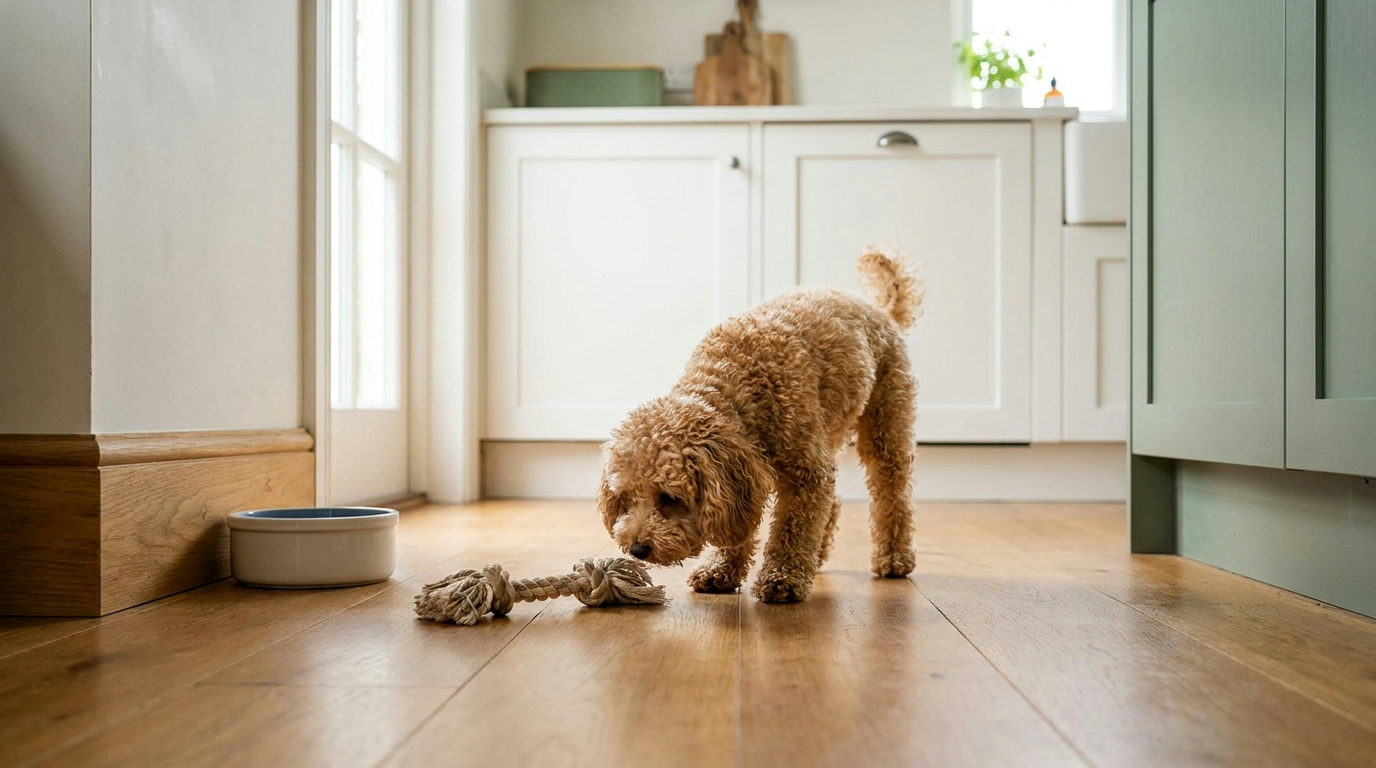
A poodle home safety checklist is useful whenever you bring home a puppy, change rooms, or buy something new for the house. A dog that has ignored a cupboard for months may investigate it when bored or alone. Walk through the home at poodle height and consider what can be chewed, swallowed, pulled down, or reached by jumping.
Poodle home safety checklist: secure products first
Move cleaning supplies, medicines, laundry products, and garden chemicals behind closed doors or into secure storage. Keep original labels. The ASPCA Poison Control household-products guide explains that everyday items can pose risks and says suspected exposure needs prompt veterinary or poison-control advice. Do not wait for symptoms before calling if you think your poodle ate a hazardous product.
Check kitchen bins and low shelves. Food wrappers, bones, strings, and small packaging can be attractive to a curious dog. Use a lidded bin or a latched cupboard rather than relying on a verbal cue when nobody is watching. Move charging cables and dangling blind cords out of reach. A dog can pull an object down even if it cannot climb to it.
Create a safe resting area
Give your poodle a quiet place with water, comfortable bedding, and appropriate chew items. If you use a gate or pen, test whether the dog can push through gaps or catch a collar on protruding hardware. Check that the chosen room is ventilated and that the dog cannot reach a heater, an open stair edge, or a window screen. A safe area should be a place the dog can settle, not a substitute for supervision and regular activity.
Choose toys that suit your dog’s size and chewing style. Inspect them often and remove pieces that break away. Toy Poodles and Standards need different sizes of objects, and an item safe for one dog may be easy for another to swallow. Introduce new toys while you are present so you can see how your dog uses them.
Recheck after changes
Visitors, holidays, deliveries, and home projects add temporary hazards. Before leaving your poodle alone, scan floors and low tables for tools, batteries, ribbons, or food. Put bags and coats away; they often contain medicines or snacks. If you have several dogs, make sure each can reach water without conflict and separate high-value chews when needed.
Finally, keep identification and your veterinarian’s contact details current. The poodle home safety checklist works best as a monthly habit and a quick reset after every room change. It will not remove every risk, but it helps you catch the preventable ones before your dog does.
Five-minute room scan
- Products and medicines secured.
- Bins, cords, and small objects out of reach.
- Gates, screens, and doors tested.
- Toys intact and sized for the dog.
- Water and a quiet resting place available.
Check the kitchen and dining areas
Begin at the dog’s eye level and look under tables, beside bins, and around appliance cords. A closed pantry is safer than an open bag on the floor. Keep human food and medicines out of reach, and do not assume a dog will ignore a dropped tablet or snack. Secure the rubbish bin with a lid or cupboard latch. If children eat in the same room, make a rule for clearing plates and wrappers promptly. Prevention is easier than trying to identify what a dog swallowed after the fact.
Plants also deserve an inventory. Identify each plant rather than relying on appearance or a vague “pet safe” label. Move any plant you cannot verify out of reach until you check it against a reputable toxic-plant resource or ask a veterinarian. Potting material and plant containers can be attractive to a curious dog even when the leaves are harmless. Record the plant name and keep packaging when you buy a new one, so you can give accurate information if there is an exposure.
Review cleaning and laundry storage
Keep detergents, fabric products, bleach, and other cleaners closed in their original containers. Do not transfer them into unlabelled bottles. Put the dog in another room while you use a product that needs ventilation or has a wet surface the dog might lick. Follow the label directions and let floors dry before the dog returns. If you suspect ingestion or significant contact, seek veterinary or poison-control advice promptly; do not improvise home treatment.
Laundry baskets can contain more than clothes. Check pockets for gum, medicines, batteries, and coins before leaving a pile where a poodle can investigate it. Dryer sheets and detergent pods should be stored securely. The same principle applies to handbags, gym bags, and overnight cases. Those movable containers bring hazards into a room that was safe yesterday. A quick evening floor-and-bag check is a useful household habit.
Make movement through the home safer
Inspect gates for gaps, loose latches, and places where a collar could catch. Keep balcony doors, window screens, and stair access in mind, especially for a small dog or a puppy. Put electrical cords behind furniture or protective covers. If the dog chews furniture or objects, supervise and provide appropriate alternatives while you address the behaviour. Do not use a crate or gate as a way to ignore a dog for long periods; a safe space still needs water, comfort, and interaction.
Visitors can change the environment quickly. Ask guests to keep bags closed and not to offer food without checking with you. During repairs or parties, use a quiet room with a sign on the door so the dog is not repeatedly exposed to open entrances, tools, or dropped food. Check that the room remains comfortable and that someone is responsible for regular breaks. A plan that depends on everyone remembering every rule is fragile; physical barriers are often more reliable.
Know what information to keep ready
Store your veterinarian’s number, the local emergency clinic, and a poison-control contact where every adult can find them. Keep a recent photograph and identification details for your poodle. If an exposure occurs, note the product name, amount if known, and time, then call a professional. Do not wait to see whether the dog “seems fine.” The ASPCA resource linked above is general information; a clinician needs the facts of your specific case.
Review the checklist after a move, new furniture, a new pet, or a change in your poodle’s behaviour. A puppy that previously could not reach a shelf may be taller and more determined a month later. An older dog may need better traction or easier access to water. Focus on the highest-probability hazards first, then repeat the scan. A safer home is maintained through small checks, not a single perfect afternoon.
Test the room from the dog’s point of view
Spend ten minutes watching where your poodle naturally goes when you are home. Does the dog investigate a shoe rack, nudge a cupboard, or stretch up toward a coffee table? That observation is more useful than a generic list because it shows the opportunities in your house. Move one hazard at a time and watch again. If you use a gate, test it while you are present rather than discovering later that the latch opens under pressure. For a small poodle, look for narrow spaces behind appliances. For a larger one, consider what can be reached from a standing position. Repeat this observation after rearranging furniture or adding a new household member.
General pet-care information only; this article is not veterinary advice. Ask your veterinarian about your dog’s individual health or symptoms.