
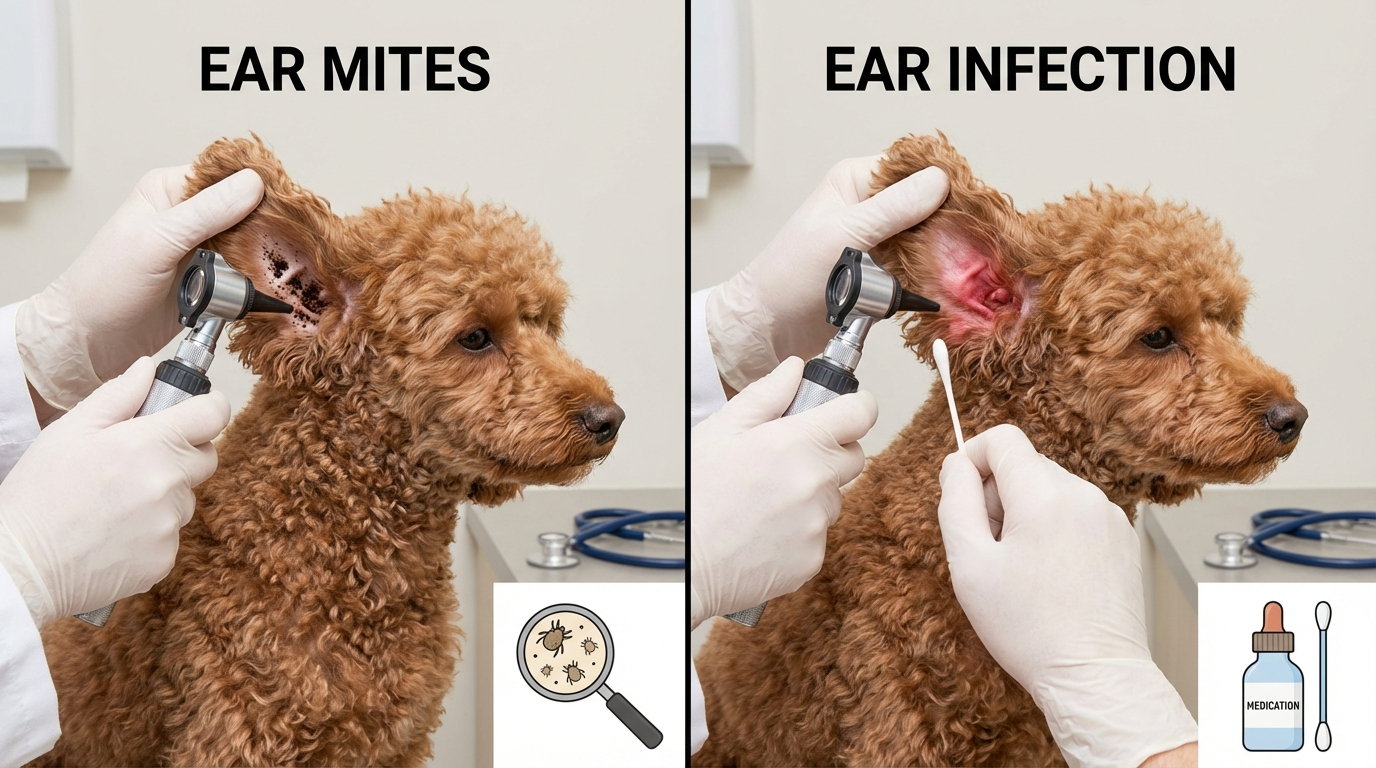
When your pet starts shaking their head or scratching their ears, concern sets in quickly. Understanding ear mites vs ear infections helps you recognize symptoms early and respond with the correct treatment. Although both conditions affect the ears and cause discomfort, they differ in cause, appearance, and care approach.
Because symptoms often overlap, confusion is common. However, once you learn the key differences, identifying the problem becomes much easier. Early detection not only reduces discomfort but also prevents long-term complications.
What Are Ear Mites?
Ear mites are tiny parasitic insects that live inside the ear canal. They feed on wax and skin debris. As a result, irritation and inflammation develop quickly.
These parasites spread easily between animals, especially in multi-pet households. Therefore, cats and dogs living together often share infestations.
Unlike bacterial issues, mites create a dark, crumbly discharge that resembles coffee grounds. This debris is one of the most recognizable signs.
Because mites are contagious, immediate treatment matters. Without intervention, scratching may cause wounds and secondary infections.
Recognizing ear mites vs ear infections early prevents unnecessary treatments and speeds recovery.
What Are Ear Infections?
Ear infections typically result from bacteria or yeast overgrowth. Moisture, allergies, or trapped debris often trigger the imbalance.
Unlike parasites, infections do not spread through direct contact in the same way. However, environmental factors can increase risk.
Discharge from infections often appears yellow, brown, or green. Additionally, it may carry a strong odor.
Inflammation, swelling, and pain frequently accompany infections. Pets may resist ear handling due to discomfort.
Understanding ear mites vs ear infections allows you to distinguish between parasitic and microbial causes effectively.
Key Differences in Symptoms
Although both conditions cause scratching and head shaking, subtle differences exist.
Ear mites usually create intense itching. Pets may scratch constantly. The discharge appears dark and dry.
Infections often cause swelling and tenderness. Discharge may look moist and thick. Odor tends to be stronger.
Additionally, ear infections may develop gradually. Mite infestations often escalate quickly due to irritation.
When comparing ear mites vs ear infections, texture and smell of discharge provide strong clues.
How Veterinarians Diagnose Each Condition
Accurate diagnosis requires examination. Veterinarians use otoscopes to inspect the ear canal closely.
For mites, microscopic evaluation reveals moving parasites. This visual confirmation ensures precise treatment.
Infections require swab samples. Laboratory testing identifies bacterial or yeast presence.
Because treatments differ significantly, professional diagnosis prevents incorrect medication use.
When owners attempt to treat ear mites vs ear infections without confirmation, symptoms may worsen.
Treatment Approaches for Ear Mites
Treatment for mites focuses on eliminating parasites. Topical medications or prescription drops typically resolve infestations quickly.
Cleaning the ear removes debris before medication application. However, gentle handling remains essential.
Because mites spread easily, treat all pets in the household simultaneously. Bedding and shared areas should also be cleaned thoroughly.
Improvement usually appears within one to two weeks. Still, complete the full course to prevent recurrence.
Addressing ear mites vs ear infections correctly ensures targeted treatment and faster recovery.
Treatment Approaches for Ear Infections
Infections require antimicrobial or antifungal medications. Depending on severity, treatment may include oral antibiotics.
First, veterinarians clean the ear canal professionally. This step removes buildup and improves medication absorption.
Anti-inflammatory drops often reduce swelling and pain. Consequently, pets experience relief within days.
Chronic infections may require allergy management. Identifying underlying triggers reduces recurrence risk.
When comparing ear mites vs ear infections, remember that infection therapy targets microbes, not parasites.
Risk Factors and Prevention
Moisture plays a major role in infections. Therefore, drying ears after swimming or bathing reduces risk.
Allergies also increase susceptibility. Managing food or environmental sensitivities lowers inflammation.
For mites, prevention focuses on limiting exposure to infected animals. Regular ear checks help detect early signs.
Routine cleaning, when done gently, maintains healthy ear environments.
Understanding ear mites vs ear infections encourages proactive prevention rather than reactive treatment.
Complications if Left Untreated
Ignoring symptoms may lead to severe outcomes. Persistent scratching can cause wounds or hematomas.
Untreated infections may damage the ear canal. In extreme cases, hearing loss can occur.
Mite infestations may trigger secondary bacterial infections. Therefore, delay increases complexity.
Prompt action minimizes discomfort and long-term damage.
Recognizing ear mites vs ear infections early significantly reduces complication risks.
Home Care and Monitoring Tips
While veterinary care remains essential, monitoring at home supports recovery.
Inspect ears weekly. Look for redness, discharge, or unusual odor.
Use veterinarian-approved cleaning solutions only. Avoid cotton swabs deep in the canal.
Observe behavioral changes. Lethargy or balance issues require immediate attention.
Tracking symptoms helps differentiate ear mites vs ear infections if problems reappear.
When to Seek Immediate Veterinary Care
Severe swelling, bleeding, or neurological signs demand urgent evaluation.
Head tilting, loss of balance, or persistent crying may indicate deeper infection.
If symptoms fail to improve within days of treatment, follow up promptly.
Although mild irritation sometimes resolves quickly, persistent discomfort signals underlying issues.
Early professional care ensures accurate identification of ear mites vs ear infections and prevents escalation.
Supporting Overall Ear Health
Balanced nutrition strengthens immune response. Healthy skin supports ear resilience.
Regular grooming prevents excess hair trapping moisture inside the canal.
Additionally, maintaining clean sleeping areas reduces environmental contaminants.
Because ear health connects closely to overall wellness, holistic care makes a difference.
Consistent observation allows owners to spot changes quickly and address concerns before they worsen.
Common Misconceptions
Some owners assume all dark discharge indicates mites. However, certain yeast infections can produce similar debris.
Others believe infections spread easily between pets. In reality, most infections stem from internal imbalance.
Confusing ear mites vs ear infections may delay proper care.
Education eliminates guesswork and protects your pet’s comfort.
Conclusion: Knowledge Leads to Faster Relief
Ear problems cause significant discomfort for pets. However, understanding ear mites vs ear infections empowers owners to act confidently.
While both conditions share symptoms, differences in discharge, odor, and cause help distinguish them. Accurate diagnosis ensures effective treatment and faster healing.
By staying attentive and seeking veterinary guidance early, you protect your pet’s hearing and overall health. Awareness remains the most powerful tool in preventing complications.
FAQ
- How can I tell if my pet has mites or a bacterial issue?
Dark, crumbly debris often suggests parasites, while moist, smelly discharge typically indicates infection. - Are ear mites contagious between pets?
Yes, mites spread easily through close contact, especially in multi-pet homes. - Can ear infections resolve without medication?
Mild irritation may improve, but true infections usually require prescribed treatment. - How often should I check my pet’s ears?
Weekly inspections help detect early changes and prevent serious complications. - What happens if ear problems go untreated?
Untreated issues can lead to chronic pain, hearing damage, and deeper infections.