A glossy, soft coat often reflects your dog’s overall health. The best diets for shiny dog coat support skin hydration, reduce inflammation, and deliver essential nutrients from the inside out. While grooming helps, nutrition plays the most powerful role in long-term coat quality.
Because skin and fur depend on balanced nutrients, poor diet often leads to dryness or shedding. However, targeted feeding strategies can restore shine and strength over time. With consistency, visible improvement often appears within weeks.
Why Nutrition Directly Impacts Coat Quality
Skin is the largest organ in your dog’s body. Therefore, it requires consistent nourishment to function well. When nutrient intake drops, the body prioritizes vital organs. As a result, coat health may suffer first.
Dull fur, excessive shedding, or flaky skin often signal dietary imbalance. Although seasonal changes can affect coat texture, persistent dryness typically links to nutrition.
The best diets for shiny dog coat focus on healthy fats, quality protein, vitamins, and trace minerals. Together, these nutrients build strong hair shafts and support healthy skin cells.
Because hair growth is continuous, daily feeding choices matter more than occasional supplements.
High-Quality Protein as the Foundation
Protein forms the structure of hair. Therefore, strong coats require adequate, digestible protein sources. Lean meats such as chicken, turkey, lamb, and fish deliver essential amino acids.
Avoid diets with vague “meat by-products” listed first. Instead, choose foods that name the primary protein clearly. Whole-food protein improves absorption and supports hair strength.
Additionally, rotating protein sources may help dogs with sensitivities. When digestion improves, skin health often improves as well.
Although carbohydrates provide energy, protein remains the building block of coat vitality.
Omega-3 and Omega-6 Fatty Acids for Shine
Healthy fats give coats their natural gloss. Omega-3 fatty acids reduce inflammation and soothe irritated skin. Meanwhile, omega-6 supports cell structure and hydration.
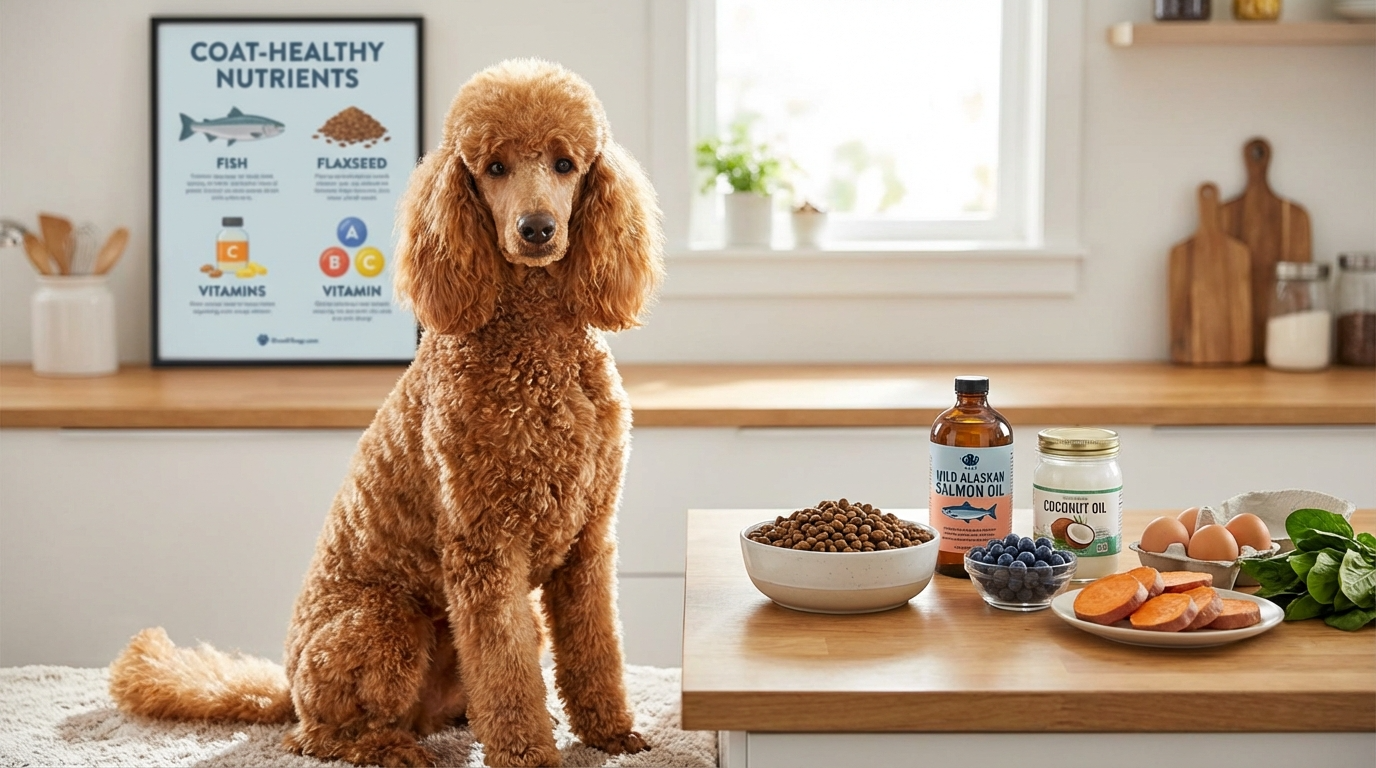
The best diets for shiny dog coat include fish oil, flaxseed, or salmon as primary fat sources. These ingredients nourish follicles and reduce flaking.
However, balance matters. Too much omega-6 without omega-3 can increase inflammation. Therefore, look for balanced ratios in quality dog foods.
Consistent intake of healthy fats often leads to softer fur and reduced shedding within a month.
Essential Vitamins That Boost Skin Health
Vitamins support cellular repair and immune strength. Vitamin E acts as an antioxidant, protecting skin cells from damage. Vitamin A encourages healthy growth and repair.
B vitamins, particularly biotin, strengthen hair structure. When deficiency occurs, fur may become brittle or thin.
Because complete dog foods already contain balanced vitamins, avoid excessive supplementation without guidance. Over-supplementing can cause imbalances.
Still, premium formulas designed for skin health often provide optimal levels to support lasting shine.
Minerals That Strengthen the Hair Shaft
Trace minerals like zinc and copper play critical roles in coat color and durability. Zinc supports immune response and skin repair. Copper influences pigment and shine.
Deficiencies may cause dull fur or patchy areas. Therefore, balanced mineral content is essential.
The best diets for shiny dog coat typically list chelated minerals. These forms improve absorption and support consistent results.
If coat problems persist despite quality feeding, consult your veterinarian to rule out deficiency.
Hydration and Moisture Retention
Water supports skin elasticity and moisture balance. Dry skin often appears flaky and irritated. Therefore, ensure your dog drinks fresh water daily.
Wet or raw diets may improve hydration compared to dry kibble alone. Because moisture supports skin flexibility, combining wet and dry food can help.
Additionally, broth-based toppers may increase water intake. However, choose low-sodium options designed for pets.
Hydrated skin naturally reflects more light, creating visible shine.
Whole Food Ingredients vs. Highly Processed Diets
Processing affects nutrient quality. Highly processed foods may lose essential fatty acids and vitamins. Therefore, ingredient sourcing matters significantly.
The best diets for shiny dog coat rely on whole ingredients with minimal artificial additives. Artificial colors and fillers offer no nutritional benefit.
Grain-inclusive or grain-free diets can both work well, depending on your dog’s needs. Focus on quality rather than marketing labels.
Transition gradually when switching foods. Sudden changes may upset digestion and temporarily affect coat texture.
Incorporating Fresh Foods Safely
Fresh additions can enhance nutritional value. Cooked salmon, sardines in water, or small amounts of boiled eggs provide beneficial fats and protein.
However, introduce new foods slowly. Monitor for digestive upset or allergic reactions. Balance remains key, so avoid replacing complete meals entirely.
Pumpkin and sweet potatoes also offer fiber and antioxidants. These support digestion, which indirectly supports skin clarity.
Natural food additions complement the best diets for shiny dog coat without overwhelming the digestive system.
Managing Food Sensitivities and Allergies
Sometimes dull coats stem from hidden food allergies. Common triggers include beef, dairy, wheat, or chicken. Persistent itching often accompanies coat issues.
Limited-ingredient diets simplify exposure. By narrowing protein sources, you identify sensitivities more easily.
When inflammation decreases, fur texture often improves. Therefore, addressing allergies supports overall coat restoration.
Work with a veterinarian before beginning elimination diets. Professional guidance ensures balanced nutrition during testing phases.
The Role of Digestive Health
Gut health influences nutrient absorption. Even high-quality food cannot support coat shine if digestion fails.
Probiotics support beneficial gut bacteria. When absorption improves, skin receives consistent nourishment.
Fiber from vegetables aids regular digestion. Consequently, nutrient delivery becomes more efficient.
The best diets for shiny dog coat consider not only ingredients but also how well those ingredients absorb.
Homemade vs. Commercial Diets
Some owners prefer homemade meals. While fresh cooking offers ingredient control, balanced formulation requires expertise.
Consult a veterinary nutritionist before preparing full-time homemade diets. Missing essential nutrients can quickly harm coat health.
Premium commercial diets simplify balance. Many formulas specifically target skin and coat support.
Whichever route you choose, prioritize consistency and nutritional completeness.
Seasonal Adjustments for Coat Maintenance
Coats change with seasons. During shedding periods, nutrient demands may increase. Therefore, slight dietary adjustments can help.
Boost omega-3 intake during heavy shedding months. Ensure adequate protein to support regrowth.
Cold weather may dry skin. Consequently, maintaining fat levels becomes especially important.
Seasonal awareness strengthens the impact of the best diets for shiny dog coat and prevents fluctuations in quality.
Tracking Progress and Setting Expectations
Visible improvement takes time. Hair growth cycles last several weeks. Therefore, expect gradual change rather than overnight shine.
Take photos monthly to compare texture and thickness. Small changes become more noticeable over time.
If no progress appears after two months, reassess ingredient quality or consult a veterinarian.
Patience and consistency remain essential for lasting results.
Conclusion: Nourish From Within for Lasting Shine
A vibrant coat begins with balanced nutrition. The best diets for shiny dog coat deliver quality protein, healthy fats, essential vitamins, and proper hydration. Together, these nutrients build resilience from the inside out.
While grooming enhances appearance, diet creates the foundation. With thoughtful feeding and steady routines, your dog’s coat can become softer, brighter, and healthier.
Commit to high-quality ingredients and consistent care. Over time, the results will shine through.
FAQ
- How long does it take to see coat improvement after changing food?
Most dogs show visible improvement within four to eight weeks, depending on hair growth cycles. - Are fish oil supplements safe for daily use?
Fish oil is generally safe in proper doses, but consult your veterinarian for accurate recommendations. - Can grain-free diets improve coat shine?
Some dogs benefit from grain-free formulas, yet quality ingredients matter more than grain content alone. - Should I add raw eggs to my dog’s meals?
Cooked eggs are safer and still provide valuable protein and nutrients for skin support. - What signs suggest a nutritional deficiency affecting fur?
Excess shedding, brittle hair, patchy areas, and persistent dryness may signal dietary imbalance.