
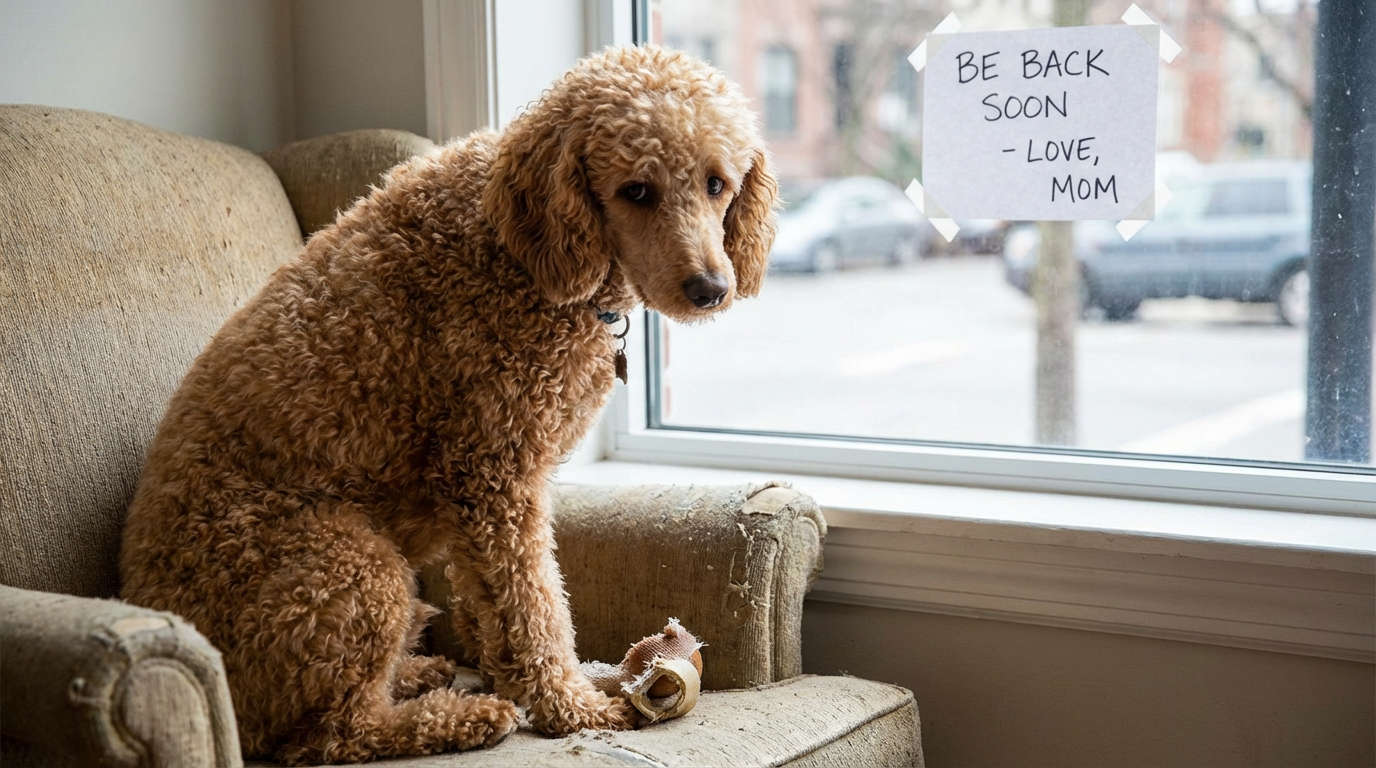
Rescue dog separation anxiety often catches new owners off guard. You bring your dog home with hope and excitement. You offer safety, food, and affection. Yet the moment you leave the room, panic appears. Barking erupts. Doors are scratched. Your absence feels unbearable to them.
This reaction can feel confusing or even personal. After all, you rescued them. You gave them a second chance. Why would they fear being alone now.
The answer lies in their past, not your present. Rescue dog separation anxiety is rarely about disobedience. It is about survival memories, disrupted attachment, and uncertainty. Dogs who have lost people before often fear losing them again.
Understanding why this happens changes everything. It replaces frustration with empathy. It shifts training from correction to healing. When you see anxiety through the lens of experience, solutions become clearer and kinder.
What Rescue Dog Separation Anxiety Really Is
Rescue dog separation anxiety is an intense emotional response to being left alone or separated from a trusted person.
These dogs experience distress the moment separation begins or even before it happens. Departure cues like keys or shoes trigger stress. Their nervous system reacts as if danger is imminent.
This anxiety exists on a spectrum. Some dogs pace or whine. Others destroy doors or injure themselves. In severe cases, the dog cannot eat, rest, or self-soothe when alone.
Understanding the depth of this fear is the first step toward real progress.
Why Rescue Dogs Are Especially Vulnerable
Rescue dogs often carry invisible baggage. Their history matters, even when it is unknown.
Many have experienced abandonment. Others were surrendered repeatedly. Some lived in unstable homes or shelters where people came and went unpredictably.
For these dogs, separation is not neutral. It is associated with loss. Each departure feels permanent.
Because of this, rescue dog separation anxiety develops as a protective response. Clinging feels safer than letting go.
The Impact of Early Attachment Disruption
Early attachment shapes emotional resilience. Puppies who experience consistent caregiving learn that absence is temporary.
Rescue dogs often missed that lesson. They may have been separated from mothers too early. They may have experienced neglect or inconsistent care.
Without secure attachment, dogs struggle to regulate emotions. Separation becomes overwhelming.
Rescue dog separation anxiety often reflects an attachment wound, not a training issue.
Shelter Life and Its Emotional Effects
Shelters save lives, yet they are stressful environments.
Noise, confinement, and constant change affect dogs deeply. Humans appear and disappear. Bonds form and break repeatedly.
Dogs learn that connections are fragile. Stability feels temporary.
When adopted, they cling to the first stable figure they trust. Losing that person, even briefly, feels catastrophic.
Shelter life plants the seeds for separation anxiety.
Why Even “Well-Adjusted” Rescue Dogs Can Struggle
Some rescue dogs seem confident at first.
Then anxiety surfaces weeks later. This delay confuses owners.
This is called the honeymoon period. Dogs suppress fear until they feel safe enough to express it.
Once attachment forms, fear of loss emerges. Rescue dog separation anxiety often appears after bonding, not before.
The Role of Hyper-Attachment
Hyper-attachment is common in rescue dogs.
This behavior feels affectionate, yet it signals anxiety. The dog has not learned emotional independence.
Hyper-attachment increases separation distress because the dog has no coping skills when alone.
Balance is essential for healing.
Why Routine Changes Trigger Anxiety
Rescue dogs rely heavily on predictability.
Changes in schedule, environment, or household members disrupt their sense of safety. Even small shifts can trigger anxiety.
Work-from-home transitions worsen the problem. Constant presence creates dependency.
When absence returns suddenly, panic follows.
Rescue dog separation anxiety thrives on unpredictability.
How Trauma Shapes the Canine Nervous System
Trauma rewires the brain.
Stress hormones activate faster. Calm states become harder to reach. Survival responses dominate.
Rescue dogs often live in heightened alertness. Their nervous system scans for threats.
Separation feels threatening because past separations ended badly.
Healing requires retraining the nervous system, not just behavior.
Why Punishment Makes Rescue Dog Separation Anxiety Worse
Punishment reinforces fear.
If a dog is punished after a panic episode, they associate your return with danger. Anxiety increases.
They learn that being alone leads to distress and punishment.
This cycle deepens separation anxiety rather than resolving it.
Compassion must replace correction.
Common Behaviors Misunderstood as Disobedience
Destruction is often targeted at exits. Barking is persistent. Accidents occur indoors.
These behaviors are survival responses, not spite.
Dogs are not plotting revenge. They are trying to escape perceived danger.
Understanding this reframes your response.
Why Time Alone Feels Unsafe to Rescue Dogs
Alone time lacks reference points.
Without confidence that you will return, minutes feel endless. Anxiety stretches time painfully.
Dogs cannot rationalize absence. They feel it.
Rescue dog separation anxiety makes solitude intolerable.
The Difference Between Boredom and Anxiety
Bored dogs destroy things randomly. Anxious dogs target exits.
Boredom improves with enrichment. Anxiety persists despite toys.
Recognizing the difference prevents misdirected solutions.
Why “Getting Another Dog” Rarely Fixes It
Another dog does not replace human attachment.
Separation anxiety is about losing a specific person.
While some dogs benefit from companionship, many remain anxious.
Adding a dog may complicate dynamics.
Address the root, not the distraction.
Why Crates Sometimes Make It Worse
Crates provide safety for some dogs. For anxious dogs, confinement amplifies panic.
If a dog panics in a crate, distress escalates quickly.
Crates should never be forced for anxious dogs.
Individual responses guide decisions.
The Emotional Toll on Rescue Dog Owners
Living with separation anxiety is exhausting.
Schedules shrink. Guilt grows. Stress builds.
Owners may feel trapped or helpless.
Support matters for humans too.
Why Rescue Dog Separation Anxiety Is Treatable
Brains remain flexible.
With consistency, safety, and gradual exposure, anxiety can reduce significantly.
Progress may be slow, but change is possible.
Healing requires patience, not perfection.
Building Safety Before Training Absences
Independence begins at home.
Encourage your dog to rest away from you. Reward calm separation.
Avoid constant reassurance.
Safety grows from confidence, not closeness alone.
Desensitizing Departure Cues
Keys, shoes, and bags trigger anxiety.
Practice handling these items without leaving.
Reduce their emotional charge.
Neutral cues reduce panic.
Graduated Absence Training for Rescue Dogs
Start small. Seconds matter.
Leave briefly and return calmly.
Increase time gradually only when calm persists.
Slow progress prevents setbacks.
Why Calm Returns Matter More Than Departures
Excited reunions reinforce anxiety cycles.
Calm greetings teach that absence is normal.
Neutral returns stabilize emotions.
Consistency matters.
Medication and Professional Support
Some rescue dogs need medication.
Medication supports learning by reducing panic.
Professional guidance tailors treatment.
Support accelerates progress.
Preventing Relapse Over Time
Once improvement appears, maintain routines.
Avoid sudden long absences.
Life changes require gradual adjustment.
Maintenance preserves progress.
Reframing Success for Anxious Rescue Dogs
Success is not perfect independence.
Success is reduced panic and improved coping.
Small gains matter.
Celebrate progress.
Why Love Alone Is Not Enough
Love provides motivation. Structure provides safety.
Both are required.
Healing blends compassion with boundaries.
Balance supports resilience.
Conclusion
Rescue dog separation anxiety is not a flaw. It is a story written by loss, uncertainty, and disrupted attachment. These dogs are not broken. They are protective of the bond they finally feel safe enough to trust. By understanding why rescue dogs struggle with separation anxiety, owners can respond with empathy instead of frustration. Healing happens through patience, predictability, and emotional safety. With time and thoughtful support, rescue dogs can learn that being alone does not mean being abandoned. It simply means waiting for someone who always comes back.
FAQ
1. Is separation anxiety more common in rescue dogs?
Yes, rescue dogs experience it more often due to past instability and loss.
2. Can rescue dog separation anxiety be cured?
Many dogs improve significantly, though some require ongoing management.
3. How long does it take to see improvement?
Progress varies, but weeks to months is common with consistent training.
4. Should I ignore my dog when they panic?
No, panic should be addressed calmly, not ignored or punished.
5. When should I seek professional help?
If anxiety causes self-harm, severe destruction, or prevents daily life, seek help immediately.