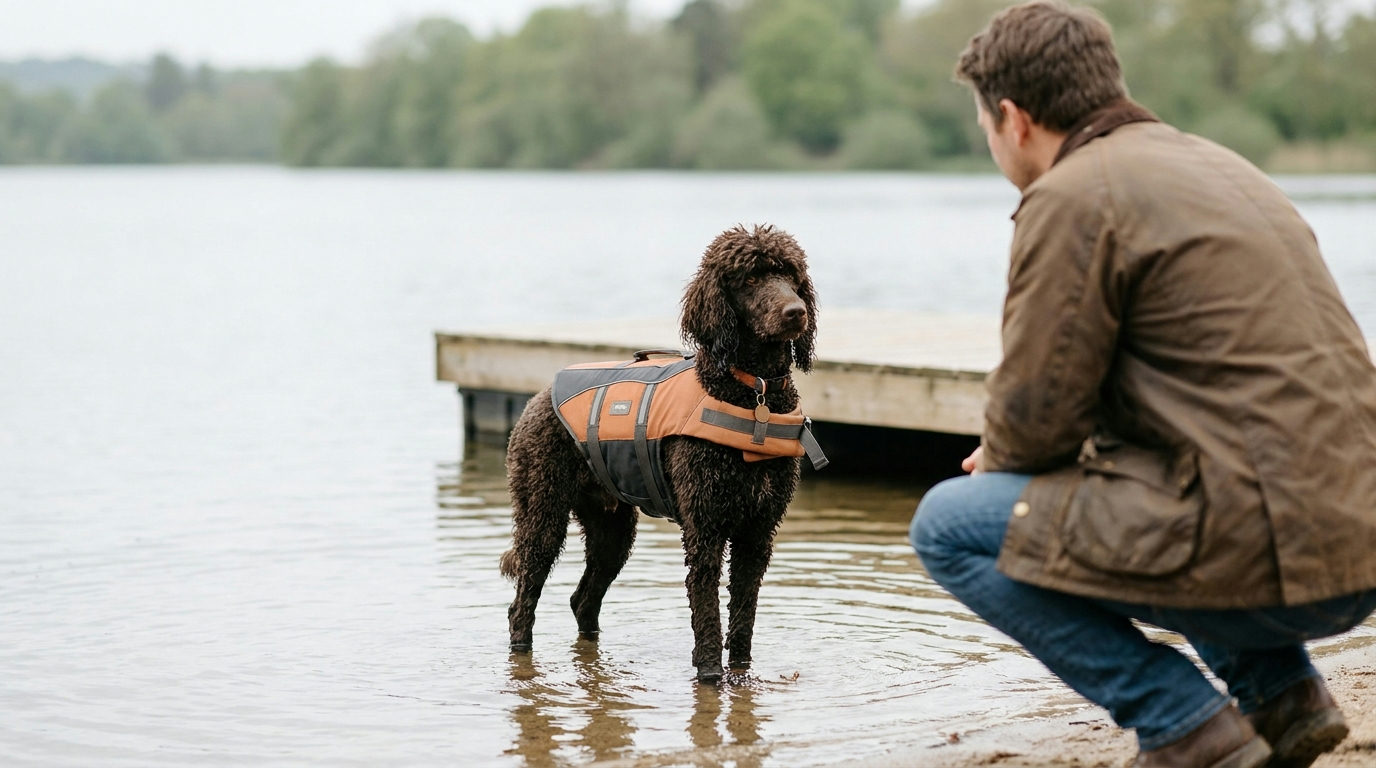
A poodle life jacket fit check belongs on the dock or at home before the first swim, not after your dog is already in deep water. Poodles may enjoy water, but confidence does not remove fatigue, currents, or the need for close supervision. A flotation jacket is one layer of safety. It works best alongside a calm introduction, a suitable swimming place, and an owner who remains near the dog.
Poodle life jacket fit starts with measurement
Use a flexible tape to measure your poodle’s chest at the widest part of the rib cage, lower neck, and back length. Check the maker’s chart rather than selecting by Toy, Miniature, or Standard labels alone. Weight limits matter too. If your dog is between sizes, compare the range of strap adjustment and the length of the flotation panels. A jacket can be snug around the chest yet too long at the rear, so inspect the entire shape.
The American Kennel Club’s life-jacket guide recommends a snug fit that still lets a dog sit, lie down, and swim horizontally. Test all three movements on dry land. A strap that cuts into an armpit or a panel that blocks the front legs needs adjustment or a different design.
Check the useful features
Look for a visible colour, adjustable straps, a sturdy handle, and an attachment point that matches how you will guide the dog. Fasten every buckle and lift the jacket gently by its handle while supporting the dog with your other hand. The handle should not tear or twist the whole jacket. Do not use a jacket’s lead ring as proof that it can support every kind of pull; follow its maker’s instructions.
Run your fingers under the straps and inspect the edges for rubbing. The jacket should not slide over the head when your poodle steps backward. Recheck the fit after a major haircut, because coat volume can change how secure a strap feels.
Introduce water in small steps
Let the dog sniff the jacket, wear it briefly indoors, and walk in it before going near water. Reward calm behaviour and remove the jacket before the dog becomes frustrated. At the water, begin in a shallow, quiet area with firm footing. Stay close and watch the dog’s movement: the head should remain comfortably above water and the body should not roll or tilt because the jacket is poorly placed.
A poodle that resists, tires, or struggles should leave the water. Never force a swim. Rinse and dry the jacket as directed after use, then inspect buckles and seams before the next outing. Poodle life jacket fit is a repeated check, not a one-time purchase decision.
Before entering the water
- Measurements match the maker’s size chart.
- Jacket permits sitting, walking, and horizontal swimming movement.
- Straps are secure without rubbing the legs.
- Owner has chosen calm water and can supervise closely.
- Dog has practised wearing the jacket on land.
Choose the setting before the equipment
A dog life jacket is not permission to swim anywhere. Consider the entry and exit points, water depth, current, boat traffic, and weather before allowing your poodle near the water. A calm, shallow shoreline where the dog can stand is a better first experience than a steep bank or a busy dock. Have a person remain close enough to help. If the dog appears unsure, let the outing be a shoreline visit. Enjoying water is not a requirement for a good life.
Ask whether the area has rules for dogs and whether the water is considered safe. Avoid water with visible algae, a strong smell, or posted warnings. Keep your dog from drinking unknown water and bring fresh water to offer. If your poodle has a medical condition, has recently had surgery, or struggles with mobility, ask a veterinarian whether swimming is appropriate before planning a session. Equipment can support a plan, but it cannot answer that health question.
Fit the jacket on dry land
Begin with the straps loose. Set the flotation panel along the dog’s back according to the maker’s directions and fasten one buckle at a time. Adjust each side evenly so the jacket stays centered. Let the dog walk, sit, and lie down. Watch whether the front legs reach forward freely and whether any edge pushes against the throat. If your poodle freezes, remove the jacket and reintroduce it in smaller steps. A jacket that fits but feels frightening has not yet been introduced successfully.
Use the handle only as its design permits. Some handles help guide a dog toward a safe exit, but they do not all support lifting the dog’s full weight. Check the product instructions, especially for a Standard Poodle. Practise reaching the handle while the dog stands on land. You do not want to discover in a hurry that it is hidden under a lead or a twisted strap. Inspect stitching and buckles every time; a damaged jacket should not go into water.
Test the fit in shallow water
Enter gradually and remain beside your dog. A correctly positioned jacket should not slide forward over the head or roll to one side as the dog moves. Watch the poodle’s head position and ability to paddle comfortably. Return to land immediately if the dog seems exhausted, panics, or the jacket shifts. A short, positive session is more useful than pushing for distance. Once ashore, check under the straps for rubbing and give the dog a chance to rest.
Rinse the jacket if the maker recommends it and dry it fully before storage. Damp gear can smell and deteriorate, while wet coat trapped beneath straps can tangle. If your dog has a full coat, part the hair where straps crossed the chest and belly. Maintain the coat as you normally would after water activity. Write down the strap settings that worked, but repeat the fit check on every outing because hair length and body condition change.
Questions owners often ask
Does a poodle that swims well still need a jacket? Strong swimming ability does not remove fatigue or unfamiliar conditions. Use the location, the dog’s age and health, and the activity to decide with appropriate supervision. Can a human life jacket be adapted? Use equipment designed for dogs and follow its directions; human flotation gear does not account for a dog’s horizontal movement. Can a jacket replace close supervision? No. An owner should remain present, especially around open water.
How often should I remeasure? Recheck after a major haircut, puppy growth, weight change, or a long period without using the jacket. Also check the fit when wet. Straps can feel different in water, and a dog may move differently while swimming. The repeatable process matters more than a size label: measure, fit on land, introduce shallow water, observe, and stop if the dog is uncomfortable.
Make the outing enjoyable without a swim
A water trip can be successful even if your poodle only walks beside the shore. Bring fresh water, a towel, shade, and a familiar lead. Choose a place where the dog can leave easily and avoid crowding by boats or other animals. If a child is helping, an adult should still control the dog and supervise the water. Do not tie a dog unattended near a pool or dock. A jacket can snag or shift while nobody is watching. Take a photo of the fitted jacket from each side before the outing; later, you can compare whether a strap has moved. When you get home, note whether the dog enjoyed the experience and what should change next time.
General pet-care information only; this article is not veterinary advice. Ask your veterinarian about your dog’s individual health or symptoms.