A poodle car travel setup begins before the engine starts. A dog moving freely in the vehicle can distract the driver, and a sudden stop can turn a loose pet into an emergency. Whether your companion is a Toy, Miniature, or Standard Poodle, make a specific plan for where the dog will ride, how the restraint works, and what you will need at stops.
Poodle car travel setup starts with a secure place
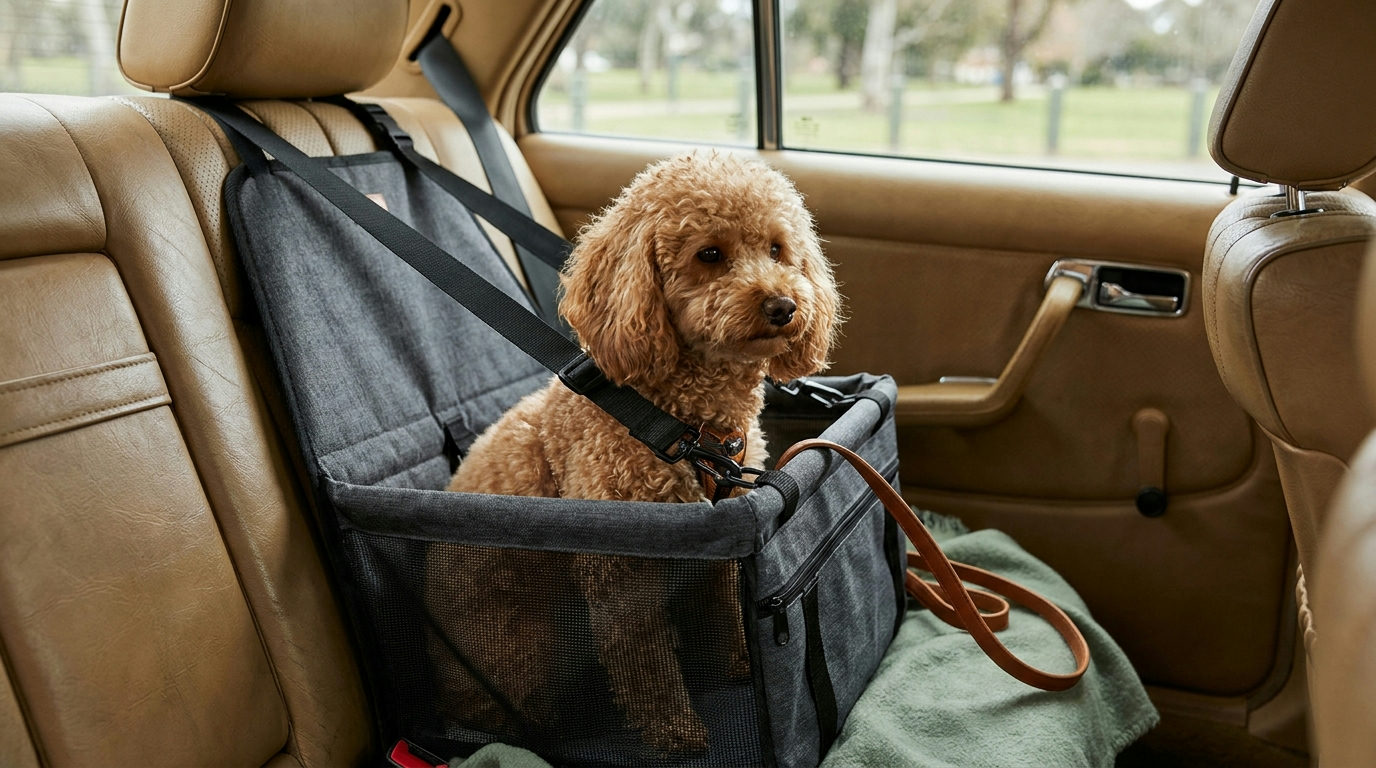
Pick a suitable carrier, crate, or car restraint that fits the dog and the vehicle. A walking harness is not automatically designed for car travel. Read the maker’s instructions and confirm how the product attaches to the car. Place it where it will not interfere with the driver or airbags. The American Veterinary Medical Association’s travel guide discusses carriers and restraints as part of planning pet trips.
Practise with the car parked. Let your poodle enter the carrier or restraint, reward calm behaviour, and end the session before the dog becomes distressed. Next, take a short drive that ends somewhere pleasant. The aim is to learn whether the setup stays secure and the dog can settle, not to complete a long journey on the first attempt.
Pack for ordinary needs and interruptions
Keep a lead, identification, waste bags, water, a bowl, usual food, and any prescribed medication within easy reach. Store the veterinarian’s number and an emergency contact on your phone and on paper. Carry cleaning supplies for spills and a towel for wet paws. A familiar blanket may help, provided it does not obstruct ventilation or defeat the restraint. Our broader poodle travel guide can help with the destination side of the trip.
Do not leave a dog alone in a parked vehicle. Temperature and conditions can change quickly, even when an errand seems brief. Plan stops that allow the dog to leave the vehicle safely, drink, and take a toilet break. Clip the lead before opening a door; an unfamiliar stop can tempt a quick dash.
Adjust for the dog in front of you
Some dogs settle after a few short rides; others show stress or car sickness. If your poodle drools excessively, vomits, or remains distressed, ask a veterinarian for advice before another long drive. Avoid giving human medicines or sedatives without veterinary direction. A puppy may need more frequent breaks than a relaxed adult. An older dog may need help entering the car or a softer resting surface.
At the destination, inspect the coat where the restraint touched the body and check for rubbing. Clean and dry the gear before storing it. A dependable poodle car travel setup is a routine: secure the dog, pack the essentials, plan the stops, and check comfort again after the trip.
Compare restraint options realistically
A carrier, crate, or vehicle restraint should be selected for the dog’s actual size and the vehicle’s available space. A Toy Poodle may fit a sturdy carrier, while a Standard Poodle may need a different arrangement. Check dimensions with the dog standing and lying naturally. The dog should not be squeezed into a tiny compartment or left free to climb toward the driver. Use the product exactly as directed for vehicle attachment; a restraint is only as useful as its installation.
Make sure the carrier door or harness buckle can be opened quickly by an adult in an emergency. Practise the motion before travel. Keep the dog away from loose luggage that could shift on a hard stop. If you use a crate, secure the crate itself rather than placing it unsecured on a seat. If the vehicle has rear airbag or child-seat guidance that affects placement, follow the vehicle manual. No article can certify a particular restraint model for your car.
Build a short practice sequence
Introduce the setup in the house if possible. Invite the dog to investigate the carrier or harness and reward calm behaviour. For a carrier, feed a few ordinary treats near the entrance, then inside, without closing the door immediately. For a travel harness, practise wearing it on the floor before attaching it in the car. Once the dog is comfortable, spend a few minutes in the parked car with the engine off and doors closed.
Next, try a short drive around the block and return home. Increase duration gradually if the dog remains relaxed. Observe whether the poodle can lie down and whether the restraint twists when the car turns. A dog that pants heavily, drools, trembles, or vomits may need a different plan. Ask a veterinarian about repeated car sickness or distress rather than trying an unapproved medicine. Avoid using the first long trip as the first test of new gear.
Plan the stops before leaving
Choose places where you can park safely, clip on the lead, and let the dog exit without walking into traffic. Attach the lead before opening a carrier or car door. Offer water and a toilet opportunity at suitable intervals for your individual dog. Keep the break calm; a busy service station can be overwhelming. If the weather is hot, move the trip to a cooler time or reconsider it. Never depend on a cracked window to make a parked vehicle safe for a dog.
Keep food, water, bags, and a towel reachable from the passenger area or trunk without unpacking every suitcase. If your dog requires medication, follow the veterinarian’s timing and storage instructions. Carry a recent photograph and current identification details in case the dog becomes separated from you. If you are crossing a border or flying after the drive, verify the destination’s current pet requirements well in advance; these rules change and vary by route.
Arrive with a calm transition
At the destination, give the poodle a chance to orient to the new place on lead. Set up water and a familiar resting spot before inviting visitors to greet the dog. Inspect the skin and coat beneath the travel harness for rubbing, particularly after a long trip. Clean the carrier and let it dry before storing it, so the next journey starts with usable gear. Write down what did and did not work: time between stops, the dog’s behaviour, and items you wished you had packed.
A practical travel setup is a repeatable routine, not a one-time shopping list. Re-measure the dog when it grows, changes weight, or receives a substantial haircut. Recheck fasteners before each journey. If your poodle has mobility issues, respiratory concerns, or other health needs, discuss the travel plan with your veterinarian. The goal is a secure trip with a dog that can settle, breathe comfortably, drink, and arrive safely.
Keep a written travel card
A small card in the travel bag can list the dog’s name, your phone number, the destination address, the veterinarian, feeding details, and any health instructions. This helps another adult take over if you are delayed. Keep a digital copy as well, but do not rely on phone battery or a network signal. If your poodle wears a collar, check that the identification tag remains readable and current. Microchip registration details should also be current. A trip can involve unfamiliar doors and people, so identification is part of the travel setup, not an optional extra. Review the card before every major journey and remove outdated numbers.
General pet-care information only; this article is not veterinary advice. Ask your veterinarian about your dog’s individual health or symptoms.