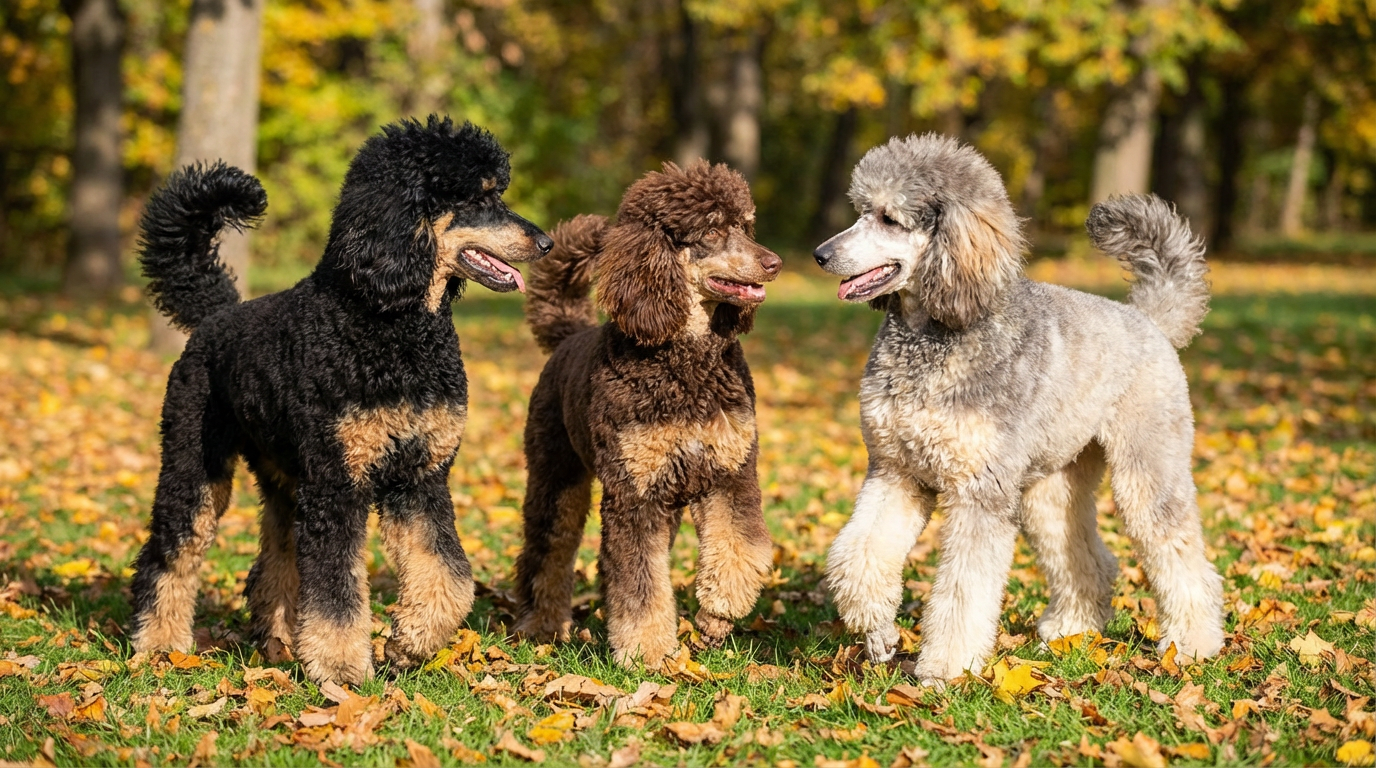
Phantom poodles seem to stop people in their tracks. You notice them instantly. Dark coats accented with lighter points above the eyes, on the chest, and along the legs. They look almost painted, like a living work of art. Many first-time admirers assume they are rare hybrids. Others think they are designer dogs. In reality, phantom poodles are purebred, deeply rooted in poodle history, and surrounded by quiet intrigue.
Exploring the mystique of phantom poodles means going beyond appearance. Their story blends genetics, tradition, and personality. They are elegant yet playful. Confident yet sensitive. Once you understand them, their appeal becomes impossible to ignore.
This guide takes you into their world. You will learn where phantom poodles come from, what makes their markings special, how they behave, and whether they are the right fit for your life.
What Are Phantom Poodles Really
Phantom poodles are defined by their color pattern, not by size or lineage. They can be Toy, Miniature, or Standard poodles. The defining feature is a two-tone coat with specific placement.
Typically, a phantom poodle has a solid base color like black, brown, silver, or red. Lighter markings appear above each eye, on the muzzle sides, chest, legs, and under the tail. These markings resemble the pattern seen in Dobermans or Rottweilers, which is why people often do a double take.
Despite misconceptions, phantom poodles are not mixed breeds. They meet purebred standards, although some kennel clubs historically discouraged the pattern in show rings. That history adds to their mystique.
The Historical Roots of Phantom Poodles
Phantom poodles are not a modern trend. They existed long before today’s social media spotlight.
Early poodle breeding focused on function rather than appearance. Hunters and water retrievers valued intelligence, athleticism, and trainability. Coat color was secondary. As breed standards evolved, solid colors became preferred, pushing phantoms into the background.
However, genetics never forgot them. The phantom pattern remained quietly present, passed down through generations. In recent years, breeders and enthusiasts began celebrating this overlooked beauty.
Exploring the mystique of phantom poodles includes honoring this hidden history.
Understanding Phantom Poodle Genetics
The phantom pattern results from specific recessive genes. Both parents must carry the phantom gene for it to appear in puppies.
That genetic requirement makes phantom poodles less common, though not rare. It also means ethical breeding practices are essential. Responsible breeders prioritize health, temperament, and genetic diversity over color alone.
Color should never come at the expense of well-being. Fortunately, phantom poodles are just as healthy and robust as other poodles when bred responsibly.
Why Phantom Poodles Look So Striking
Their markings create contrast. Contrast draws the eye.
The lighter points frame their expressions, making their eyes appear more alert and soulful. Their leg markings highlight movement, giving them a graceful, almost theatrical presence.
In sunlight, the coat can appear dynamic, shifting shades as the dog moves. This visual depth is part of their charm.
Phantom poodles often look regal without trying. That effortless elegance fuels fascination.
Common Phantom Color Combinations
Phantom poodles come in several combinations, each with its own appeal.
Black with tan points is the most recognized. Brown with cream points offers warmth. Silver phantoms develop contrast as they mature. Red phantoms provide a softer, rarer look.
Regardless of combination, the pattern placement remains consistent. That consistency is what defines a true phantom.
Temperament Traits of Phantom Poodles
Temperament matters more than color, yet phantom poodles often develop reputations for strong personalities. While color does not dictate behavior, certain traits appear frequently.
They are alert, intelligent, and emotionally intuitive. Many phantom poodles bond deeply with their families. They thrive on engagement and mental stimulation.
Because they are highly perceptive, they respond best to calm, consistent leadership. Harsh training methods backfire quickly.
Living with a phantom poodle feels like sharing space with a thoughtful companion rather than a passive pet.
Intelligence and Trainability
All poodles rank among the most intelligent dog breeds. Phantom poodles are no exception.
They learn quickly. Sometimes too quickly. They notice patterns, routines, and emotions. This intelligence makes training rewarding but demands creativity.
Positive reinforcement works best. Short sessions keep them engaged. Variety prevents boredom.
When mentally stimulated, phantom poodles shine. When ignored, they invent their own entertainment.
Energy Levels and Daily Needs
Phantom poodles balance energy with adaptability. They enjoy activity but also appreciate downtime.
Daily walks, play sessions, and interactive toys keep them satisfied. Mental exercise matters as much as physical movement.
Without outlets, pent-up energy becomes mischief. With structure, they become calm and cooperative.
Understanding their needs prevents frustration on both sides.
Social Behavior and Family Life
Phantom poodles usually integrate well into family settings. They enjoy being involved. Isolation does not suit them.
They tend to be gentle with children when socialized early. Supervision remains important, especially with smaller varieties.
With other pets, early introductions set the tone. Their intelligence allows them to adapt to multi-pet households.
Exploring the mystique of phantom poodles includes appreciating their social awareness.
Are Phantom Poodles Good for First-Time Owners
They can be, with the right mindset.
First-time owners must be ready for engagement. Phantom poodles need guidance, not neglect. They flourish with owners who enjoy interaction and learning together.
Those seeking low-effort pets may struggle. Those seeking companionship will thrive.
Commitment defines success more than experience.
Grooming Needs of Phantom Poodles
Poodles require regular grooming, regardless of color. Phantom markings add visual interest but not extra difficulty.
Regular brushing prevents matting. Professional grooming every four to six weeks maintains coat health.
Some owners choose styles that highlight phantom points. Others prefer simplicity.
Grooming time also becomes bonding time, strengthening trust.
Health Considerations Specific to Phantom Poodles
Phantom poodles share the same health considerations as other poodles.
These include hip dysplasia, eye conditions, and certain genetic disorders. Responsible breeders screen for these risks.
Color itself does not increase health issues. However, unethical breeding practices focused solely on appearance can.
Health testing matters more than coat color.
Diet and Nutrition for Optimal Health
High-quality nutrition supports longevity and vitality. Phantom poodles benefit from balanced diets rich in protein and healthy fats.
Some may develop sensitivities. Monitoring reactions helps guide choices.
Consistency aids digestion. Sudden changes disrupt balance.
A well-fed poodle glows from the inside out.
Exercise and Mental Stimulation
Exercise keeps bodies healthy. Mental challenges keep minds sharp.
Puzzle toys, training games, and scent work provide stimulation. Agility and obedience suit their athleticism.
Variety prevents boredom. Routine builds security.
Together, these elements support well-rounded development.
Why Phantom Poodles Attract Attention Everywhere
People ask questions. Strangers stop to admire. Conversations start easily.
Phantom poodles stand out without being flashy. Their beauty feels intentional, not exaggerated.
This attention suits confident dogs. Shy dogs may need support.
Owners should prepare for curiosity and compliments alike.
Phantom Poodles in Popular Culture
While not mainstream icons, phantom poodles appear increasingly in social media and boutique breeding circles.
Their photogenic qualities suit modern platforms. As awareness grows, appreciation follows.
However, popularity carries responsibility. Education prevents impulsive purchases.
Mystique should inspire respect, not trends.
Ethical Breeding and Responsible Ownership
Choosing a phantom poodle means choosing responsibility.
Ethical breeders prioritize health, temperament, and transparency. They welcome questions and provide documentation.
Avoid sellers focused solely on color or price.
A healthy start shapes a lifetime.
Living With the Mystique Daily
The mystique fades into normalcy once you live together. What remains is connection.
Phantom poodles become companions, confidants, and comedic relief. Their markings become familiar. Their personalities become cherished.
The real magic lies not in appearance, but in shared moments.
Is a Phantom Poodle Right for You
Ask yourself honest questions. Do you enjoy interaction. Are you patient. Do you value intelligence.
If yes, a phantom poodle may fit beautifully.
If not, another breed may suit better.
Matching lifestyle matters more than mystique.
Conclusion
Exploring the mystique of phantom poodles reveals far more than striking markings. These dogs combine beauty, intelligence, and emotional depth in a way that leaves lasting impressions. While their appearance draws attention, their temperament builds bonds. When raised with care, structure, and respect, phantom poodles offer companionship that feels both elegant and deeply human. Their mystique is not just seen. It is lived, daily, in moments of connection and trust.
FAQ
1. Are phantom poodles rare?
They are less common than solid colors but not truly rare.
2. Are phantom poodles purebred?
Yes, phantom poodles are fully purebred poodles.
3. Do phantom poodles have different temperaments?
No, temperament depends on upbringing, not coat pattern.
4. Are phantom poodles accepted in dog shows?
Acceptance varies by kennel club and show standards.
5. Do phantom poodles cost more?
Pricing varies, but ethical breeders do not charge solely for color.