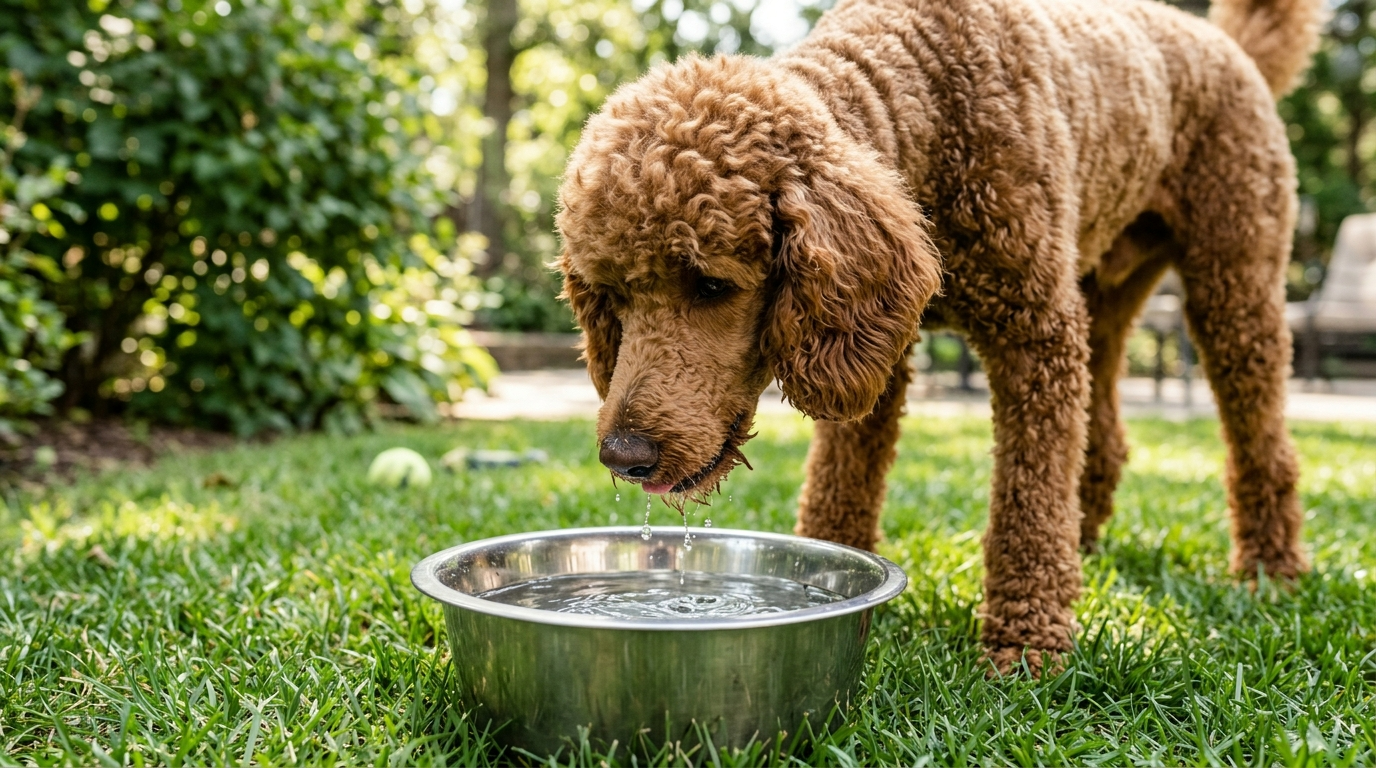
Healthy Poodle hydration plays a crucial role in your dog’s overall well-being. While food often receives the most attention, water supports nearly every bodily function. Therefore, ensuring proper fluid intake directly impacts energy levels, digestion, and organ health.
Poodles are active, intelligent, and often highly energetic. Because of their activity levels and dense coats, they may lose fluids quickly. As a result, dehydration can occur faster than many owners realize.
In this guide, you will learn why Healthy Poodle hydration matters so much and how to maintain proper water balance at every life stage.
Why Water Is Essential for Poodle Health
Water makes up a large percentage of your Poodle’s body. It regulates temperature, supports circulation, and aids nutrient absorption. Without adequate fluids, even basic functions slow down.
Additionally, water helps flush toxins from the kidneys and urinary tract. Therefore, consistent hydration reduces the risk of urinary complications.
Proper fluid intake also supports joint lubrication. Because Poodles are active and agile, joint health remains essential for mobility.
When you prioritize Healthy Poodle hydration, you support nearly every internal system simultaneously.
How Dehydration Affects Poodles
Even mild dehydration can cause noticeable changes. Your dog may appear lethargic or less playful. Additionally, appetite may decrease.
Dry gums and reduced skin elasticity often signal fluid deficiency. In more serious cases, vomiting or rapid heart rate may occur.
Because Poodles are sensitive, dehydration may also increase stress levels. Consequently, mood changes or irritability may appear.
Early detection prevents complications. Therefore, monitoring Healthy Poodle hydration daily helps maintain steady energy and comfort.
How Much Water Does a Poodle Need?
Water needs vary based on size, activity, and climate. Generally, dogs require about one ounce of water per pound of body weight daily.
Toy Poodles may drink smaller amounts more frequently. Meanwhile, Standard Poodles often consume larger volumes due to size and energy output.
Hot weather significantly increases water requirements. Therefore, provide additional access during warm months.
Active play sessions also raise fluid loss. Always offer fresh water immediately after exercise.
Maintaining consistent Healthy Poodle hydration prevents fatigue and overheating.
Signs Your Poodle Is Well Hydrated
Healthy gums should appear moist and pink. Skin elasticity also provides clues. Gently lift the skin at the neck and release it. If it returns quickly, hydration levels are likely adequate.
Clear or pale yellow urine typically indicates proper fluid balance. Dark urine may signal dehydration.
Consistent energy and alertness also suggest sufficient water intake.
Monitoring these signs helps you adjust routines before problems arise.
How Diet Influences Hydration
Food choices affect fluid intake significantly. Dry kibble contains minimal moisture. Therefore, dogs on dry diets must drink more water.
Wet food contains higher water content, which supports overall hydration. Some owners combine both for balance.
Additionally, adding low-sodium broth to meals may encourage reluctant drinkers. However, always verify ingredient safety.
Balanced nutrition combined with Healthy Poodle hydration supports digestion and nutrient absorption effectively.
Hydration and Coat Health
Water plays a direct role in coat quality. When hydration drops, fur may appear dull or brittle.
Moisture supports skin elasticity and reduces flaking. Additionally, hydrated skin forms a stronger barrier against environmental irritants.
Because Poodles have curly coats that require regular grooming, internal hydration supports external shine.
Proper Healthy Poodle hydration complements brushing, grooming, and omega-rich diets.
Hydration and Kidney Function
Kidneys rely heavily on adequate fluid levels. Water helps flush waste products and maintain balanced electrolytes.
Insufficient hydration increases strain on these organs. Over time, chronic dehydration may contribute to kidney complications.
Senior Poodles, in particular, benefit from consistent monitoring. Aging dogs may experience reduced thirst response.
Encouraging steady fluid intake protects long-term kidney health significantly.
Encouraging Your Poodle to Drink More Water
Some dogs drink less than ideal amounts. Therefore, you may need creative solutions.
Place multiple water bowls throughout your home. Clean bowls daily to prevent odor or bacterial buildup.
Consider using a pet water fountain. Flowing water often attracts dogs more effectively than still water.
During outdoor activities, carry portable water containers. Frequent small drinks maintain balance.
By supporting Healthy Poodle hydration proactively, you reduce health risks.
Seasonal Hydration Considerations
Weather changes influence water needs. During summer, increased panting leads to faster fluid loss.
In winter, indoor heating may reduce humidity, contributing to subtle dehydration.
Additionally, dry air may affect skin and coat condition. Therefore, consistent water access remains essential year-round.
Adjust water availability based on seasonal demands rather than fixed assumptions.
Hydration During Illness or Recovery
Sick dogs often lose fluids more rapidly. Vomiting or diarrhea accelerates dehydration risk.
During recovery periods, monitor water intake closely. Offer small amounts frequently to prevent stomach upset.
If your Poodle refuses water entirely, contact a veterinarian promptly.
Supporting Healthy Poodle hydration during illness speeds recovery and prevents complications.
Common Hydration Mistakes to Avoid
Relying solely on thirst cues may not be sufficient. Some dogs do not signal dehydration clearly.
Leaving water bowls empty for extended periods increases risk. Therefore, check levels regularly.
Using flavored drinks designed for humans is unsafe. Always stick to clean, fresh water or vet-approved additives.
Ignoring subtle signs such as dry nose or low energy delays intervention.
Preventive awareness protects your dog’s long-term health.
Building a Daily Hydration Routine
Establish predictable patterns to maintain steady intake. Offer fresh water each morning and refill throughout the day.
Encourage drinking after walks and play sessions. Additionally, observe habits during meals.
Make hydration part of grooming and care routines. When habits become automatic, compliance improves naturally.
Healthy Poodle hydration thrives on consistency rather than occasional reminders.
Final Thoughts on Lifelong Water Balance
Healthy Poodle hydration supports digestion, kidney function, joint health, coat quality, and overall vitality. While water seems simple, its impact reaches every system.
Start by ensuring clean, accessible water at all times. Then adjust intake based on weather, age, and activity level.
Monitor subtle changes in behavior or appearance. Early adjustments prevent complications.
Ultimately, consistent Healthy Poodle hydration forms one of the simplest yet most powerful foundations of lifelong wellness.
FAQ
- How can I tell if my Poodle is dehydrated?
Look for dry gums, reduced skin elasticity, dark urine, or low energy levels. - Does wet food help improve hydration?
Yes, wet food contains higher moisture and supports overall fluid intake. - How often should I change my dog’s water?
Replace water daily and clean bowls to prevent bacterial growth. - Can I add broth to encourage drinking?
Low-sodium, dog-safe broth may encourage intake, but always check ingredients carefully. - Do older Poodles need more hydration support?
Yes, senior dogs may have reduced thirst response and require closer monitoring.