
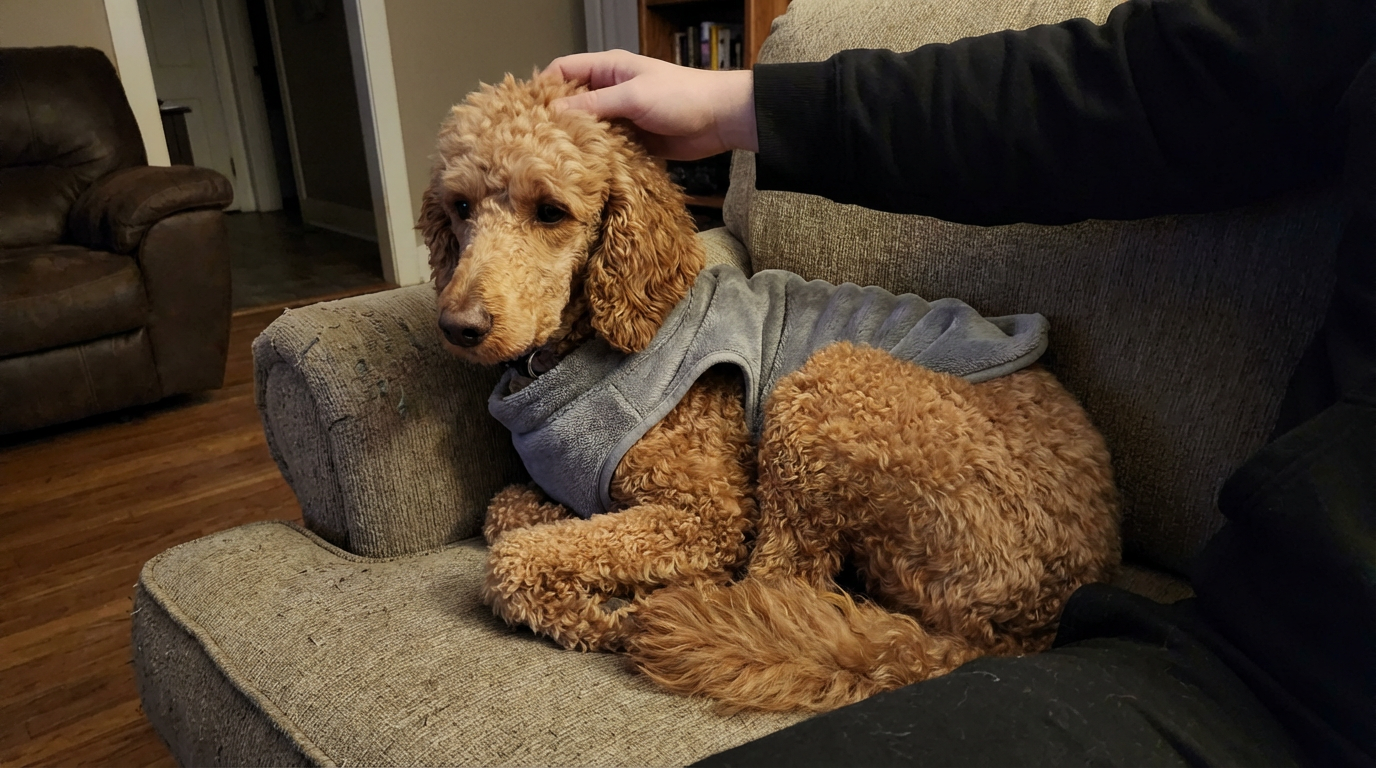
Extreme separation anxiety dogs experience is not just inconvenient. It is heartbreaking. You leave the house for ten minutes, and it feels like the world collapses behind you. Scratched doors. Torn furniture. Endless barking. Sometimes, even self-injury. When you return, your dog looks panicked, exhausted, and overwhelmed.
This is not bad behavior. It is fear. Deep, consuming fear.
Dogs with extreme separation anxiety are not trying to punish you. They are reacting to a perceived threat: being alone. Their nervous system shifts into survival mode. Logic disappears. Panic takes over.
The good news is this. Even severe separation anxiety can improve. With the right strategies, patience, and understanding, dogs can learn that being alone is safe. Healing takes time, but progress is possible.
What Extreme Separation Anxiety Dogs Experience Looks Like
Extreme separation anxiety dogs display symptoms that go far beyond mild whining or restlessness. These dogs panic the moment they sense departure cues. Shoes picked up. Keys jingling. A jacket touched.
Their reactions can include destructive chewing focused on exits, nonstop vocalization, drooling, pacing, and attempts to escape. Some dogs injure teeth, paws, or nails trying to break free.
Physically, stress hormones surge. Heart rate spikes. Digestion shuts down. Mentally, the dog cannot self-soothe.
Understanding the severity helps shift your mindset from frustration to empathy.
Why Some Dogs Develop Extreme Separation Anxiety
There is rarely a single cause. Instead, multiple factors stack together.
Genetics play a role. Some dogs are naturally more sensitive. Early life experiences matter deeply. Puppies who lacked stable caregivers or experienced early separation often struggle later.
Sudden changes trigger anxiety too. Moving homes. Schedule shifts. Loss of a family member. Even illness.
Additionally, well-meaning owners may unknowingly reinforce anxiety by never allowing independence.
Extreme separation anxiety dogs develop it through a perfect storm, not personal failure.
The Difference Between Normal Attachment and Extreme Anxiety
Healthy attachment allows flexibility. Anxiety removes it.
A normally attached dog may feel disappointed when you leave. An anxious dog feels terrified. Their brain interprets absence as danger.
This distinction matters. Training methods that work for mild cases often fail for extreme separation anxiety dogs.
These dogs need emotional rehabilitation, not obedience drills.
Why Punishment Makes Separation Anxiety Worse
Punishment never helps anxiety. It amplifies it.
If a dog is punished for destruction or vocalization, fear increases. The dog associates your return with anger, not relief. This reinforces panic during absence.
Anxiety-driven behavior cannot be trained away through discipline. It must be soothed and reshaped.
Safety, not correction, is the foundation of healing.
Understanding the Canine Nervous System
Extreme separation anxiety dogs live in a constant state of alert.
Their sympathetic nervous system dominates. Fight or flight activates quickly. Calm states are rare.
Healing focuses on teaching the nervous system to settle. This requires repetition, predictability, and gradual exposure.
You are not just training behavior. You are retraining emotional responses.
Why Quick Fixes Do Not Work
There is no single product or trick that cures separation anxiety.
Crates, cameras, and toys help some dogs. For extreme cases, they often fail alone.
Healing is layered. Each strategy builds safety slowly.
Expecting instant results creates frustration. Progress appears in small steps.
Creating a Foundation of Safety at Home
Before addressing absences, build safety while you are home.
Encourage independence gently. Reward calm behavior away from you. Avoid constant physical contact.
Teach your dog that distance does not equal danger.
This foundation supports later training.
Desensitizing Departure Cues
Extreme separation anxiety dogs often panic before you leave.
Keys, shoes, bags trigger fear. These cues must be neutralized.
Practice picking up keys without leaving. Put on shoes, then sit down. Repeat until the cues lose power.
Desensitization breaks the link between cues and panic.
Graduated Absence Training
This is the core of treatment.
Start with absences so short they do not trigger anxiety. Seconds matter. Step outside, then return calmly.
Slowly increase duration only when your dog remains relaxed.
Progress feels slow. However, rushing causes setbacks.
Patience creates lasting change.
Why Calm Returns Matter More Than Calm Departures
Many owners focus on leaving calmly. Returning calmly matters more.
Excited greetings reinforce anxiety cycles. They teach dogs that reunion is intense and emotional.
Instead, return neutrally. Acknowledge calmly once your dog settles.
Calm bookends reduce emotional spikes.
The Role of Predictability in Reducing Anxiety
Predictable routines build trust.
Feed at consistent times. Walk on schedule. Leave and return at varied but manageable intervals.
Predictability teaches dogs what to expect. Certainty reduces fear.
Routine is not boring to anxious dogs. It is comforting.
Environmental Management for Extreme Anxiety
Management prevents harm while training progresses.
Block access to doors. Provide safe confinement areas. Use sound masking to reduce external noise.
Some dogs feel safer in smaller spaces. Others panic in confinement. Individualization matters.
Safety comes first.
Mental Enrichment That Supports Emotional Balance
Mental stimulation tires the brain gently.
Food puzzles. Scent work. Training games. These activities reduce baseline anxiety.
Avoid overstimulation before departures. Calm enrichment works best.
A satisfied mind rests more easily.
Exercise and Its Role in Anxiety Reduction
Exercise helps regulate stress hormones.
However, overexcitement before departure increases anxiety. Timing matters.
Provide moderate exercise earlier in the day. Avoid intense activity right before leaving.
Balance creates calm energy.
When Medication Becomes Part of the Solution
For extreme separation anxiety dogs, medication is not failure. It is support.
Medication stabilizes brain chemistry. It reduces panic enough for training to work.
Behavior modification without medication may be impossible in severe cases.
Veterinary behaviorists guide appropriate use.
Types of Medication Commonly Used
Medications may include SSRIs, anti-anxiety drugs, or situational aids.
These are not sedatives. They help normalize emotional responses.
Medication works best alongside training, not alone.
Consistency and monitoring are essential.
Why Professional Help Matters
Severe cases benefit from professional guidance.
Certified trainers experienced in anxiety understand pacing. Veterinary behaviorists address medical aspects.
Online advice often oversimplifies complex cases.
Expert support saves time and prevents setbacks.
Common Mistakes That Slow Progress
Leaving too long too soon. Inconsistent routines. Emotional departures. Ignoring early stress signs.
Each mistake reinforces fear.
Awareness accelerates healing.
Tracking Progress the Right Way
Progress is not linear.
Celebrate small wins. Longer calm moments. Reduced destruction. Quicker recovery.
Regression happens. It does not erase progress.
Tracking helps maintain perspective.
The Emotional Toll on Owners
Living with extreme separation anxiety dogs is exhausting.
Guilt builds. Schedules shrink. Stress accumulates.
Owner well-being matters too. Support systems help maintain patience.
You are not alone in this journey.
Why Dogs Can Recover Even After Years
Dogs remain emotionally flexible.
Even long-standing anxiety responds to consistent care.
Neural pathways change with repetition. Safety rewires fear.
Hope remains valid at any stage.
Living Life During Recovery
Life does not pause during training.
Use pet sitters. Doggy daycare for suitable dogs. Family support.
Management allows progress without burnout.
Balance protects everyone.
Preventing Relapse Long Term
Once improvement occurs, maintenance matters.
Continue calm routines. Avoid sudden long absences.
Life changes require gradual adjustment.
Prevention preserves progress.
Reframing Success
Success is not perfection.
Success is reduced panic. Increased confidence. Improved quality of life.
Even partial improvement transforms daily living.
That matters.
Conclusion
Extreme separation anxiety dogs face is one of the most challenging behavioral conditions, but it is also one of the most misunderstood. These dogs are not disobedient. They are afraid. By focusing on safety, gradual exposure, emotional regulation, and professional support when needed, real healing becomes possible. Progress may be slow, yet each calm moment builds resilience. With patience and compassion, dogs learn that being alone does not mean being abandoned. It means being safe until you return.
FAQ
1. Can extreme separation anxiety dogs ever fully recover?
Many dogs improve significantly, and some recover fully with consistent treatment.
2. How long does treatment usually take?
Improvement may take weeks to months depending on severity and consistency.
3. Is crate training helpful for extreme anxiety?
It depends on the dog. Some feel safer, while others panic more.
4. Should I get another dog to help with anxiety?
A second dog rarely solves separation anxiety and may complicate treatment.
5. When should I consider medication?
If panic prevents training progress or causes self-harm, medication should be discussed.