
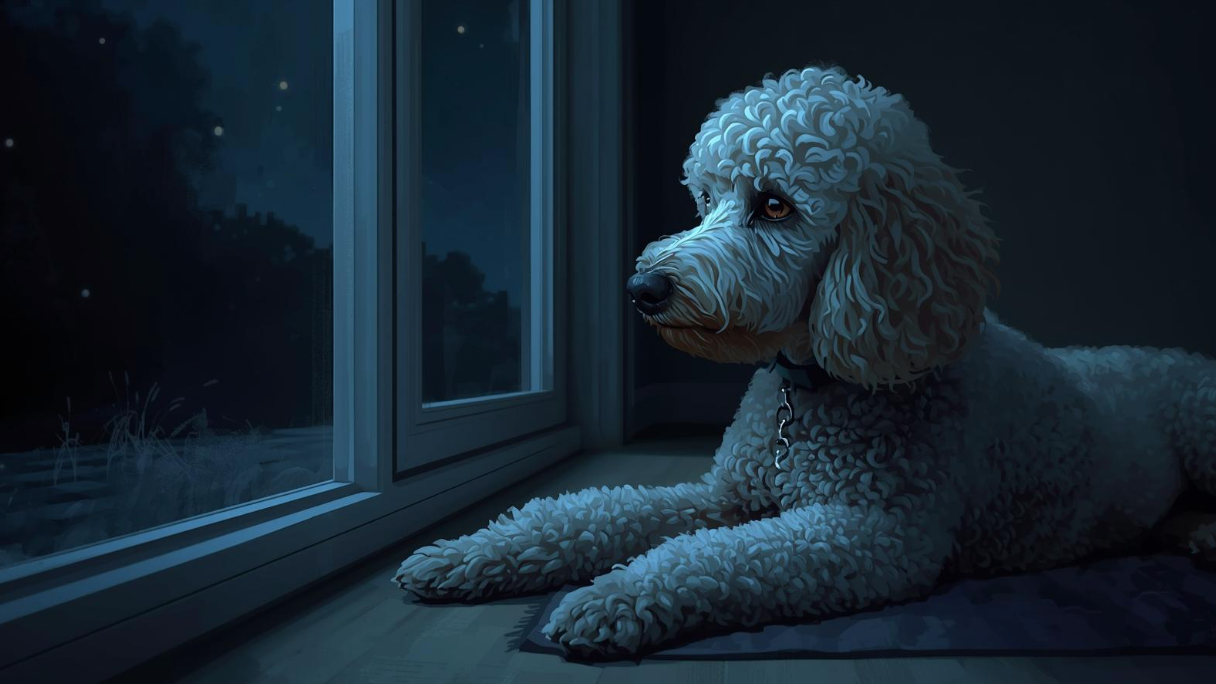
Night should bring rest. For many dogs, however, bedtime triggers stress instead of calm. Pacing begins. Whining follows. Barking may echo through the house. While the lights are off, anxiety stays wide awake.
Dog separation anxiety night issues are more common than most owners expect. During the day, distractions help dogs cope. At night, silence amplifies fear. Separation feels deeper. Uncertainty grows louder.
Fortunately, nighttime anxiety can be managed. With understanding, structure, and patience, evenings become peaceful again. Both you and your dog deserve uninterrupted sleep.
Why Dog Separation Anxiety Gets Worse at Night
Darkness changes perception. Sounds feel sharper. Familiar cues disappear. When owners head to bed, dogs may interpret the routine as abandonment.
During the day, dogs rely on movement and noise for reassurance. At night, those signals fade. As a result, anxious thoughts fill the void. Separation anxiety intensifies.
Dog separation anxiety night episodes often stem from predictability loss. Once routines shift, stress rises. Recognizing this pattern helps you respond effectively.
Common Signs of Dog Separation Anxiety at Night
Nighttime anxiety looks different from daytime stress. Symptoms may escalate quietly or explode suddenly.
Whining and barking are common. Scratching doors may follow. Some dogs pace relentlessly. Others refuse to settle. Accidents may occur, even in house-trained dogs.
Physical signs matter too. Excessive panting, drooling, or trembling indicate distress. When these behaviors appear only after bedtime, separation anxiety is likely involved.
Understanding the Emotional Root of Night Anxiety
Dogs form strong attachments. At night, separation feels final. Unlike daytime absences, bedtime lasts longer.
Silence also plays a role. Without stimulation, anxious dogs focus inward. Fear loops repeat. Emotional regulation weakens.
Dog separation anxiety night problems are emotional responses, not disobedience. Viewing anxiety through this lens fosters empathy and better solutions.
How Past Experiences Shape Nighttime Anxiety
History matters. Rescue dogs often struggle more. Previous abandonment leaves emotional scars.
Puppies removed from litters too early may lack self-soothing skills. Dogs that experienced illness or trauma at night associate darkness with fear.
Understanding your dog’s background helps explain behavior. More importantly, it guides personalized solutions.
The Role of Routine in Managing Night Anxiety
Consistency builds security. Predictable routines signal safety.
A stable bedtime ritual helps anxious dogs prepare mentally. Repetition calms the nervous system. When routines remain unchanged, uncertainty decreases.
Dog separation anxiety night episodes often ease once dogs know what to expect. Structure replaces fear with familiarity.
Creating a Calming Pre-Bedtime Routine
Evenings set the tone. Calm activities reduce stimulation before bed.
Gentle play helps burn energy. Quiet walks relax muscles. Soft interaction reassures emotionally.
Avoid intense games late at night. High arousal increases anxiety. Instead, guide your dog toward rest gradually.
Consistency turns these actions into calming signals over time.
Exercise and Its Impact on Night Anxiety
Energy fuels anxiety. Without release, rest becomes difficult.
Adequate daytime exercise reduces nighttime restlessness. Physical fatigue supports mental calm.
However, timing matters. Exercise too late may overstimulate. Earlier activity works best.
Balanced exercise supports dog separation anxiety night management by promoting deeper sleep.
Feeding Schedules and Nighttime Calm
Meal timing influences sleep. A slightly later dinner may help some dogs relax.
Digestion triggers parasympathetic responses. Calm increases naturally. For anxious dogs, this effect matters.
Avoid drastic changes. Adjust slowly while observing behavior. Small shifts create meaningful improvements.
Sleep Environment and Separation Anxiety
Location matters. Sleeping alone may trigger fear. Sleeping too close may reinforce dependency.
Some dogs benefit from sleeping in the owner’s room. Others need gradual independence training.
Lighting also influences comfort. A dim nightlight reduces sensory deprivation. Sound machines mask sudden noises.
Optimizing the environment eases dog separation anxiety night symptoms significantly.
Crate Use and Nighttime Anxiety
Crates provide security for some dogs. For others, confinement worsens fear.
Positive crate associations matter. If introduced incorrectly, crates amplify anxiety.
Use crates only if your dog views them as safe spaces. Otherwise, alternative sleeping arrangements work better.
Respect individual preferences when managing nighttime separation stress.
Gradual Independence Training at Night
Independence builds resilience. Training should proceed slowly.
Begin with short separations while you remain nearby. Gradually increase distance.
Reward calm behavior. Avoid responding immediately to minor noises. This teaches self-soothing.
Over time, confidence grows. Dog separation anxiety night episodes reduce naturally.
Why Punishment Makes Night Anxiety Worse
Anxiety is emotional, not intentional. Punishment increases fear.
Yelling, scolding, or ignoring severe distress damages trust. Stress hormones rise. Sleep worsens.
Instead, respond calmly. Reinforce security. Gentle reassurance supports healing.
Compassion outperforms correction when anxiety is involved.
Using Comfort Items to Reduce Night Anxiety
Familiar scents soothe dogs. Clothing with your scent provides reassurance.
Comfort toys may help. Weighted blankets designed for dogs offer calming pressure.
These tools reduce isolation feelings. For many dogs, they bridge the gap until confidence improves.
Comfort items support dog separation anxiety night management without reinforcing dependency.
Music and Sound Therapy at Night
Sound influences emotion. Silence magnifies fear for anxious dogs.
Soft music calms the nervous system. White noise masks sudden sounds.
Studies suggest classical music reduces canine stress. Consistent nighttime sound becomes a safety cue.
Sound therapy works subtly but effectively.
Training Calm Bedtime Behaviors
Training doesn’t stop at night. Calm behaviors can be taught intentionally.
Reward lying down. Reinforce quiet moments. Shape relaxation gradually.
Use low-energy rewards. Praise softly. Keep movements slow.
Training calm responses builds long-term emotional regulation.
When to Ignore vs. When to Respond
Distinguishing distress from attention-seeking matters.
Mild whining may fade if ignored briefly. Intense panic requires reassurance.
Watch body language. Trembling, pacing, or heavy panting signal real anxiety.
Respond thoughtfully. Balance reassurance with independence building.
Managing Nighttime Departures
Leaving the room at night can trigger anxiety.
Practice short exits during the day. Normalize brief absences.
At night, avoid dramatic goodbyes. Keep departures boring.
Neutral behavior reduces emotional spikes.
Medication and Supplements for Night Anxiety
Some dogs require additional support. Supplements may help mild anxiety.
Melatonin supports sleep cycles. L-theanine promotes relaxation.
Prescription medications may be necessary for severe cases. Veterinary guidance ensures safety.
Medication works best alongside behavioral strategies.
The Impact of Owner Stress on Dog Anxiety
Dogs mirror emotions. Tension transfers easily.
If you feel frustrated, your dog senses it. Anxiety escalates.
Practicing calm responses benefits both of you. Deep breathing helps regulate shared energy.
Managing your stress supports your dog’s progress.
Tracking Progress Over Time
Improvement rarely happens overnight. Progress appears gradually.
Track behaviors. Note changes. Celebrate small wins.
Regression may occur occasionally. That’s normal.
Consistency ensures long-term success.
When Professional Help Is Needed
Some cases exceed home management.
Certified trainers or veterinary behaviorists offer tailored plans. Early intervention prevents worsening.
Seeking help shows commitment, not failure.
Professional guidance accelerates healing.
Long-Term Outlook for Dogs with Night Anxiety
Most dogs improve with patience. Trust rebuilds. Confidence grows.
Nighttime anxiety often fades once security returns.
The goal is not perfection. The goal is comfort and rest.
With time, peaceful nights become the norm again.
Conclusion
Dog separation anxiety night challenges disrupt sleep and emotional balance. However, understanding the root causes changes everything. Through consistent routines, calming environments, gradual independence training, and compassionate responses, nighttime anxiety becomes manageable. Each small step builds trust and confidence. Over time, fear gives way to comfort. Peaceful nights return. Both you and your dog rest easier, together or apart, knowing safety remains constant.
FAQ
1. Why does my dog only show separation anxiety at night?
Nighttime reduces stimulation and increases perceived isolation, intensifying anxiety.
2. Should my dog sleep in my room if anxiety is severe?
Temporarily, yes. Gradual independence training can follow once calm improves.
3. Can exercise help with nighttime separation anxiety?
Yes. Adequate daytime exercise reduces restlessness and supports better sleep.
4. Are supplements safe for dog separation anxiety at night?
Some supplements help, but veterinary guidance ensures safety and effectiveness.
5. How long does it take to improve nighttime anxiety?
Improvement varies. Many dogs show progress within weeks when routines stay consistent.