A dog ear infection vet visit can feel like a judgment call. You notice head shaking. Maybe some scratching. There is an odor you did not smell yesterday. You pause and wonder. Is this something I can manage at home, or is it time to call the vet.
That hesitation is common. Many owners wait too long because the signs seem mild at first. Others rush in for issues that could have resolved easily. Knowing the difference protects your dog from pain, long-term damage, and unnecessary stress.
Ear infections rarely stay neutral. They either improve or escalate. The challenge is recognizing which direction things are heading. Once you understand the warning signs, the decision becomes clearer and faster.
This guide explains exactly when a dog ear infection requires a vet visit, what symptoms should never be ignored, and how early action can save your dog from chronic ear disease.
Why Dog Ear Infections Escalate So Quickly
Dog ears are not designed for self-cleaning. Their L-shaped ear canals trap moisture, wax, and debris. Once inflammation begins, the environment becomes ideal for bacteria and yeast.
What starts as mild irritation can turn painful within days. Swelling narrows the ear canal. Drainage builds. Medication struggles to reach deeper tissue.
Because of this structure, ear infections rarely stay mild for long. Delaying a dog ear infection vet visit increases the risk of complications.
Common Early Signs of a Dog Ear Infection
Early signs are subtle but meaningful.
Your dog may shake their head more than usual. They may scratch one ear repeatedly. You might notice redness or warmth inside the ear flap. A mild odor may appear.
At this stage, discomfort exists but pain is limited. These signs signal irritation or early infection.
Early action often prevents escalation. Waiting invites trouble.
When Mild Symptoms May Not Require a Vet Yet
Not every ear irritation requires an immediate vet visit.
If symptoms are mild, recent, and improving with gentle cleaning, monitoring may be appropriate. Examples include slight redness after swimming or minor wax buildup without odor or pain.
However, improvement should occur within twenty-four to forty-eight hours. If symptoms stall or worsen, veterinary care becomes necessary.
The key is progress. No progress means no waiting.
Signs That Signal a Dog Ear Infection Vet Visit Is Needed
Certain symptoms should always trigger a vet visit.
Persistent head shaking that does not stop. Intense scratching that causes yelping. Strong foul odor. Thick discharge that is yellow, green, or dark brown. Visible swelling or heat.
Pain matters most. If your dog resists ear handling or cries out, the infection has progressed.
These signs indicate more than surface irritation.
Pain as the Most Important Warning Sign
Pain changes everything.
Dogs tolerate discomfort quietly until pain becomes severe. When pain appears, infection has usually advanced.
A painful ear suggests inflammation deep in the canal. Home care becomes risky. Incorrect treatment worsens damage.
Pain is a clear signal for a dog ear infection vet visit.
Head Tilt and Balance Issues: An Emergency Signal
A head tilt is never normal.
If your dog tilts their head, stumbles, or seems disoriented, the infection may have reached the middle or inner ear.
This can affect balance and hearing. Immediate veterinary attention is required.
Delaying care risks permanent damage.
Discharge Color and What It Means
Discharge tells a story.
Yellow or green discharge often indicates bacterial infection. Dark brown or black discharge suggests yeast. Bloody discharge signals severe inflammation or trauma.
Any discharge beyond light wax should prompt concern. Thick discharge rarely resolves without medication.
This is a clear reason for a dog ear infection vet visit.
Odor That Gets Worse Instead of Better
Mild odor can appear early. Strong odor means progression.
A sour, musty, or rotten smell signals active infection. Odor intensifies as microbes multiply.
If odor worsens over time, veterinary treatment is needed.
Smell is an early warning that should not be ignored.
Swelling That Narrows the Ear Canal
Swelling blocks airflow and medication delivery.
As the canal narrows, infection becomes trapped. Topical treatments lose effectiveness.
Swelling also increases pain significantly.
Once swelling is visible, a dog ear infection vet visit becomes urgent.
Repeated Ear Infections and Chronic Patterns
Recurring ear infections always require veterinary evaluation.
If infections return every few months, an underlying cause exists. Allergies, hormonal issues, or anatomical factors may be involved.
Repeated home treatment masks symptoms without addressing causes.
Chronic ear disease develops when patterns are ignored.
Why Chronic Ear Infections Are Dangerous
Chronic infections damage tissue permanently.
Skin thickens. Scar tissue forms. Glands overproduce wax. Medication penetration becomes difficult.
Eventually, surgery may be required.
Early veterinary intervention prevents this progression.
Breed-Specific Risk Factors That Warrant Early Vet Visits
Some breeds are more prone to ear infections.
Dogs with floppy ears, narrow canals, or hair-filled ears face higher risk. Poodles, Cocker Spaniels, Basset Hounds, and Retrievers fall into this category.
For these breeds, symptoms escalate faster. Early vet visits prevent chronic issues.
Breed awareness saves time and pain.
When Home Remedies Become Risky
Home remedies can help mild irritation. They can also cause harm.
If redness increases, pain appears, or discharge develops, home care should stop.
Using vinegar, oils, or unapproved solutions on infected ears worsens inflammation.
Once uncertainty exists, choose safety. Choose a vet visit.
Why Guessing Infection Type Delays Healing
Bacterial and yeast infections require different treatments.
Treating yeast with antibiotics worsens imbalance. Treating bacteria with antifungals fails.
Only veterinary cytology identifies the infection type accurately.
Guessing extends suffering.
The Role of Ear Cytology at the Vet
Ear cytology involves examining a sample under a microscope.
This reveals bacteria, yeast, or inflammation patterns. Treatment becomes targeted.
Correct treatment speeds healing and prevents recurrence.
Cytology makes the dog ear infection vet visit invaluable.
Why Some Infections Need Oral Medication
Severe infections extend beyond surface tissue.
Swelling may block topical medication. Middle ear involvement requires systemic treatment.
Oral antibiotics or anti-inflammatories address deeper infection.
Home care cannot reach these areas.
How Long You Should Wait Before Seeing a Vet
Time matters.
If symptoms persist beyond two days without improvement, schedule a vet visit. If symptoms worsen at any point, go sooner.
Pain, discharge, odor, or swelling shorten timelines.
Waiting rarely improves outcomes.
Puppies and Senior Dogs Need Faster Intervention
Puppies have developing immune systems. Seniors have weaker defenses.
Infections progress faster in both groups.
Early veterinary care prevents complications.
Age increases urgency.
Ear Infections After Swimming or Bathing
Water trapped in ears triggers infections.
If irritation appears after swimming and resolves quickly, monitoring is reasonable.
If symptoms persist beyond one day, infection may have started.
Moisture invites microbes.
When Scratching Causes Secondary Injury
Scratching damages skin.
Open wounds invite bacteria. Blood attracts further irritation.
If scratching causes sores, a vet visit is required.
Secondary injury complicates treatment.
Behavior Changes That Signal Pain
Pain changes behavior.
Irritability, withdrawal, reduced appetite, or restlessness may appear.
Dogs may avoid touch or isolate themselves.
Behavior shifts often precede obvious physical signs.
Why Early Vet Visits Save Money Long Term
Early treatment costs less.
Mild infections require shorter courses. Chronic infections need repeated visits and medications.
Surgery is expensive and stressful.
Timely care protects finances and welfare.
What to Expect During a Dog Ear Infection Vet Visit
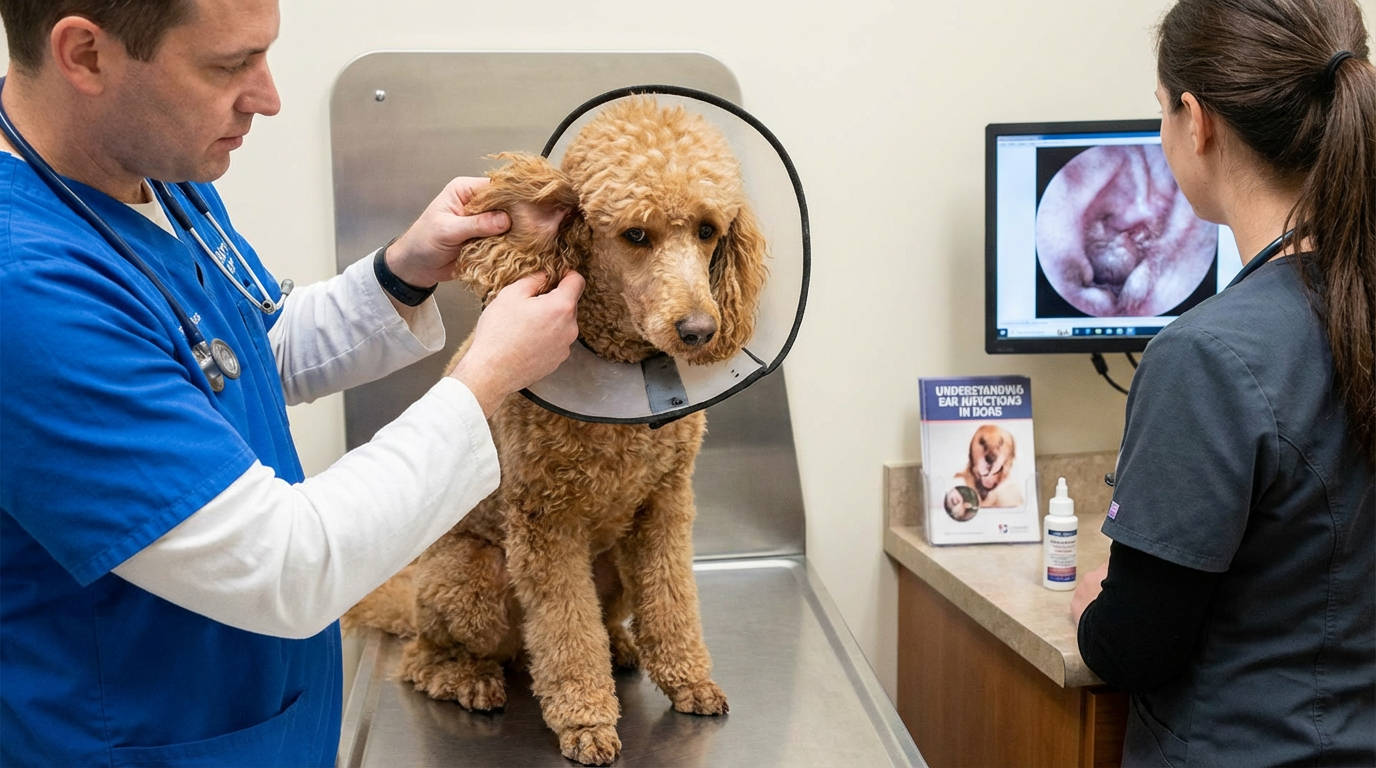
The vet examines the ear visually. Cytology follows. Sometimes cultures are taken.
Treatment is prescribed based on findings. Cleaning instructions are provided.
Follow-up may be scheduled.
Clarity replaces guesswork.
How to Support Healing After the Vet Visit
Follow instructions precisely.
Complete the full medication course. Clean only as directed.
Avoid water exposure during healing.
Consistency prevents relapse.
Preventing Future Vet Visits Through Prevention
Regular ear checks catch early signs.
Routine cleaning prevents buildup. Allergy management reduces inflammation.
Dry ears thoroughly after swimming.
Prevention reduces frequency.
Why Some Dogs Need Long-Term Management
Some dogs have lifelong predispositions.
Allergies, anatomy, or chronic conditions require ongoing care.
Maintenance reduces flare-ups.
Acceptance improves outcomes.
Myths That Delay Necessary Vet Care
Many myths cause hesitation.
Some believe ear infections resolve on their own. Others fear overuse of medication.
Infections rarely self-resolve completely.
Knowledge replaces myths with action.
Trusting Your Instincts as an Owner
You know your dog.
If something feels wrong, it probably is.
Early action is never wrong.
Your instincts matter.
Conclusion
Knowing when a dog ear infection vet visit is necessary can prevent pain, permanent damage, and chronic disease. Mild irritation may resolve with careful monitoring, but worsening symptoms, pain, discharge, odor, or balance changes demand professional care. Ear infections rarely improve through waiting alone. By recognizing early warning signs and acting promptly, you protect your dog’s comfort, hearing, and long-term ear health. When in doubt, choosing the vet is always the safer path.
FAQ
1. Can dog ear infections heal without a vet visit?
Very mild irritation may improve, but true infections usually need veterinary treatment.
2. How fast can a dog ear infection get worse?
Symptoms can escalate within days, especially in floppy-eared breeds.
3. Is head shaking always a sign of infection?
Occasional shaking is normal, but persistent shaking suggests irritation or infection.
4. Should I clean my dog’s ears before seeing the vet?
Do not clean painful ears before a visit unless instructed.
5. What happens if ear infections go untreated?
Untreated infections can cause chronic pain, hearing loss, and permanent ear damage.