The best obedience training tools do more than correct behavior. They build communication. They create clarity. Most importantly, they help you and your dog understand each other without frustration. Training is not about control. It is about cooperation.
Every dog owner starts with good intentions. You imagine calm walks, reliable recall, and polite greetings. Reality often looks different. Pulling on the leash. Ignored commands. A dog who listens only when it feels convenient.
Here is the truth. Dogs are not stubborn. They are confused. When expectations are unclear, behavior falls apart. The right training tools act like a shared language. They remove guesswork and replace it with structure.
This guide explores the best obedience training tools for dog owners who want results without harming trust. Tools are not shortcuts. They are guides that support consistency, timing, and clarity when used correctly.
Why Obedience Training Tools Matter
Training without tools is like building furniture without a level. You can try, but alignment suffers.
Dogs learn through timing and repetition. Tools help you deliver feedback at the right moment. That timing makes learning stick.
Additionally, tools help owners stay consistent. Consistency creates predictability. Predictability builds confidence.
The best obedience training tools support learning rather than forcing compliance.
Understanding Tools Versus Techniques
Tools do not replace training skills. They support them.
A leash does nothing without guidance. A clicker means nothing without timing. Treats fail when misused.
Think of tools as amplifiers. They make good technique clearer. They also magnify mistakes.
Education matters as much as equipment.
Best Obedience Training Tools Start With the Basics
Before advanced devices, basics form the foundation.
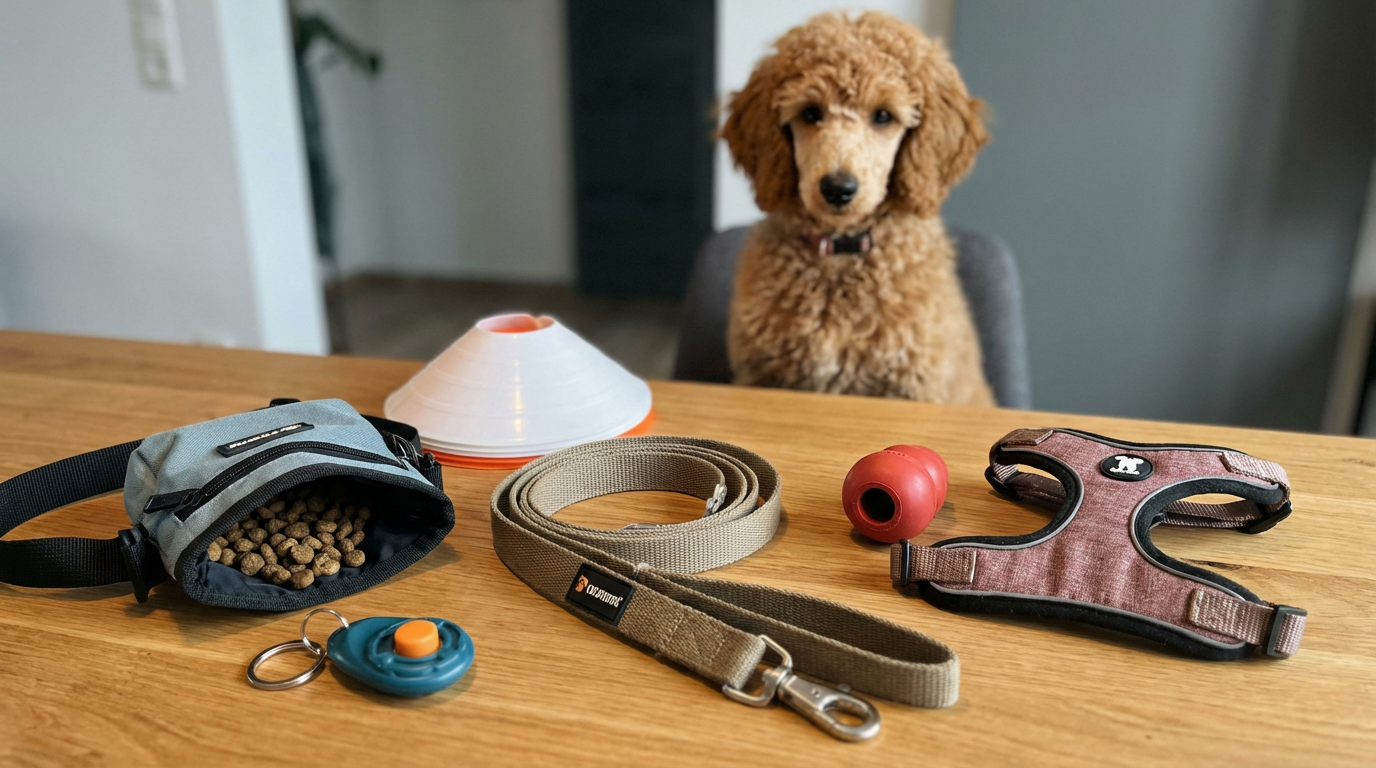
A sturdy leash. A well-fitted collar or harness. High-value rewards.
Simple tools used well outperform complex tools used poorly.
Start simple. Build upward.
Flat Collars as Foundational Training Tools
Flat collars are among the most common obedience tools.
Proper fit matters. Too loose causes slipping. Too tight causes discomfort.
Flat collars work best for dogs who already walk politely.
They are neutral tools, not corrective devices.
Harnesses and Controlled Movement
Harnesses distribute pressure across the chest and shoulders.
Front-clip harnesses reduce pulling by redirecting momentum. Back-clip harnesses offer comfort but less control.
Harnesses are excellent for dogs learning leash manners. They reduce strain on the neck.
However, harnesses alone do not teach loose leash walking.
They support training rather than replace it.
Leashes as Communication Lines
A leash is not a handle. It is a communication line.
Standard six-foot leashes offer control without restriction. Retractable leashes hinder training and timing.
Leash tension sends signals. Slack indicates freedom. Pressure indicates guidance.
The best obedience training tools include leashes used intentionally.
Long Lines for Distance Training
Long lines allow freedom with safety.
They are invaluable for recall training. Dogs practice coming when called without risk.
Long lines prevent rehearsing disobedience.
Distance builds reliability gradually.
Treats as Powerful Training Tools
Food motivates behavior. This is biology, not bribery.
High-value treats increase focus. Low-value treats maintain known behaviors.
Treat size matters. Small pieces prevent overfeeding.
Treats fade as behaviors strengthen.
Used correctly, treats build lasting obedience.
Clickers and Marker Training
Clickers create precise communication.
The sound marks exact behavior. Rewards follow.
Timing improves dramatically. Learning accelerates.
Verbal markers work too, but consistency varies.
Clickers offer clarity that speeds understanding.
Target Sticks and Guided Learning
Target sticks guide movement without force.
Dogs learn to follow a visual cue. Positioning becomes easier.
Target training supports heeling, spins, and positioning exercises.
This tool is especially useful for shaping complex behaviors.
Training Pouches and Accessibility
Accessibility affects success.
Treat pouches keep rewards ready. Delays reduce effectiveness.
Hands-free pouches improve timing.
Convenience encourages consistency.
Best Obedience Training Tools for Recall
Recall saves lives.
Long lines prevent escape. High-value rewards reinforce success.
Whistles provide consistent sound over distance.
Recall tools focus on safety and reliability.
Whistles as Distance Communication Tools
Whistles cut through noise.
They provide consistent tone regardless of emotion.
Dogs associate whistles with reward-based recall.
Whistles shine in outdoor environments.
Training Mats and Place Work
Training mats define space.
Dogs learn to settle. Impulse control improves.
Place training supports calm behavior indoors.
This simple tool builds structure and patience.
Crates as Training Tools
Crates provide structure, not punishment.
They support house training and calm routines.
Proper crate use builds security.
Misuse creates anxiety.
Crates are powerful when introduced correctly.
Best Obedience Training Tools for Impulse Control
Impulse control underpins obedience.
Leashes, mats, and controlled feeding routines support patience.
Tools structure waiting behavior.
Control develops gradually.
Head Halters and Advanced Control
Head halters offer control for strong pullers.
They guide head movement gently.
Proper fitting and introduction are critical.
Head halters are management tools, not teaching tools.
Electronic Tools: Use With Caution
Electronic collars spark debate.
When misused, they cause fear. When used professionally, they support communication.
They require education and restraint.
These tools are not beginner-friendly.
Why Timing Matters More Than Tools
Timing shapes learning.
A perfect tool used late fails.
Simple tools used on time succeed.
Focus on timing first.
Training Tools for Puppies
Puppies need gentle guidance.
Light leashes. Soft treats. Positive markers.
Avoid heavy equipment.
Early experiences shape lifelong learning.
Training Tools for Adult Dogs
Adult dogs can learn new behaviors.
Consistency matters more than age.
Tools support clarity.
Patience builds trust.
Training Tools for Reactive Dogs
Reactive dogs need safety.
Distance tools like long lines help.
Muzzle training may be necessary for safety.
Professional guidance improves outcomes.
Why One Tool Does Not Fit Every Dog
Dogs differ.
Temperament, size, history, and motivation matter.
Adapt tools to the dog, not trends.
Observation guides choices.
Combining Tools for Better Results
Tools work best together.
Leash plus treats. Clicker plus target.
Layering improves clarity.
Simplicity still matters.
Common Mistakes With Obedience Tools
Inconsistent use. Poor timing. Overreliance.
Tools should fade as behavior strengthens.
Avoid tool dependency.
How to Transition Away From Tools
Tools are training wheels.
Gradually reduce reliance.
Reward behavior, not equipment.
Independence builds confidence.
Training Environment Matters
Environment influences success.
Start low distraction. Increase gradually.
Tools support progression.
Set dogs up to win.
The Human Side of Training
Owner emotion affects dogs.
Calm hands train better.
Tools reflect mindset.
Patience matters.
Building Trust Through Tool Use
Trust grows when tools are predictable.
Fair feedback builds confidence.
Harsh correction breaks trust.
The best obedience training tools protect relationships.
Why Education Matters More Than Gear
Knowledge outperforms equipment.
Learning theory improves outcomes.
Tools support understanding.
Education empowers owners.
Investing in Quality Tools
Quality tools last longer.
They fit better. They perform reliably.
Cheap tools cause frustration.
Invest wisely.
Training Is a Journey, Not a Destination
Progress unfolds gradually.
Tools evolve with skill.
Celebrate improvement.
Enjoy the process.
Conclusion
The best obedience training tools are not about dominance or shortcuts. They are about communication, clarity, and consistency. When chosen thoughtfully and used with skill, these tools help dogs understand expectations without fear or confusion. From simple leashes and treats to advanced training aids, each tool serves a purpose within a larger system of trust-based learning. Obedience grows when owners focus on timing, patience, and education. With the right tools and the right mindset, training becomes a shared journey rather than a struggle.
FAQ
1. Do I need many tools to train my dog?
No, a few well-used tools are more effective than many unused ones.
2. Are training tools safe for all dogs?
Most are safe when fitted and used correctly. Individual needs vary.
3. Should I use electronic collars for obedience training?
Only with professional guidance and when other methods have failed.
4. How long should I use training tools?
Use them until behaviors are reliable, then fade gradually.
5. What is the most important training tool of all?
Consistency and timing matter more than any physical tool.