A poodle harness fit check takes only a minute, yet it can prevent a walk from turning into a struggle with slipping straps or rubbing fabric. Toy, Miniature, and Standard Poodles differ greatly in size, and a fluffy coat can hide where a strap actually rests. Choose a harness by your dog’s measurements, then check it on the dog rather than trusting a size label.
Poodle harness fit starts with measurements
Use a soft measuring tape for the chest girth at the widest part of the rib cage, usually just behind the front legs. Measure the lower neck where the harness will sit. Keep the tape close to the body without squeezing the coat flat. Write down both measurements and compare them with the particular maker’s chart. A “medium” from one brand may have a different range from another. If your poodle falls between sizes, look for a design with enough adjustment to fine-tune the fit.
The American Kennel Club’s measuring guide recommends checking both chest and neck measurements for harnesses. Measure again after a major haircut, a change in weight, or a move from puppy to adult proportions. A harness that was secure before a short clip may now have more room than you expect. Pair the fitting check with the site’s poodle travel guide when preparing for a trip.
Place the straps where the harness is designed to sit
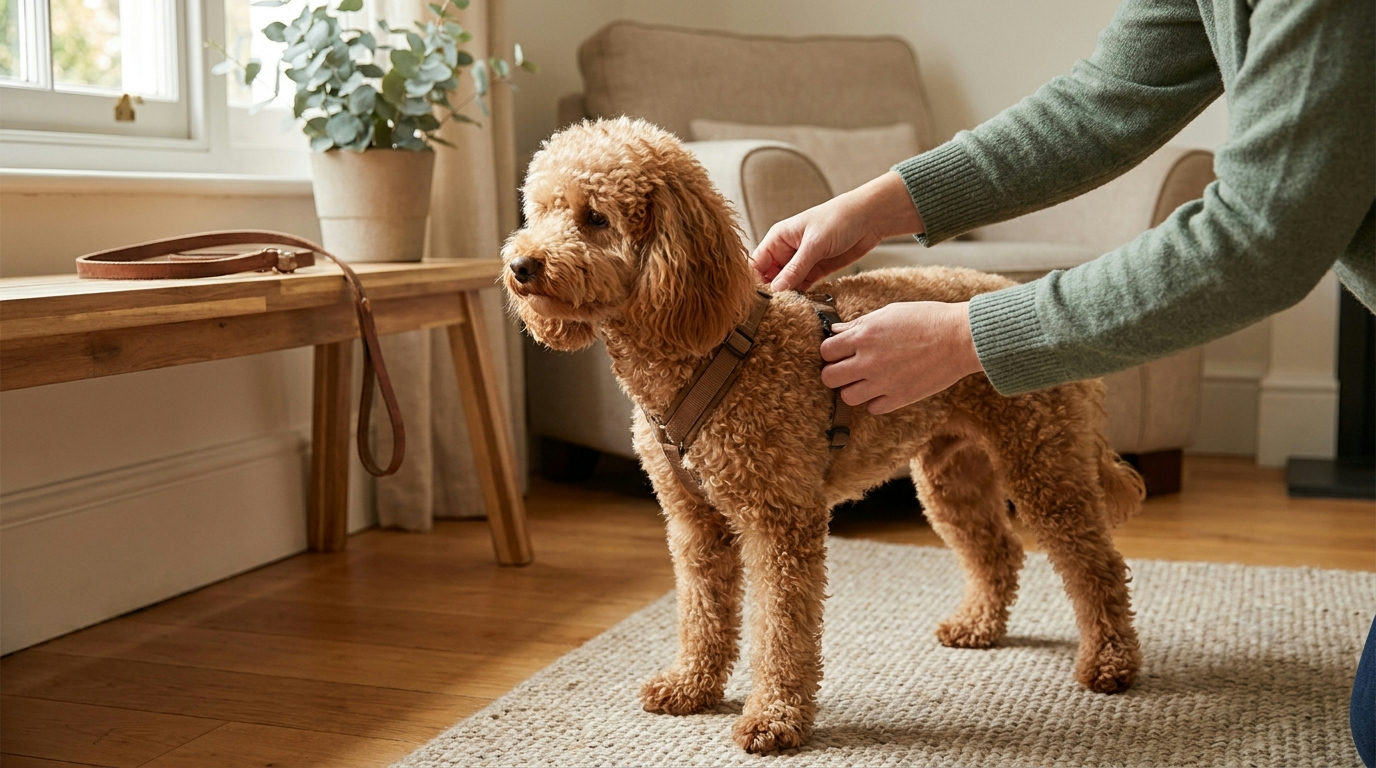
Lay the harness on a table first and identify the neck opening, chest panel, girth strap, and lead attachment. Follow the maker’s instructions for the specific style. Avoid a twisted chest panel or a strap caught in the hair. On a standing poodle, the girth strap should lie around the rib cage rather than across the soft belly or directly in the armpits. Check the front panel as the dog takes a few steps: the shoulders and front legs should move freely.
Run a hand under each strap. You should be able to fit your fingers under it without forcing them, while the harness should not slide loosely over the dog’s head. This is a starting check, not a universal measurement; body shape and harness design matter. The AKC’s harness-fitting advice also recommends testing leg movement and gently checking whether the dog can back out. Do that in a secure room, not beside traffic.
Test for rubbing and escape routes
Attach the lead and walk your poodle around the house or a fenced space. Watch from the side. Does the front edge press into the shoulder as the leg reaches forward? Does the girth strap creep into an armpit? Does the harness rotate when the lead changes direction? Adjust one strap at a time, then repeat the short walk. If the hardware rubs or the chest panel keeps shifting, the shape may be wrong even when the size number looks right.
Try a gentle backward step while keeping hold of the lead. Some dogs can reverse out of a loose harness. If your poodle’s head could pass through the neck opening, tighten the adjustable points or choose a more suitable design. Never use a tight strap to compensate for a poor pattern. After the test, part the coat beneath the contact points and look for redness, flattened knots, or tangles. Stop using a harness that repeatedly chafes and ask a veterinarian about skin irritation that persists.
Match the harness to the walk
A basic back-clip harness may suit a calm walk. A front attachment changes how the lead applies pressure, but it is not a substitute for teaching loose-lead walking. For a small poodle, check that the hardware is not disproportionately heavy. For a Standard Poodle, confirm that the straps and buckles are sturdy enough for the dog’s size. For any variety, prioritize secure fit and free movement over a fashionable shape or a “no-pull” claim.
Before leaving home, close every buckle, check the lead clip, and do a quick finger-and-movement test. Repeat the check after grooming and periodically as your dog grows. A good poodle harness fit is one your dog can move in comfortably and cannot easily slip out of. If you are unsure, take the harness to a reputable trainer or pet shop that can check the fit in person.
Quick poodle harness fit checklist
- Chest and lower-neck measurements match the maker’s chart.
- Straps lie flat, away from armpits and soft belly.
- Front legs and shoulders move freely.
- Harness stays in place when the lead changes direction.
- Dog cannot easily back out in a safe-room test.
- No rubbing or tangles appear after a short walk.
Compare harness shapes before buying
A harness can meet the tape-measure numbers and still fit poorly because its shape does not suit your poodle. Look at where the chest panel ends and how the neck opening sits when the dog is standing naturally. If the panel pulls into the throat when you attach a lead, or the shoulder straps sit across the front of the leg, try another pattern. Step-in designs, overhead designs, and adjustable Y-shaped designs place pressure differently. Do not assume a feature name tells you how it will fit; let the dog’s movement be the test.
Bring measurements and, if possible, let your poodle try the harness before removing tags. At home, photograph the dog from the front and side while standing. Photos make it easier to notice twisted straps and uneven adjustment. After a five-minute practice walk, check the fur under each contact point. A long coat can hide a red patch or a knot forming under a buckle. If you see repeated rubbing, change the fit or model before making the walk longer.
Fit changes after grooming and growth
Poodle coats can change dramatically between a full coat and a short clip. The harness may seem secure over dense hair while leaving excess space after grooming. Make a habit of checking the neck opening and girth on the first walk after a clip. Puppies change even faster; measure and adjust frequently rather than buying a much larger harness “to grow into.” A secure harness today matters more than a size you hope will fit months from now.
Weight changes also affect fit. If the same strap suddenly needs a very different setting, confirm the dog has not outgrown the size range and ask your veterinarian about unexplained weight change. Keep a note of the brand, model, size, and strap settings when you find a good fit. That record saves time when you replace worn gear, but you should still remeasure before buying again because manufacturers can revise their size charts.
Handle common fitting problems
If the harness rotates toward one side, check whether the two sides were adjusted evenly and whether the lead attachment is centered. If the dog backs out, test the neck opening and chest circumference in a secure room, then try a shape designed to resist reverse escape if adjustment cannot solve it. If the front legs seem shortened or the dog walks stiffly, remove the harness and compare movement without it. Do not ask a dog to “get used to” gear that blocks normal motion.
For a poodle that dislikes the harness itself, practise without a walk deadline. Put the harness on the floor, reward an investigation, lift it briefly, and stop. In later sessions, reward a head or paw moving through the correct opening. Keep the experience voluntary and calm. If the dog is suddenly painful when touched, consult a veterinarian instead of treating it as a training problem. The final fit check should be easy for both of you to repeat before every outing.
General pet-care information only; this article is not veterinary advice. Ask your veterinarian about your dog’s individual health or symptoms.