
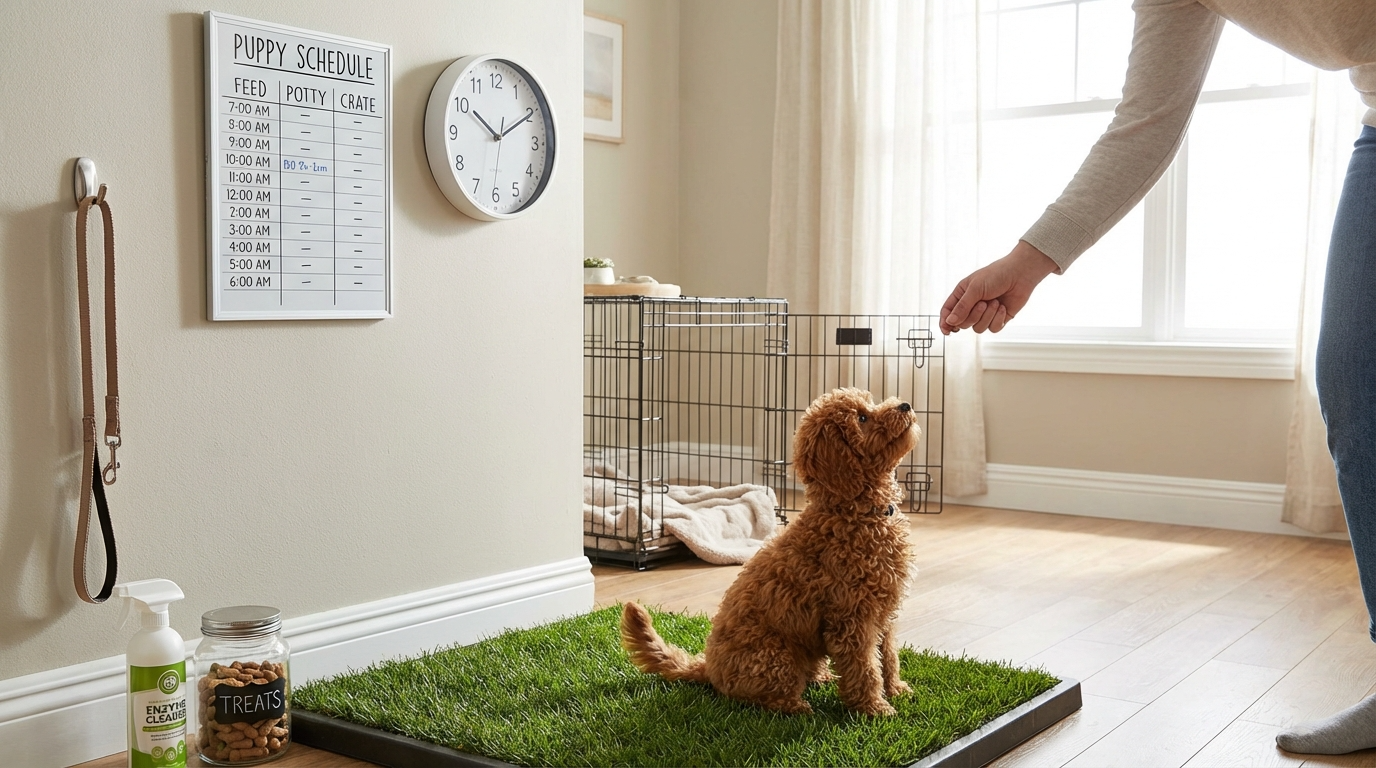
Housebreaking your puppy is one of the first and most important lessons you will teach. Although accidents are normal in the beginning, consistent structure creates fast progress. With patience and repetition, you can build reliable habits that last a lifetime.
Because puppies thrive on routine, clear expectations make training easier. When you understand how dogs learn, you reduce frustration and speed up results. This guide walks you through every stage so you can approach the process with confidence.
Understanding Your Puppy’s Natural Instincts
Before housebreaking your puppy, it helps to understand basic canine instincts. Dogs naturally avoid soiling their sleeping area. Therefore, they prefer to eliminate away from where they rest.
However, young puppies lack full bladder control. Most can hold urine for roughly one hour per month of age. For example, a three-month-old puppy may hold it for three hours.
Additionally, puppies usually need to go after waking, eating, drinking, or playing. Recognizing these patterns helps you prevent accidents.
Because timing matters, observation becomes your strongest tool. Watch for sniffing, circling, or sudden restlessness. These signals often appear seconds before elimination.
Creating a Consistent Daily Schedule
Consistency drives success in housebreaking your puppy. Start by setting fixed feeding times. Predictable meals lead to predictable bathroom breaks.
Next, establish regular outdoor trips. Take your puppy outside first thing in the morning. Then schedule breaks after meals, naps, and play sessions.
Evenings require attention as well. Offer a final bathroom break before bedtime. This step reduces overnight accidents significantly.
Although busy days happen, try to maintain routine as closely as possible. When schedules fluctuate often, puppies become confused.
A written schedule may help you stay organized. Simple structure builds clarity, and clarity builds trust.
Choosing the Right Bathroom Spot
Select one designated outdoor area for bathroom breaks. Returning to the same spot encourages familiar scent cues. Consequently, elimination becomes quicker over time.
Use a consistent verbal cue such as “go potty.” Say it calmly while your puppy sniffs. When they finish, offer praise immediately.
Positive reinforcement strengthens behavior faster than punishment. Reward with treats or affection within seconds of success.
Because timing affects learning, avoid distractions during bathroom trips. Keep outings focused until your puppy finishes.
Using Crate Training Effectively
Crate training supports housebreaking your puppy when done correctly. A properly sized crate mimics a den. Puppies rarely eliminate where they sleep.
Choose a crate large enough for standing and turning, but not large enough for separate bathroom space. This sizing encourages control.
However, never use the crate as punishment. Instead, present it as a safe, comfortable resting place.
Introduce the crate gradually with treats and short sessions. Over time, your puppy will enter willingly.
Crates help manage supervision when you cannot watch closely. Still, avoid extended confinement beyond age-appropriate limits.
Supervision Prevents Accidents
Direct supervision speeds up housebreaking your puppy dramatically. When indoors, keep your puppy within sight.
If you cannot watch constantly, use baby gates or tethers. These tools limit unsupervised wandering.
Because accidents often happen quickly, interrupt gently if you catch your puppy in the act. Immediately take them outside to finish.
Avoid yelling or harsh reactions. Fear does not teach control. Instead, calm redirection maintains trust.
Consistent supervision reduces mistakes and builds faster understanding.
Handling Accidents the Right Way
Accidents are part of the learning process. When they occur, clean thoroughly using enzyme-based cleaners. Standard cleaners may leave scent traces.
Residual odor encourages repeat behavior in the same spot. Therefore, proper cleaning prevents recurring mistakes.
If you find a mess after the fact, avoid scolding. Puppies do not connect delayed punishment to past behavior.
Instead, review your schedule. Ask whether you missed a signal or delayed a break.
Adjust timing as needed. Improvement comes from refinement, not frustration.
Nighttime Training Tips
Night training requires patience. Young puppies often need one overnight break. Therefore, set an alarm if necessary.
Keep nighttime trips calm and quiet. Avoid play or excitement. This approach reinforces that nighttime means business, not fun.
Gradually extend time between breaks as bladder control improves.
Most puppies sleep through the night by four to six months. However, progress varies by individual.
Stay consistent, and nighttime accidents will decrease steadily.
Using Positive Reinforcement for Faster Results
Reward-based training works best during housebreaking your puppy. Treats, praise, and gentle petting reinforce correct choices.
Offer rewards immediately after elimination outdoors. Timing creates clear association.
Over time, reduce treat frequency while maintaining praise. Eventually, outdoor elimination becomes habit rather than task.
Because positive methods build confidence, your puppy feels safe learning.
Consistency in reinforcement strengthens reliability long term.
When to Consider Puppy Pads
Some owners use puppy pads during early training. Pads may help in apartments or during extreme weather.
However, transitioning from pads to outdoor elimination may take extra effort. Therefore, choose your strategy carefully.
If you use pads, place them in one consistent location. Gradually move them closer to the door before eliminating them entirely.
Although convenient, outdoor training from the start often leads to faster results.
Addressing Common Challenges
Regression sometimes occurs during growth phases. Teething, excitement, or environmental changes may temporarily disrupt progress.
In such cases, return to stricter supervision and routine. Reinforce outdoor success again.
Medical issues like urinary infections can also cause setbacks. If accidents increase suddenly, consult your veterinarian.
Understanding that housebreaking your puppy includes ups and downs keeps expectations realistic.
Travel and New Environment Adjustments
New locations may confuse your puppy temporarily. Bring familiar bedding to maintain scent continuity.
Reintroduce bathroom routines immediately upon arrival. Show the designated outdoor spot right away.
Even brief travel disruptions may cause minor setbacks. However, returning to your established routine restores progress quickly.
Consistency remains your greatest ally, even in new settings.
Tracking Progress and Celebrating Milestones
Keep a simple log of bathroom times and accidents. Tracking patterns reveals improvement.
Celebrate small victories. A full accident-free day deserves recognition.
Although perfection takes time, steady progress signals success.
Housebreaking your puppy becomes easier when you measure growth rather than focusing on mistakes.
Transitioning to Full Freedom
Gradually expand indoor freedom once reliability increases. Start with one room at a time.
Continue monitoring closely during this phase. If accidents return, reduce space temporarily.
Full trust develops over weeks of consistent success.
Eventually, your puppy will understand expectations clearly and act independently.
Conclusion: Patience Builds Lifelong Habits
Housebreaking your puppy requires structure, observation, and positive reinforcement. While accidents happen, consistent routines prevent long-term confusion.
By setting clear schedules, supervising carefully, and rewarding success, you create reliable habits. Although progress may feel slow initially, daily consistency leads to lasting results.
Stay patient and calm. Over time, your puppy will gain control and confidence. The effort you invest now builds a clean, stress-free future for both of you.
FAQ
- How long does potty training usually take?
Most puppies achieve consistent results within three to six months, depending on age and consistency. - Should I wake my puppy at night for bathroom breaks?
Young puppies often need one overnight break. Gradually reduce frequency as control improves. - What if my puppy keeps having accidents in the same spot?
Use enzyme cleaners thoroughly and increase supervision to prevent repeat behavior. - Is crate training necessary for success?
Crates are helpful but not mandatory. However, they significantly speed up reliable habits. - When can my puppy have full access to the house?
Grant full freedom only after several weeks without accidents and consistent outdoor success.