
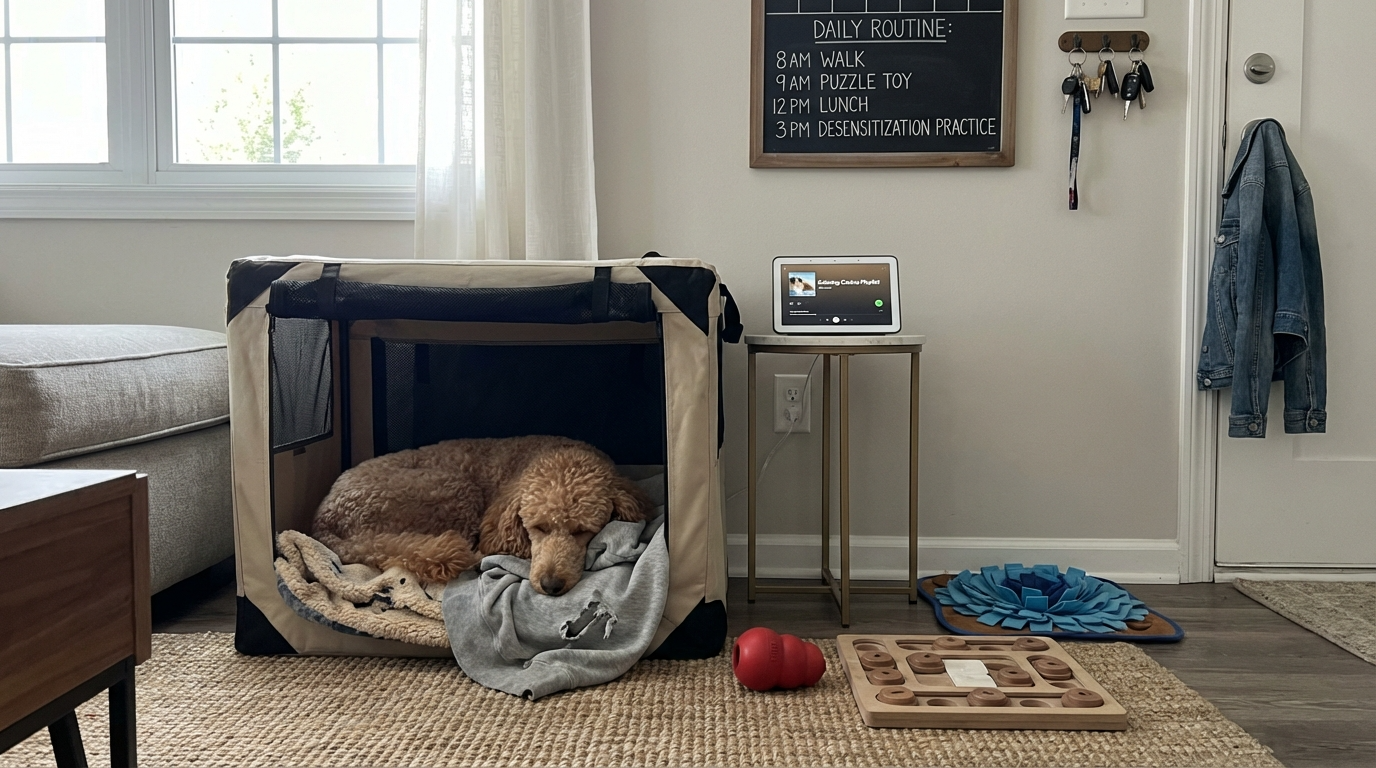
Separation anxiety can turn simple departures into emotional events. However, daily routines for dog separation anxiety can create structure, reduce stress, and build long-term confidence. Dogs thrive on predictability, so consistent habits help them feel secure even when you are away.
Although anxiety may seem overwhelming at first, steady daily structure makes a measurable difference. With patience and repetition, your dog can learn that alone time is safe and temporary.
Understanding Why Dogs Struggle With Being Alone
Dogs are social animals. Therefore, isolation can trigger fear responses in some pets. When left alone, anxious dogs may bark excessively, chew furniture, pace, or attempt to escape.
In many cases, separation distress develops after a schedule change. For example, a move, new job, or family shift may disrupt familiar patterns. As a result, uncertainty increases stress hormones.
Because anxiety builds quickly, prevention works better than correction. Early intervention using daily routines for dog separation anxiety reduces the intensity of reactions. Over time, structure replaces fear with calm expectation.
The Power of Predictable Morning Habits
Mornings set the tone for the entire day. If departures feel rushed or emotional, your dog may sense tension. Instead, create calm consistency.
Start each morning at roughly the same time. Feed breakfast, allow bathroom breaks, and provide light exercise. Physical movement lowers stress levels and burns excess energy.
After exercise, practice short, calm separation drills. Leave the room briefly, then return without fanfare. Gradually increase the duration. Because repetition builds trust, your dog learns that departures are normal.
Structured mornings remain one of the most effective daily routines for dog separation anxiety because they replace chaos with clarity.
Pre-Departure Calm Rituals
Many owners accidentally signal anxiety before leaving. Picking up keys, putting on shoes, or grabbing a bag can trigger panic.
Therefore, desensitize these cues. Throughout the day, pick up your keys without leaving. Put on your coat while staying home. This approach reduces emotional reactions tied to specific actions.
Additionally, avoid dramatic goodbyes. Keep departures quiet and brief. Although affection feels natural, emotional exits often increase stress.
Consistency matters. When your leaving routine stays calm every time, your dog begins to relax during the process.
Structured Alone-Time Training Sessions
Gradual exposure helps build independence. Begin with very short absences. Step outside for one minute. Return calmly. Slowly extend the time as your dog remains relaxed.
Because progress depends on comfort, never jump too quickly. If anxiety spikes, shorten the duration again. Small wins create steady improvement.
Interactive toys can also support alone-time practice. Puzzle feeders or frozen treats provide positive distractions. As a result, your dog associates solitude with rewarding experiences.
These structured sessions form the backbone of daily routines for dog separation anxiety and create measurable progress over weeks.
Midday Mental Stimulation
Mental enrichment reduces destructive behaviors. Boredom often intensifies anxious reactions. Therefore, include cognitive challenges in your schedule.
Rotate puzzle toys daily. Hide treats around a safe area. Introduce scent-based games that encourage focus. Because mental tasks tire the brain, calm behavior often follows.
If possible, arrange midday breaks. A dog walker or trusted neighbor can provide reassurance. Even brief interaction lowers cortisol levels.
However, avoid unpredictable timing. Predictable breaks work better than random visits. Routine creates stability, and stability reduces stress.
Exercise as Emotional Regulation
Physical movement plays a powerful role in emotional balance. A well-exercised dog handles alone time more calmly. Consequently, daily walks should remain non-negotiable.
Aim for at least 30 minutes of brisk walking or play. High-energy breeds may require more. Structured activities like fetch or agility drills increase engagement.
After exercise, many dogs enter a natural rest period. Plan departures during this calm window. Because energy levels are lower, separation becomes easier.
When combined with daily routines for dog separation anxiety, exercise supports both mental and physical health.
Creating a Safe, Comfortable Environment
Your dog’s environment influences emotional stability. First, choose a quiet resting area. Provide soft bedding and familiar scents. Comfort promotes relaxation.
Some dogs benefit from background noise. Soft music or white noise can mask outdoor triggers. In addition, consistent lighting helps maintain normal rhythms.
Avoid sudden environmental changes. Moving furniture or shifting sleep areas may increase insecurity. Instead, keep key elements stable.
Crate training may help certain dogs when introduced gradually. However, forcing confinement often increases fear. Assess your dog’s response carefully.
Evening Wind-Down Rituals
Evenings offer another opportunity to reinforce calm patterns. Establish a quiet routine before bedtime. Dim lights and reduce stimulation.
Offer gentle play followed by a final bathroom break. Then settle into a predictable bedtime schedule. Because dogs anticipate repeated patterns, they relax more easily.
Wind-down rituals also improve sleep quality. Well-rested dogs display fewer anxiety symptoms overall.
Over time, morning structure combined with evening consistency strengthens daily routines for dog separation anxiety and builds resilience.
Building Independence During the Day
Independence training should not occur only during departures. Throughout the day, encourage short moments of self-soothing.
Send your dog to a mat while you move to another room. Practice calm “stay” commands. Reward relaxed behavior when alone, even briefly.
Because confidence grows gradually, reinforce calm independence often. Avoid constant shadowing behavior by gently redirecting attention to toys or resting spots.
This steady practice teaches your dog that distance does not equal danger.
Avoiding Common Routine Mistakes
Even with good intentions, mistakes can slow progress. Inconsistent schedules create confusion. Sudden long absences may undo small gains.
Overreacting to minor setbacks also reinforces anxiety. Instead, stay neutral and adjust gradually.
Punishment should never enter the equation. Anxiety-driven behavior is emotional, not defiant. Harsh responses increase stress and damage trust.
Successful daily routines for dog separation anxiety rely on patience, consistency, and calm leadership.
Nutrition and Supplement Support
Diet influences mood regulation. Balanced meals stabilize blood sugar and reduce irritability. Therefore, feed high-quality food at consistent times.
Some dogs benefit from calming supplements. Ingredients like L-theanine or chamomile may support relaxation. However, consult your veterinarian before adding new products.
Hydration also matters. Fresh water should always be available. Small adjustments in nutrition sometimes create noticeable emotional improvements.
Tracking Progress and Adjusting Gradually
Progress rarely moves in a straight line. Some days feel easier than others. Keep a simple log of departure durations and behavior.
Because tracking highlights improvement, motivation increases. Small gains add up over weeks.
If anxiety persists despite consistent effort, consider professional guidance. Certified trainers or veterinary behaviorists offer structured support.
Nevertheless, most dogs improve significantly when daily routines for dog separation anxiety remain consistent.
The Role of Owner Mindset
Dogs read human emotions closely. If you feel guilty or anxious about leaving, your dog may mirror that tension.
Practice calm breathing before departures. Maintain steady body language. Confidence transfers from owner to pet.
Remind yourself that short absences build independence. With steady repetition, your dog develops resilience.
Consistency, not perfection, creates results.
Conclusion: Stability Creates Confidence
Separation anxiety challenges both dogs and owners. Yet structured habits provide powerful relief. Daily routines for dog separation anxiety replace unpredictability with reassurance.
Through calm departures, gradual exposure, mental stimulation, and regular exercise, dogs learn that alone time is temporary. Although progress requires patience, steady practice produces lasting change.
Structure builds confidence. Confidence reduces fear. Over time, your home becomes calmer, and departures feel ordinary rather than stressful.
FAQ
- How long does it take to reduce separation stress in dogs?
Most dogs show improvement within several weeks when consistent structure and gradual exposure are used daily. - Can exercise alone solve anxious behavior?
Exercise helps significantly, but mental enrichment and predictable departures must also be included. - Should I ignore my dog completely before leaving?
Keep departures calm and brief. Avoid emotional goodbyes, but do not act harsh or distant. - Are calming supplements necessary?
Some dogs benefit from supplements, yet many improve with structured training alone. - When should I consult a professional trainer?
Seek expert help if destructive behavior, panic, or self-injury continues despite steady routine changes.